
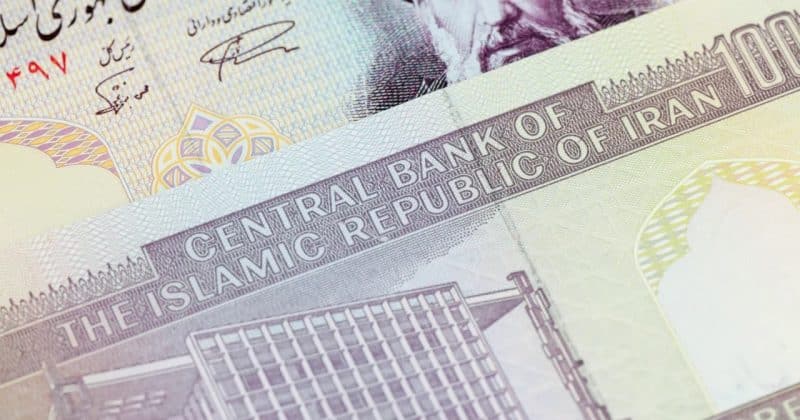
Iran Central Bank governor says US has legally committed to releasing blocked Iranian assets
Abdolnasser Hemmati's claims come amid broader US-Iran negotiations, with roughly $24 billion in frozen funds at stake and crypto sanctions adding a digital wrinkle to the talks.
Iran’s Central Bank Governor Abdolnasser Hemmati stated that the United States has “clearly and legally” agreed to release Iran’s blocked assets. The declaration marks one of the most concrete public claims from Tehran about progress in the ongoing diplomatic standoff over frozen Iranian funds.
The assets in question total an estimated $24 billion, spread across multiple countries. Iran’s frozen assets are distributed across at least three countries. Approximately $12 billion sits in Qatar, around $7 billion in India, and roughly $6 billion in Iraq.
Iranian media have reported the existence of a 14-point memorandum outlining the mechanics of how these funds would be released. The structure reportedly involves two tranches: an initial $12 billion before formal negotiations commence, and an additional $12 billion during a 60-day window tied to the broader talks.
Qatar appears to be playing the role of intermediary in these transactions. Hemmati traveled to Doha around May 25, 2026, specifically to discuss the unfreezing process, underscoring Qatar’s importance as a diplomatic bridge between Washington and Tehran.
These asset negotiations are deeply intertwined with broader US-Iran talks aimed at achieving a ceasefire following hostilities in mid-2026. For Iran, getting its money back has been a primary demand alongside broader sanctions relief.
Hemmati himself was reappointed as Central Bank governor in December 2025, a move that signaled Tehran’s intention to put an experienced financial diplomat at the center of these negotiations.
The diplomatic channel through Qatar isn’t new. The Gulf state has served as a mediator in previous US-Iran exchanges, including the 2023 prisoner swap that involved the release of $6 billion in frozen Iranian oil revenues held in South Korea.
Adding a digital dimension to these negotiations, the US Treasury sanctioned Nobitex, an Iranian crypto exchange, in early June 2026. The sanctions targeted Nobitex for alleged ties to Iran’s Central Bank, specifically for involvement in sanctions evasion using stablecoins.
Crypto markets have already shown modest gains amid rising optimism around the US-Iran talks. The Nobitex sanctions also carry a specific lesson for crypto investors: stablecoins are increasingly becoming the financial infrastructure that sanctions enforcement agencies scrutinize most closely, and the US has demonstrated a willingness to act on that risk with little warning.
The 60-day window reportedly outlined in the memorandum creates a natural timeline for watching developments. If the first $12 billion tranche moves, it would represent the largest single release of frozen Iranian assets in history.