
Nexo Earn with Nexo
Iran’s crude oil exports plunge 84% in May amid US blockade

Iran’s crude oil exports plunge 84% in May amid US blockade

US naval blockade and expanded sanctions have driven Iranian oil shipments to their lowest levels in six years, with exports collapsing from nearly 30 million barrels in April to roughly 2 million in May.

Iran’s oil exports just hit a wall.

In May, Iran’s crude oil shipments collapsed by 84% compared to April, falling to their lowest levels in more than six years. The cause: a US naval blockade enacted in mid-April and a fresh wave of Treasury sanctions that have systematically dismantled Tehran’s ability to move crude to buyers.

The numbers tell a brutal story

Iran exported approximately 2.01 million barrels by sea in May 2026. That’s down from 29.7 million barrels in April, a decline of roughly 93% by volume. On a daily basis, exports dropped below 300,000 barrels per day.

Some crude shipment trackers suggested that May exports had fallen to functionally zero barrels in certain analyses.

Advertisement

Shipping analysts from Lloyd’s List and United Against Nuclear Iran, a nonprofit that tracks Iranian oil shipments, both confirmed the severity of the drop. The figures represent Iran’s weakest export performance since roughly 2020, when a previous round of maximum pressure sanctions cratered the country’s oil trade.

How the blockade works

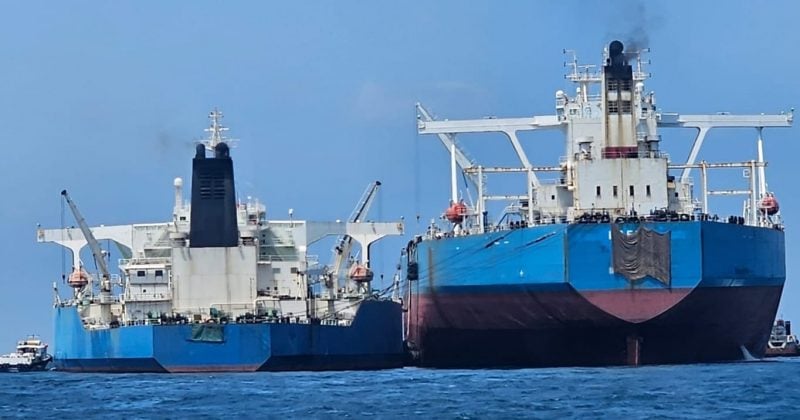
The US naval blockade, focused on the Strait of Hormuz, has made it increasingly dangerous for large tankers to carry Iranian crude. Very Large Crude Carriers became prime targets for interception. CENTCOM reported that dozens of vessels had been intercepted or redirected during the blockade period.

Iran’s response was to pivot to smaller tankers, vessels that are harder to track and easier to slip through enforcement lines.

The US Treasury expanded sanctions against Iranian oil networks in May, blacklisting 19 vessels linked to Iranian crude exports, along with companies and personnel associated with Tehran’s oil trade. Each sanctioned vessel becomes radioactive to the global shipping and insurance industries, effectively removing it from service even if it avoids physical interception.

What this means for oil markets and investors

Removing 300,000 to 900,000 barrels per day of supply from the global market is not a rounding error. Iran’s crude matters particularly to Asian refiners who have historically been the primary buyers of discounted Iranian oil.

If the blockade escalates into a broader confrontation in the Strait of Hormuz, the supply disruption could extend far beyond Iranian crude. Roughly 20% of the world’s oil supply transits through that strait daily.

Investors watching crude futures should pay close attention to two signals: any indication of escalation near the Strait of Hormuz, which would be bullish for oil prices, and any diplomatic back-channel activity that might signal a relaxation of enforcement, which would push prices lower as Iranian barrels re-enter the market.

Disclosure: This article was edited by Editorial Team. For more information on how we create and review content, see our Editorial Policy.

Iran’s crude oil exports plunge 84% in May amid US blockade

Iran’s crude oil exports plunge 84% in May amid US blockade

US naval blockade and expanded sanctions have driven Iranian oil shipments to their lowest levels in six years, with exports collapsing from nearly 30 million barrels in April to roughly 2 million in May.

Iran’s oil exports just hit a wall.

In May, Iran’s crude oil shipments collapsed by 84% compared to April, falling to their lowest levels in more than six years. The cause: a US naval blockade enacted in mid-April and a fresh wave of Treasury sanctions that have systematically dismantled Tehran’s ability to move crude to buyers.

The numbers tell a brutal story

Iran exported approximately 2.01 million barrels by sea in May 2026. That’s down from 29.7 million barrels in April, a decline of roughly 93% by volume. On a daily basis, exports dropped below 300,000 barrels per day.

Some crude shipment trackers suggested that May exports had fallen to functionally zero barrels in certain analyses.

Advertisement

Shipping analysts from Lloyd’s List and United Against Nuclear Iran, a nonprofit that tracks Iranian oil shipments, both confirmed the severity of the drop. The figures represent Iran’s weakest export performance since roughly 2020, when a previous round of maximum pressure sanctions cratered the country’s oil trade.

How the blockade works

The US naval blockade, focused on the Strait of Hormuz, has made it increasingly dangerous for large tankers to carry Iranian crude. Very Large Crude Carriers became prime targets for interception. CENTCOM reported that dozens of vessels had been intercepted or redirected during the blockade period.

Iran’s response was to pivot to smaller tankers, vessels that are harder to track and easier to slip through enforcement lines.

The US Treasury expanded sanctions against Iranian oil networks in May, blacklisting 19 vessels linked to Iranian crude exports, along with companies and personnel associated with Tehran’s oil trade. Each sanctioned vessel becomes radioactive to the global shipping and insurance industries, effectively removing it from service even if it avoids physical interception.

What this means for oil markets and investors

Removing 300,000 to 900,000 barrels per day of supply from the global market is not a rounding error. Iran’s crude matters particularly to Asian refiners who have historically been the primary buyers of discounted Iranian oil.

If the blockade escalates into a broader confrontation in the Strait of Hormuz, the supply disruption could extend far beyond Iranian crude. Roughly 20% of the world’s oil supply transits through that strait daily.

Investors watching crude futures should pay close attention to two signals: any indication of escalation near the Strait of Hormuz, which would be bullish for oil prices, and any diplomatic back-channel activity that might signal a relaxation of enforcement, which would push prices lower as Iranian barrels re-enter the market.

Disclosure: This article was edited by Editorial Team. For more information on how we create and review content, see our Editorial Policy.