
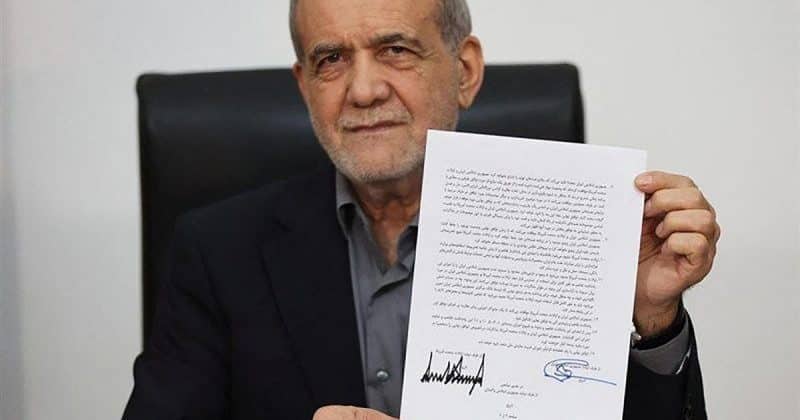
Iranian delegation arrives in Switzerland to implement US-Iran memorandum of understanding

Iranian delegation arrives in Switzerland to implement US-Iran memorandum of understanding

The talks, hosted at a Swiss resort, aim to finalize a comprehensive agreement within a 60-day window as geopolitical tensions ripple through global markets

Iran’s diplomatic team has touched down in Switzerland to begin implementing a memorandum of understanding with the United States, the Swiss Foreign Ministry confirmed. The arrival marks the first face-to-face phase of a deal that was signed electronically on June 17.

The MoU, signed through mediators on June 17, 2026, establishes a 60-day framework for both sides to negotiate a comprehensive agreement. That window is extendable. The core focus is establishing a cessation of military initiatives, particularly operations affecting the Strait of Hormuz. For context, roughly 20% of the world’s oil supply passes through that narrow waterway.

Advertisement

Iran’s delegation is led by Parliament Speaker Mohammad Bagher Ghalibaf, joined by Foreign Minister Abbas Araghchi. The US side is represented by special envoy Steve Witkoff. The talks are being hosted at the Bürgenstock resort. Initial meetings reportedly faced postponement due to logistical issues, though the delegation’s arrival signals that those hurdles have been cleared, at least for now.

Washington and Tehran haven’t had direct diplomatic relations since 1980, so Switzerland has long served as the go-between, representing US interests in Iran through its embassy in Tehran. The electronic signing of the MoU on June 17 was itself a notable diplomatic maneuver, bypassing the need for both parties to be in the same room just to get the framework on paper.

The Strait of Hormuz dynamic is the clearest transmission mechanism for crypto markets. Military tensions in the region push energy prices higher, which feeds into inflation expectations, which influences central bank policy, which moves every risk asset on the planet. The 60-day negotiation window creates a defined period of uncertainty, and a prolonged, ambiguous negotiation could keep a lid on risk appetite even if no overtly negative headlines emerge.

One underappreciated angle: sanctions relief. If these talks progress toward a broader normalization of US-Iran relations, the implications for global financial flows could be significant. Iran has been one of the most heavily sanctioned economies on earth, and any loosening of restrictions would ripple through currency markets, commodity markets, and potentially the crypto ecosystem where sanctioned entities have historically sought alternative financial rails.

Disclosure: This article was edited by Editorial Team. For more information on how we create and review content, see our Editorial Policy.

Iranian delegation arrives in Switzerland to implement US-Iran memorandum of understanding

Iranian delegation arrives in Switzerland to implement US-Iran memorandum of understanding

The talks, hosted at a Swiss resort, aim to finalize a comprehensive agreement within a 60-day window as geopolitical tensions ripple through global markets

Iran’s diplomatic team has touched down in Switzerland to begin implementing a memorandum of understanding with the United States, the Swiss Foreign Ministry confirmed. The arrival marks the first face-to-face phase of a deal that was signed electronically on June 17.

The MoU, signed through mediators on June 17, 2026, establishes a 60-day framework for both sides to negotiate a comprehensive agreement. That window is extendable. The core focus is establishing a cessation of military initiatives, particularly operations affecting the Strait of Hormuz. For context, roughly 20% of the world’s oil supply passes through that narrow waterway.

Advertisement

Iran’s delegation is led by Parliament Speaker Mohammad Bagher Ghalibaf, joined by Foreign Minister Abbas Araghchi. The US side is represented by special envoy Steve Witkoff. The talks are being hosted at the Bürgenstock resort. Initial meetings reportedly faced postponement due to logistical issues, though the delegation’s arrival signals that those hurdles have been cleared, at least for now.

Washington and Tehran haven’t had direct diplomatic relations since 1980, so Switzerland has long served as the go-between, representing US interests in Iran through its embassy in Tehran. The electronic signing of the MoU on June 17 was itself a notable diplomatic maneuver, bypassing the need for both parties to be in the same room just to get the framework on paper.

The Strait of Hormuz dynamic is the clearest transmission mechanism for crypto markets. Military tensions in the region push energy prices higher, which feeds into inflation expectations, which influences central bank policy, which moves every risk asset on the planet. The 60-day negotiation window creates a defined period of uncertainty, and a prolonged, ambiguous negotiation could keep a lid on risk appetite even if no overtly negative headlines emerge.

One underappreciated angle: sanctions relief. If these talks progress toward a broader normalization of US-Iran relations, the implications for global financial flows could be significant. Iran has been one of the most heavily sanctioned economies on earth, and any loosening of restrictions would ripple through currency markets, commodity markets, and potentially the crypto ecosystem where sanctioned entities have historically sought alternative financial rails.

Disclosure: This article was edited by Editorial Team. For more information on how we create and review content, see our Editorial Policy.