
Nexo Earn with Nexo
Iran national football team labeled ‘most oppressed’ at World Cup by coach Ghalenoei

Iran national football team labeled ‘most oppressed’ at World Cup by coach Ghalenoei

US visa restrictions force Iran's squad to operate from Mexico, with 11 federation staff denied entry during the 2026 FIFA World Cup

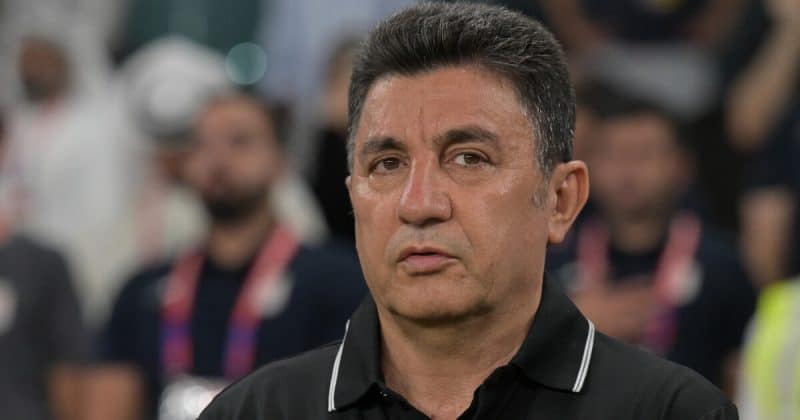
Iran drew 2-2 against New Zealand at SoFi Stadium in California, but the scoreline is barely the story. Coach Amir Ghalenoei used his post-match platform to fire a pointed accusation at the tournament’s host nation, calling Iran “the most oppressed” team at the entire 2026 FIFA World Cup.

The grievance isn’t abstract. Iran’s squad has been forced to set up their base camp across the border in Tijuana, Mexico, commuting into the US for matches because of diplomatic complications between Washington and Tehran. After the New Zealand match, the team was required to depart immediately rather than staying until Tuesday, denying players adequate recovery time.

What happened at SoFi Stadium

The match itself, played on June 15-16, 2026, ended in a 2-2 draw. But Ghalenoei’s focus after the final whistle landed squarely on everything happening outside the pitch.

Advertisement

“I think our team is the most oppressed one in the whole World Cup.”

Eleven federation staff members were denied entry into the US due to visa restrictions. While other teams settle into US-based training facilities, Iran is operating as a cross-border operation, with every game day involving an international border crossing. The forced immediate departure after the New Zealand match meant Iran was denied the recovery time other teams receive at their match-day hotel before traveling back to base.

The geopolitical backdrop

FIFA, as the governing body, is supposed to guarantee that all participating nations can compete on equal footing. Ghalenoei’s complaint is essentially that this promise has been broken for Iran.

This isn’t the first time Iran has faced politically charged situations at a World Cup. The team’s 1998 match against the US in France became a geopolitical spectacle. Their 2022 World Cup campaign in Qatar was overshadowed by the Mahsa Amini protests, with players facing pressure from both their government and activists abroad over whether to sing the national anthem.

But the 2026 edition presents a unique challenge because the host nation itself has active restrictions against Iranian nationals, with federation staff physically barred from entering the country where Iran is competing.

What this means for the tournament and beyond

FIFA selected Kraken as its first official crypto exchange supporter for the 2026 tournament. The Iran situation illustrates how quickly geopolitics can hijack the narrative around a major sporting event.

For Iran’s remaining matches, the practical question is whether a team can compete at the highest level while managing cross-border travel, missing staff, and forced immediate departures after matches. Ghalenoei’s public comments also put pressure on FIFA to respond. If the governing body stays silent, it tacitly accepts that not all teams are being treated equally at its flagship event. If it intervenes, it risks a diplomatic confrontation with the host nation.

Disclosure: This article was edited by Editorial Team. For more information on how we create and review content, see our Editorial Policy.

Iran national football team labeled ‘most oppressed’ at World Cup by coach Ghalenoei

Iran national football team labeled ‘most oppressed’ at World Cup by coach Ghalenoei

US visa restrictions force Iran's squad to operate from Mexico, with 11 federation staff denied entry during the 2026 FIFA World Cup

Iran drew 2-2 against New Zealand at SoFi Stadium in California, but the scoreline is barely the story. Coach Amir Ghalenoei used his post-match platform to fire a pointed accusation at the tournament’s host nation, calling Iran “the most oppressed” team at the entire 2026 FIFA World Cup.

The grievance isn’t abstract. Iran’s squad has been forced to set up their base camp across the border in Tijuana, Mexico, commuting into the US for matches because of diplomatic complications between Washington and Tehran. After the New Zealand match, the team was required to depart immediately rather than staying until Tuesday, denying players adequate recovery time.

What happened at SoFi Stadium

The match itself, played on June 15-16, 2026, ended in a 2-2 draw. But Ghalenoei’s focus after the final whistle landed squarely on everything happening outside the pitch.

Advertisement

“I think our team is the most oppressed one in the whole World Cup.”

Eleven federation staff members were denied entry into the US due to visa restrictions. While other teams settle into US-based training facilities, Iran is operating as a cross-border operation, with every game day involving an international border crossing. The forced immediate departure after the New Zealand match meant Iran was denied the recovery time other teams receive at their match-day hotel before traveling back to base.

The geopolitical backdrop

FIFA, as the governing body, is supposed to guarantee that all participating nations can compete on equal footing. Ghalenoei’s complaint is essentially that this promise has been broken for Iran.

This isn’t the first time Iran has faced politically charged situations at a World Cup. The team’s 1998 match against the US in France became a geopolitical spectacle. Their 2022 World Cup campaign in Qatar was overshadowed by the Mahsa Amini protests, with players facing pressure from both their government and activists abroad over whether to sing the national anthem.

But the 2026 edition presents a unique challenge because the host nation itself has active restrictions against Iranian nationals, with federation staff physically barred from entering the country where Iran is competing.

What this means for the tournament and beyond

FIFA selected Kraken as its first official crypto exchange supporter for the 2026 tournament. The Iran situation illustrates how quickly geopolitics can hijack the narrative around a major sporting event.

For Iran’s remaining matches, the practical question is whether a team can compete at the highest level while managing cross-border travel, missing staff, and forced immediate departures after matches. Ghalenoei’s public comments also put pressure on FIFA to respond. If the governing body stays silent, it tacitly accepts that not all teams are being treated equally at its flagship event. If it intervenes, it risks a diplomatic confrontation with the host nation.

Disclosure: This article was edited by Editorial Team. For more information on how we create and review content, see our Editorial Policy.