
Iran’s Foreign Ministry condemns US airstrikes as violation of ceasefire agreement

Iran’s Foreign Ministry condemns US airstrikes as violation of ceasefire agreement

Tehran says June 26 strikes on southern coastal facilities broke a week-old memorandum of understanding and the UN Charter

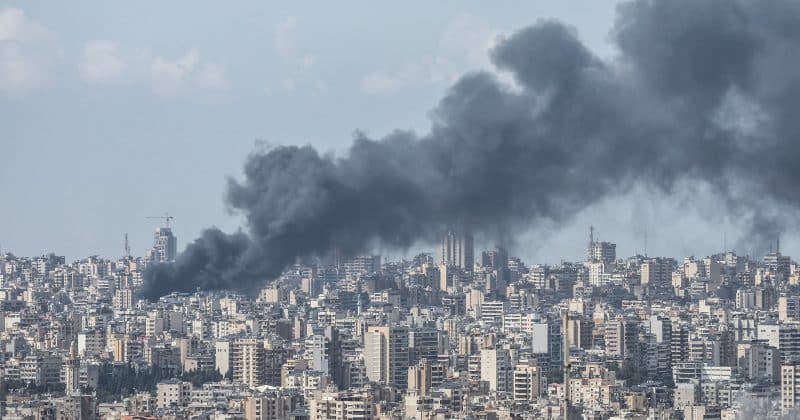
Iran’s Foreign Ministry has formally condemned US airstrikes on facilities along its southern coast, calling the attacks a direct violation of a ceasefire agreement signed just eight days earlier. The strikes, which hit the Sirik region and Qeshm Island on June 26, 2026, landed less than two weeks after both parties had committed to stopping hostilities under a memorandum of understanding dated June 18.

Tehran’s condemnation came on June 27, with the Foreign Ministry also citing Article 2, paragraph 4 of the UN Charter, which prohibits member states from using force against the territorial integrity of another state.

What happened and what Iran is saying

The targeted facilities sit along Iran’s southern coastline, an area of considerable strategic sensitivity given its proximity to the Strait of Hormuz, the narrow waterway through which a significant portion of the world’s oil supply passes.

Advertisement

By invoking the UN Charter alongside the bilateral MoU, Tehran is simultaneously making a domestic political argument and an appeal to the international community, positioning itself as the aggrieved party under two separate legal frameworks.

Crypto markets caught in the crossfire

Bitcoin fell below $73,000 on May 28, an earlier escalation point in the same conflict cycle, triggering nearly $1 billion in liquidations across crypto markets. By mid-June, as regional tensions continued to build, Bitcoin’s price had dropped further to around $61,000.

On the prediction market side, Polymarket recorded approximately $1 million in new betting activity tied to Iran-US tensions in the period leading up to the June 26 strikes.

Iranian entities have reportedly been turning to digital assets as a workaround for economic pressure, with an estimated $10.3 million in crypto outflows detected from Iranian-linked entities following the strikes.

What investors should watch

Bitcoin’s behavior in this conflict cycle has reinforced something worth keeping in mind: the asset does not reliably function as a safe haven during acute geopolitical stress. Gold tends to hold or gain in those moments. Bitcoin has been selling off alongside risk assets, which means investors treating it as a hedge against conflict-driven uncertainty have had a rough few weeks.

For traders, the key data points to track are: whether the US offers any formal response to Iran’s condemnation, whether additional MoU-adjacent communications emerge from either party, and whether on-chain data shows continued acceleration in crypto outflows from Iranian-linked addresses.

Disclosure: This article was edited by Editorial Team. For more information on how we create and review content, see our Editorial Policy.

Iran’s Foreign Ministry condemns US airstrikes as violation of ceasefire agreement

Iran’s Foreign Ministry condemns US airstrikes as violation of ceasefire agreement

Tehran says June 26 strikes on southern coastal facilities broke a week-old memorandum of understanding and the UN Charter

Iran’s Foreign Ministry has formally condemned US airstrikes on facilities along its southern coast, calling the attacks a direct violation of a ceasefire agreement signed just eight days earlier. The strikes, which hit the Sirik region and Qeshm Island on June 26, 2026, landed less than two weeks after both parties had committed to stopping hostilities under a memorandum of understanding dated June 18.

Tehran’s condemnation came on June 27, with the Foreign Ministry also citing Article 2, paragraph 4 of the UN Charter, which prohibits member states from using force against the territorial integrity of another state.

What happened and what Iran is saying

The targeted facilities sit along Iran’s southern coastline, an area of considerable strategic sensitivity given its proximity to the Strait of Hormuz, the narrow waterway through which a significant portion of the world’s oil supply passes.

Advertisement

By invoking the UN Charter alongside the bilateral MoU, Tehran is simultaneously making a domestic political argument and an appeal to the international community, positioning itself as the aggrieved party under two separate legal frameworks.

Crypto markets caught in the crossfire

Bitcoin fell below $73,000 on May 28, an earlier escalation point in the same conflict cycle, triggering nearly $1 billion in liquidations across crypto markets. By mid-June, as regional tensions continued to build, Bitcoin’s price had dropped further to around $61,000.

On the prediction market side, Polymarket recorded approximately $1 million in new betting activity tied to Iran-US tensions in the period leading up to the June 26 strikes.

Iranian entities have reportedly been turning to digital assets as a workaround for economic pressure, with an estimated $10.3 million in crypto outflows detected from Iranian-linked entities following the strikes.

What investors should watch

Bitcoin’s behavior in this conflict cycle has reinforced something worth keeping in mind: the asset does not reliably function as a safe haven during acute geopolitical stress. Gold tends to hold or gain in those moments. Bitcoin has been selling off alongside risk assets, which means investors treating it as a hedge against conflict-driven uncertainty have had a rough few weeks.

For traders, the key data points to track are: whether the US offers any formal response to Iran’s condemnation, whether additional MoU-adjacent communications emerge from either party, and whether on-chain data shows continued acceleration in crypto outflows from Iranian-linked addresses.

Disclosure: This article was edited by Editorial Team. For more information on how we create and review content, see our Editorial Policy.