
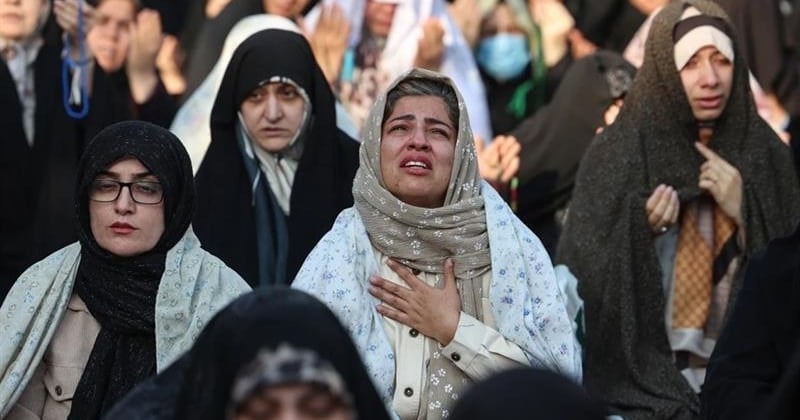
20,000 people in Iran’s Hormozgan province lose drinking water after strikes
US military strikes destroyed two water reservoirs in Sirik, cutting supply to thousands as temperatures soar past 45°C.
Two water reservoirs in the Sirik area of Hormozgan province were destroyed on June 10, leaving roughly 20,000 people without access to drinking water in one of the hottest regions on the planet. Temperatures at the time of the strikes were reaching 45-50°C, which is the kind of heat that makes dehydration not a risk factor but a countdown.
The reservoirs, with capacities of 500 cubic meters and 2,000 cubic meters, supplied Sirik town and nearby districts including Bemani and Kouhestak. Their destruction has created what local officials are calling a critical humanitarian situation.
What happened in Hormozgan
The strikes were carried out by the US military, reportedly in retaliation for Iran’s downing of a US Army Apache helicopter over Gulf waters. The targeting extended beyond Sirik itself, with affected areas including Jask and Qeshm Island, suggesting a broader operational footprint across the province.
Abdolhamid Hamzehpour, managing director of Hormozgan Water and Wastewater Company, confirmed the damage to both reservoirs. He also outlined ongoing efforts to arrange alternative water sources for the affected residents.
Iranian state media has described the conditions on the ground as “extremely difficult and critical.”
The news moving money, markets, and the world—before your day starts.
Daily. Free. Join 34,000+ readers across crypto, finance, and policy.
A pattern of infrastructure targeting
This wasn’t the first time water systems in southern Iran have come under fire in 2026. Earlier incidents allegedly involved attacks on desalination plants in the same Hormozgan region, pointing to a recurring pattern of strikes affecting civilian infrastructure.
International humanitarian law, specifically the Geneva Conventions, broadly prohibits attacks on objects indispensable to the survival of civilian populations, including drinking water installations.
Humanitarian implications and what to watch
The immediate concern is whether alternative water supplies can be mobilized fast enough to prevent a health crisis. Trucking water to remote areas of Hormozgan province is expensive, slow, and logistically complex. The province stretches along Iran’s southern coast, with communities spread across vast, arid terrain.
Investors tracking energy markets should note that Hormozgan province borders the Strait of Hormuz, through which roughly a fifth of the world’s oil supply passes.