
Iran signals future insurance fees for ships crossing Strait of Hormuz

Iran signals future insurance fees for ships crossing Strait of Hormuz

Tehran's newly formed Persian Gulf Strait Authority will require all vessels to carry approved insurance, while a proposed crypto-settled system called Hormuz Safe could generate over $10 billion in revenue


Iran has reserved the right to impose insurance fees on vessels passing through the Strait of Hormuz as it seeks greater control over the critical energy shipping route following its interim peace agreement with the United States.

A document circulated among shipping executives by Iran’s Persian Gulf Strait Authority said all vessels must carry an insurance policy approved by the agency, according to a Financial Times report.

The insurance will initially be provided free of charge. However, the authority said it could introduce fees in the future, with prices determined by the relevant insurer.

Iran agreed under its deal with Washington to restore traffic through the strait to prewar levels and refrain from charging vessels for passage for 60 days.

Advertisement

An Iranian official said no charges would be collected during that period. Iran and Oman are expected to negotiate a future framework that could include fees for services and safe passage once the 60 days expire.

The proposal has raised concerns among shipowners that Tehran is attempting to establish a new payment regime over a waterway that previously carried about one fifth of global oil and liquefied natural gas supplies.

Oman has said it does not plan to impose tolls, although it is reportedly considering charges for environmental protection, navigation management, pilotage and security services.

The latest developments have added to uncertainty across the shipping industry. Iran fired warning shots at vessels in the strait on Friday and issued a radio message instructing ships to stay away until conditions connected to the US agreement were fulfilled, according to the report.

Tehran had previously proposed charging vessels $2 million in cryptocurrency for passage through the strait.

The new Iranian authority has also instructed ships to follow a designated route close to the Iranian coast, warning that alternative routes would be treated as violations.

Shipowners remain hesitant to use other paths because of concerns that mines may have been placed in parts of the waterway during the conflict.

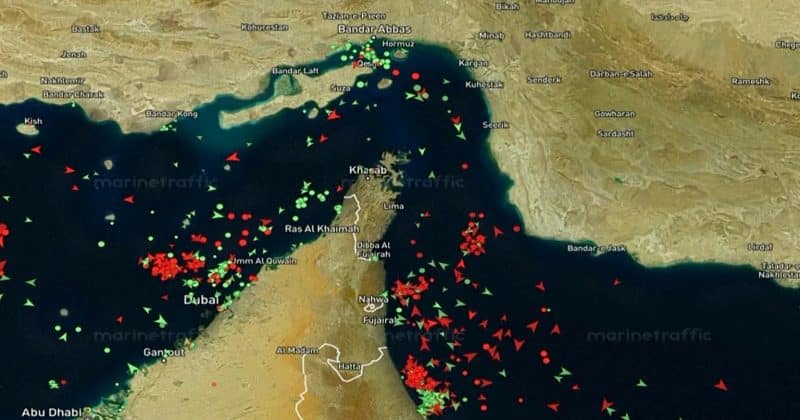
Traffic through the strait remained subdued on Friday after an initial rush of vessels attempted to leave the Gulf a day earlier.

The International Maritime Organization is working to establish a humanitarian corridor for sailors who have been trapped in the Gulf for more than 100 days. The organization is also seeking security guarantees that transit routes are clear of mines and other hazards.

Disclosure: This article was edited by Editorial Team. For more information on how we create and review content, see our Editorial Policy.

Iran signals future insurance fees for ships crossing Strait of Hormuz

Iran signals future insurance fees for ships crossing Strait of Hormuz

Tehran's newly formed Persian Gulf Strait Authority will require all vessels to carry approved insurance, while a proposed crypto-settled system called Hormuz Safe could generate over $10 billion in revenue

Share

Add us on Google

Iran has reserved the right to impose insurance fees on vessels passing through the Strait of Hormuz as it seeks greater control over the critical energy shipping route following its interim peace agreement with the United States.

A document circulated among shipping executives by Iran’s Persian Gulf Strait Authority said all vessels must carry an insurance policy approved by the agency, according to a Financial Times report.

The insurance will initially be provided free of charge. However, the authority said it could introduce fees in the future, with prices determined by the relevant insurer.

Iran agreed under its deal with Washington to restore traffic through the strait to prewar levels and refrain from charging vessels for passage for 60 days.

Advertisement

An Iranian official said no charges would be collected during that period. Iran and Oman are expected to negotiate a future framework that could include fees for services and safe passage once the 60 days expire.

The proposal has raised concerns among shipowners that Tehran is attempting to establish a new payment regime over a waterway that previously carried about one fifth of global oil and liquefied natural gas supplies.

Oman has said it does not plan to impose tolls, although it is reportedly considering charges for environmental protection, navigation management, pilotage and security services.

The latest developments have added to uncertainty across the shipping industry. Iran fired warning shots at vessels in the strait on Friday and issued a radio message instructing ships to stay away until conditions connected to the US agreement were fulfilled, according to the report.

Tehran had previously proposed charging vessels $2 million in cryptocurrency for passage through the strait.

The new Iranian authority has also instructed ships to follow a designated route close to the Iranian coast, warning that alternative routes would be treated as violations.

Shipowners remain hesitant to use other paths because of concerns that mines may have been placed in parts of the waterway during the conflict.

Traffic through the strait remained subdued on Friday after an initial rush of vessels attempted to leave the Gulf a day earlier.

The International Maritime Organization is working to establish a humanitarian corridor for sailors who have been trapped in the Gulf for more than 100 days. The organization is also seeking security guarantees that transit routes are clear of mines and other hazards.

Disclosure: This article was edited by Editorial Team. For more information on how we create and review content, see our Editorial Policy.