
Iran prepares burial for slain Supreme Leader Khamenei amid US-Israel tensions

Iran prepares burial for slain Supreme Leader Khamenei amid US-Israel tensions

Khamenei's assassination sent Bitcoin toward $63K and prediction markets surging, as one of history's most consequential leadership vacuums opens in Tehran

Ayatollah Ali Khamenei, who served as Iran’s Supreme Leader since 1989, was killed during coordinated US-Israeli airstrikes on February 28, 2026. Iranian state media confirmed his death on March 1, triggering a regional crisis that has reshuffled nearly every assumption about Middle Eastern geopolitics.

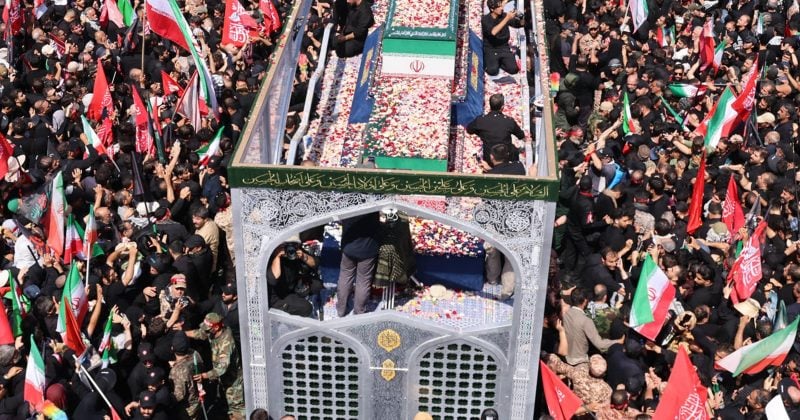
The burial, scheduled for around July 9-10, 2026 at the Imam Reza shrine in Mashhad, marks the end of a months-long procession that wound through Iranian cities and extended internationally to Karbala and Najaf in Iraq. Millions of mourners attended along the route, making it among the largest public funeral events in recent Iranian history.

What happened and why it matters now

Khamenei held a level of authority in Iran that had no real Western equivalent. He controlled foreign policy, the military, the judiciary, and the nuclear program.

His son, Mojtaba Khamenei, has emerged as the frontrunner to succeed him, according to reporting from state-adjacent Iranian media. Whether the Assembly of Experts, the clerical body formally empowered to select a new Supreme Leader, ratifies that choice or fractures over it is the central political question hanging over Tehran right now.

Advertisement

Active fighting continued even as Iran organized funeral proceedings. Businesses inside Iran reportedly faced pressure to financially contribute to funeral costs.

Crypto markets felt it immediately

When news of Khamenei’s assassination broke, Bitcoin dropped toward $63,000. The rebound came quickly. Bitcoin recovered to approximately $67,000-$68,000 as speculation about regime change in Iran and the possibility of a shorter, more decisive conflict replaced the initial panic.

Iran has used Bitcoin mining as a partial workaround for sanctions that have strangled its access to dollar-denominated financial systems. Following the assassination and the escalation of hostilities, Iran’s crypto infrastructure became the target of new sanctions.

Iran-linked mining operations have contributed meaningfully to global Bitcoin hashrate. Squeezing that capacity, even partially, affects network dynamics.

Prediction markets told a particularly revealing story. Trading volume tied to questions about Iranian political succession, regional conflict outcomes, and related events surged to approximately $45 million following Khamenei’s death.

What investors should be watching

The sanctions angle deserves specific attention from crypto investors. Regulatory pressure on Iran-linked mining and trading activity has a history of producing unexpected effects on network hashrate and, in some cases, on fee markets.

Prediction market volume at $45 million suggests a significant cohort of market participants believes the political and military situation in Iran remains genuinely uncertain and that the range of outcomes is wide enough to warrant hedging.

Disclosure: This article was edited by Editorial Team. For more information on how we create and review content, see our Editorial Policy.

Iran prepares burial for slain Supreme Leader Khamenei amid US-Israel tensions

Iran prepares burial for slain Supreme Leader Khamenei amid US-Israel tensions

Khamenei's assassination sent Bitcoin toward $63K and prediction markets surging, as one of history's most consequential leadership vacuums opens in Tehran

Ayatollah Ali Khamenei, who served as Iran’s Supreme Leader since 1989, was killed during coordinated US-Israeli airstrikes on February 28, 2026. Iranian state media confirmed his death on March 1, triggering a regional crisis that has reshuffled nearly every assumption about Middle Eastern geopolitics.

The burial, scheduled for around July 9-10, 2026 at the Imam Reza shrine in Mashhad, marks the end of a months-long procession that wound through Iranian cities and extended internationally to Karbala and Najaf in Iraq. Millions of mourners attended along the route, making it among the largest public funeral events in recent Iranian history.

What happened and why it matters now

Khamenei held a level of authority in Iran that had no real Western equivalent. He controlled foreign policy, the military, the judiciary, and the nuclear program.

His son, Mojtaba Khamenei, has emerged as the frontrunner to succeed him, according to reporting from state-adjacent Iranian media. Whether the Assembly of Experts, the clerical body formally empowered to select a new Supreme Leader, ratifies that choice or fractures over it is the central political question hanging over Tehran right now.

Advertisement

Active fighting continued even as Iran organized funeral proceedings. Businesses inside Iran reportedly faced pressure to financially contribute to funeral costs.

Crypto markets felt it immediately

When news of Khamenei’s assassination broke, Bitcoin dropped toward $63,000. The rebound came quickly. Bitcoin recovered to approximately $67,000-$68,000 as speculation about regime change in Iran and the possibility of a shorter, more decisive conflict replaced the initial panic.

Iran has used Bitcoin mining as a partial workaround for sanctions that have strangled its access to dollar-denominated financial systems. Following the assassination and the escalation of hostilities, Iran’s crypto infrastructure became the target of new sanctions.

Iran-linked mining operations have contributed meaningfully to global Bitcoin hashrate. Squeezing that capacity, even partially, affects network dynamics.

Prediction markets told a particularly revealing story. Trading volume tied to questions about Iranian political succession, regional conflict outcomes, and related events surged to approximately $45 million following Khamenei’s death.

What investors should be watching

The sanctions angle deserves specific attention from crypto investors. Regulatory pressure on Iran-linked mining and trading activity has a history of producing unexpected effects on network hashrate and, in some cases, on fee markets.

Prediction market volume at $45 million suggests a significant cohort of market participants believes the political and military situation in Iran remains genuinely uncertain and that the range of outcomes is wide enough to warrant hedging.

Disclosure: This article was edited by Editorial Team. For more information on how we create and review content, see our Editorial Policy.