
Nexo Earn with Nexo
Iran’s Kharg Island oil terminal goes dark for 10 days as tanker loadings collapse

Iran’s Kharg Island oil terminal goes dark for 10 days as tanker loadings collapse

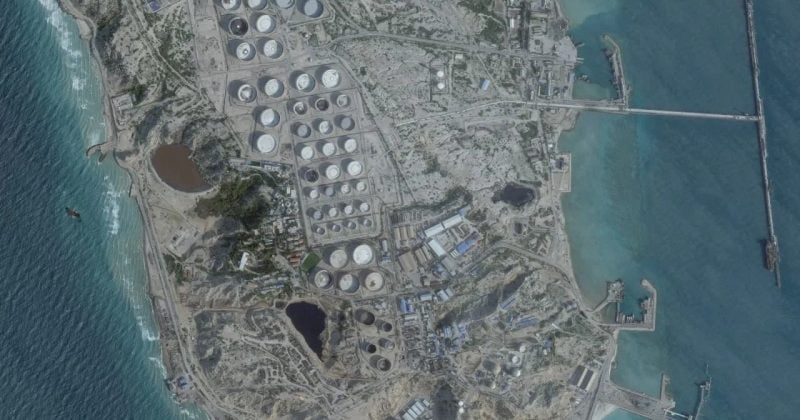
Iran's most critical oil export hub saw zero recorded tanker loadings over a 10-day stretch, with daily output plunging from 1.5 million barrels to roughly 600,000.

Iran’s oil export machine has effectively stalled. For 10 consecutive days, no tanker loadings were recorded at Kharg Island, the terminal responsible for the vast majority of Iran’s crude shipments. Daily output during the first 10 days of October 2024 collapsed to roughly 600,000 barrels per day, down from approximately 1.5 million bpd in the months prior.

What tanker data actually shows

Tanker-tracking data paints a picture of near-total paralysis at Iran’s most important terminal. During the October 1-10 window, only two Very Large Crude Carriers (VLCCs) were loaded at Kharg Island. That compares to an average of 1.1 VLCCs loaded per day during the first nine months of 2024.

Advertisement

The disruption did not come out of nowhere, either. Iran’s daily oil exports had already been sliding before October. In August and September, shipments had fallen by approximately 300,000 to 400,000 bpd, bringing the total down to around 1.4 million bpd. Some loadings have reportedly resumed since the initial 10-day blackout, but analysts note the pace remains well below normal.

Geopolitics, not mechanics, behind the shutdown

The shutdown at Kharg Island appears driven almost entirely by geopolitical risk, specifically escalating fears of Israeli military action targeting Iran’s oil infrastructure. Kharg Island sits in the northern Persian Gulf and handles the bulk of Iran’s seaborne crude exports. The framing of a “US naval blockade” has circulated in some reporting, though the evidence more strongly points to a market-driven response to perceived threat levels rather than a formal military interdiction.

China’s exposure and oil market ripple effects

China accounts for over 95% of Iran’s oil exports, making Beijing both the primary customer and the primary casualty of any prolonged shutdown. Chinese refiners, particularly the independent “teapot” refineries that have built supply chains around discounted Iranian crude, now face a potential supply gap.

OPEC+ has been carefully managing production cuts to support prices, and an involuntary reduction from Iran, a member that was already exempt from formal quota agreements due to sanctions, effectively does some of the cartel’s work for it. The fact that loadings were already declining in August and September before October’s dramatic drop suggests this is not a one-off event but a deteriorating trend.

Disclosure: This article was edited by Editorial Team. For more information on how we create and review content, see our Editorial Policy.

Iran’s Kharg Island oil terminal goes dark for 10 days as tanker loadings collapse

Iran’s Kharg Island oil terminal goes dark for 10 days as tanker loadings collapse

Iran's most critical oil export hub saw zero recorded tanker loadings over a 10-day stretch, with daily output plunging from 1.5 million barrels to roughly 600,000.

Iran’s oil export machine has effectively stalled. For 10 consecutive days, no tanker loadings were recorded at Kharg Island, the terminal responsible for the vast majority of Iran’s crude shipments. Daily output during the first 10 days of October 2024 collapsed to roughly 600,000 barrels per day, down from approximately 1.5 million bpd in the months prior.

What tanker data actually shows

Tanker-tracking data paints a picture of near-total paralysis at Iran’s most important terminal. During the October 1-10 window, only two Very Large Crude Carriers (VLCCs) were loaded at Kharg Island. That compares to an average of 1.1 VLCCs loaded per day during the first nine months of 2024.

Advertisement

The disruption did not come out of nowhere, either. Iran’s daily oil exports had already been sliding before October. In August and September, shipments had fallen by approximately 300,000 to 400,000 bpd, bringing the total down to around 1.4 million bpd. Some loadings have reportedly resumed since the initial 10-day blackout, but analysts note the pace remains well below normal.

Geopolitics, not mechanics, behind the shutdown

The shutdown at Kharg Island appears driven almost entirely by geopolitical risk, specifically escalating fears of Israeli military action targeting Iran’s oil infrastructure. Kharg Island sits in the northern Persian Gulf and handles the bulk of Iran’s seaborne crude exports. The framing of a “US naval blockade” has circulated in some reporting, though the evidence more strongly points to a market-driven response to perceived threat levels rather than a formal military interdiction.

China’s exposure and oil market ripple effects

China accounts for over 95% of Iran’s oil exports, making Beijing both the primary customer and the primary casualty of any prolonged shutdown. Chinese refiners, particularly the independent “teapot” refineries that have built supply chains around discounted Iranian crude, now face a potential supply gap.

OPEC+ has been carefully managing production cuts to support prices, and an involuntary reduction from Iran, a member that was already exempt from formal quota agreements due to sanctions, effectively does some of the cartel’s work for it. The fact that loadings were already declining in August and September before October’s dramatic drop suggests this is not a one-off event but a deteriorating trend.

Disclosure: This article was edited by Editorial Team. For more information on how we create and review content, see our Editorial Policy.