
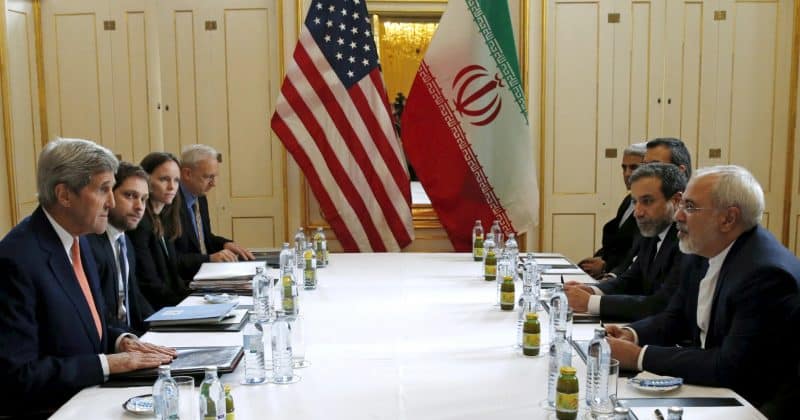
Iran nuclear deal could be signed within days, US official says
A senior Trump administration official puts the agreement at 75-85% complete, but Tehran disagrees on key terms
A senior US official has indicated that a nuclear deal with Iran could be signed within days, possibly over the weekend or at a location in Europe. The agreement, described as roughly 75-85% complete, would mark one of the most consequential geopolitical developments in years, with ripple effects stretching from oil markets to crypto portfolios.
Here’s the thing, though: Iran apparently didn’t get the same memo. Tehran’s views on the terms diverge significantly from Washington’s, particularly around nuclear restrictions, verification mechanisms, and enforcement.
What’s actually in the deal
The framework builds on a temporary ceasefire established in April 2026, which is now being extended by 60 days. Beyond the ceasefire, the agreement reportedly includes provisions for reopening the Strait of Hormuz, a chokepoint through which roughly a fifth of the world’s oil supply passes on any given day.
Iranian oil exports would also resume under the deal’s terms. In exchange, Tehran would reportedly suspend uranium enrichment and remove existing stockpiles, receiving sanctions relief as its end of the bargain.
The US official put the likelihood of the deal being signed in the coming days at 80-85%, though that figure comes with a significant asterisk: performance-based technical discussions still need to be resolved.
Macro, rates, and crypto—what moved markets and what matters next.
Daily. Free. Join 34,000+ readers across crypto, finance, and policy.
These negotiations didn’t materialize out of thin air. They follow a sequence of indirect talks that have played out across the 2025-2026 Iran-US conflict, with the April 2026 ceasefire serving as the foundational building block. The original Joint Comprehensive Plan of Action, the Obama-era nuclear deal that defined a decade of Middle East diplomacy, expired in October 2025, leaving a vacuum that both sides are now scrambling to fill.
Why crypto traders are paying attention
Bitcoin was trading around $77,000 amid optimism surrounding the potential agreement, reflecting the broader pattern where geopolitical de-escalation tends to lift risk assets. A deal that reopens the Strait of Hormuz and brings Iranian oil back to global markets could ease energy prices, reduce inflation pressure, and create a more favorable environment for speculative assets.
Prediction markets have been particularly active on this front. Platforms like Polymarket and Kalshi have recorded significant trading volumes on questions about deal completion timelines, with bettors wagering on whether an agreement gets signed by June 30 or extends into November 2026.
The gap between optimism and reality
The 75-85% completion figure sounds encouraging until you remember that the remaining 15-25% contains all the issues that have torpedoed Iran deals for decades. Verification and enforcement are the perennial sticking points. How do you confirm that enrichment has actually stopped? What happens if Iran violates the terms? Who decides what constitutes a violation?
Iranian officials have publicly diverged from Washington’s characterization of the deal’s progress, particularly on nuclear restrictions. The ceasefire framework does provide some structural advantage that previous negotiations lacked. With both sides already operating under a temporary agreement, the 60-day extension buys additional runway if the weekend signing doesn’t materialize.