
Nexo Earn with Nexo
Iran can resume oil sales under Trump’s deal to end war, and crypto markets are watching closely

Iran can resume oil sales under Trump’s deal to end war, and crypto markets are watching closely

A tentative US-Iran agreement to lift the naval blockade sent oil prices tumbling and raised questions about what cheaper energy means for Bitcoin and risk assets.

Oil prices cratered more than $4 per barrel after the US and Iran announced a tentative deal that would immediately restart Iranian oil exports.

The memorandum of understanding, announced around June 14-15 by President Donald Trump alongside Iranian officials including Parliament Speaker Mohammad Bagher Qalibaf, calls for an immediate lifting of the US naval blockade on Iranian ports. A formal signing is expected on June 19, kicking off a 60-day negotiation window that will tackle the thornier issues of sanctions relief, up to $25B in frozen Iranian assets, and nuclear program limitations.

What the deal actually does

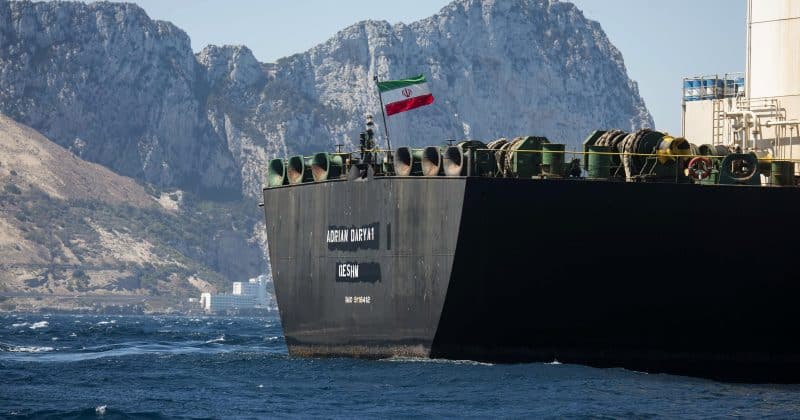
The headline outcome is the reopening of the Strait of Hormuz to Iranian oil tankers. That matters because the Strait handles roughly one-fifth of the world’s oil and gas shipments.

Advertisement

The conflict that led to the blockade began in late February or early March 2026 and had severely disrupted shipping through the Strait. With that pressure now easing, oil prices hit a three-month low almost immediately after the announcement.

The MOU is deliberately vague on the hard stuff. Sanctions relief, nuclear limitations, the fate of frozen assets: all of that gets punted to the 60-day negotiation period. Pakistan played a mediating role in getting the parties to the table, and Israel’s involvement continues to complicate the broader geopolitical picture.

Why oil traders moved first and what crypto should learn from it

Traditional energy markets didn’t wait for the formal signing. The $4-plus drop in oil prices reflects traders pricing in a near-term supply glut. Iran was a major oil exporter before the conflict, and the expectation of those barrels returning to the market is enough to push prices down even before a single tanker clears the Strait.

No direct correlation between the MOU and crypto prices has been reported. But historical patterns tell a consistent story: oil price swings create second-order effects that ripple into risk assets, including cryptocurrencies. Lower energy costs reduce the macroeconomic anxiety that often fuels speculative positioning in crypto markets.

What this means for investors

That said, the deal is far from done. The 60-day negotiation window is packed with potential landmines. Disagreements over Iran’s nuclear program have torpedoed previous diplomatic efforts multiple times. The question of $25B in frozen assets is politically explosive on both sides. And Israel’s role, which the research describes as “complicating matters further,” introduces a wildcard that could unravel the entire framework before the ink dries.

The smarter play might be to watch the June 19 formal signing as a signal. If it goes smoothly, the 60-day clock starts ticking and markets will price in gradual normalization.

Disclosure: This article was edited by Editorial Team. For more information on how we create and review content, see our Editorial Policy.

Iran can resume oil sales under Trump’s deal to end war, and crypto markets are watching closely

Iran can resume oil sales under Trump’s deal to end war, and crypto markets are watching closely

A tentative US-Iran agreement to lift the naval blockade sent oil prices tumbling and raised questions about what cheaper energy means for Bitcoin and risk assets.

Oil prices cratered more than $4 per barrel after the US and Iran announced a tentative deal that would immediately restart Iranian oil exports.

The memorandum of understanding, announced around June 14-15 by President Donald Trump alongside Iranian officials including Parliament Speaker Mohammad Bagher Qalibaf, calls for an immediate lifting of the US naval blockade on Iranian ports. A formal signing is expected on June 19, kicking off a 60-day negotiation window that will tackle the thornier issues of sanctions relief, up to $25B in frozen Iranian assets, and nuclear program limitations.

What the deal actually does

The headline outcome is the reopening of the Strait of Hormuz to Iranian oil tankers. That matters because the Strait handles roughly one-fifth of the world’s oil and gas shipments.

Advertisement

The conflict that led to the blockade began in late February or early March 2026 and had severely disrupted shipping through the Strait. With that pressure now easing, oil prices hit a three-month low almost immediately after the announcement.

The MOU is deliberately vague on the hard stuff. Sanctions relief, nuclear limitations, the fate of frozen assets: all of that gets punted to the 60-day negotiation period. Pakistan played a mediating role in getting the parties to the table, and Israel’s involvement continues to complicate the broader geopolitical picture.

Why oil traders moved first and what crypto should learn from it

Traditional energy markets didn’t wait for the formal signing. The $4-plus drop in oil prices reflects traders pricing in a near-term supply glut. Iran was a major oil exporter before the conflict, and the expectation of those barrels returning to the market is enough to push prices down even before a single tanker clears the Strait.

No direct correlation between the MOU and crypto prices has been reported. But historical patterns tell a consistent story: oil price swings create second-order effects that ripple into risk assets, including cryptocurrencies. Lower energy costs reduce the macroeconomic anxiety that often fuels speculative positioning in crypto markets.

What this means for investors

That said, the deal is far from done. The 60-day negotiation window is packed with potential landmines. Disagreements over Iran’s nuclear program have torpedoed previous diplomatic efforts multiple times. The question of $25B in frozen assets is politically explosive on both sides. And Israel’s role, which the research describes as “complicating matters further,” introduces a wildcard that could unravel the entire framework before the ink dries.

The smarter play might be to watch the June 19 formal signing as a signal. If it goes smoothly, the 60-day clock starts ticking and markets will price in gradual normalization.

Disclosure: This article was edited by Editorial Team. For more information on how we create and review content, see our Editorial Policy.