
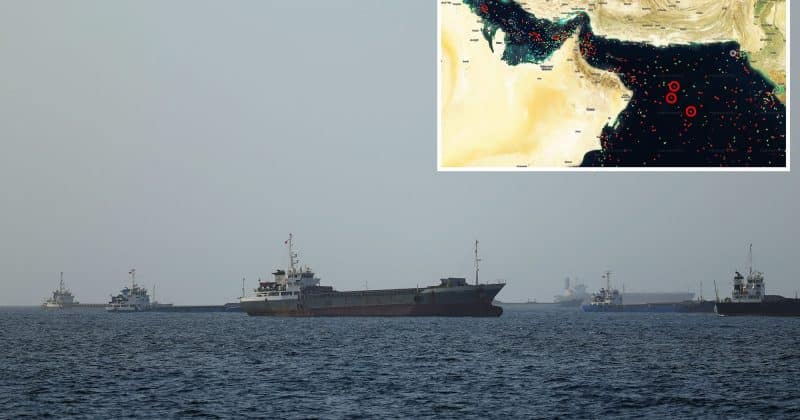
Iran ships 20 million barrels of oil in a single day, but markets barely flinch

Iran ships 20 million barrels of oil in a single day, but markets barely flinch

The massive crude export surge follows a partial lifting of the US naval blockade and an interim deal with the Trump administration

Iran just moved enough oil to fill roughly 1,270 Olympic swimming pools in a single day. According to TankerTrackers data, the country shipped out 20 million barrels of crude last Friday, a staggering volume that roughly matches the total daily flow through the Strait of Hormuz on a normal day.

What happened and why it matters

The massive shipment is part of a broader export surge that’s been building over the past week. TankerTrackers reported that 36 million barrels of Iranian crude were exported between June 15 and June 21, with 11 tankers departing from Chabahar port during that stretch.

Among the vessels involved were tankers named Diona, Hero II, and Sonia I, each carrying between 3.8 and 5 million barrels. These are supertankers operated by the National Iranian Tanker Company (NITC), and their movement through the Strait of Hormuz marks the first significant crude loadings from Iran in roughly two months.

Advertisement

The US imposed a naval blockade on Iran starting April 13, 2026, effectively choking off the country’s ability to export oil. That blockade has now been partially lifted following an interim agreement between Iran and the Trump administration.

The Strait of Hormuz, the narrow waterway between Iran and Oman, typically handles around 20 million barrels per day of global oil trade. So Iran alone, in one day, matched the strait’s entire usual throughput.

The strange silence from oil markets

Despite 36 million barrels of previously sanctioned crude flooding onto global markets, oil prices have barely reacted. China, historically Iran’s largest crude customer, has shown weaker demand signals.

Additional volumes remain in floating storage aboard ships, meaning more Iranian crude could enter the market in the coming weeks.

The geopolitical backdrop

The US naval blockade imposed in mid-April was one of the most aggressive enforcement actions against Iranian oil in recent memory, going beyond sanctions to physically restrict tanker movement. The details of the interim agreement haven’t been fully disclosed, but the practical effect is clear: NITC supertankers are now transiting the Strait of Hormuz again, and Iranian crude is flowing.

The speed of the export ramp, from zero to 36 million barrels in a week, suggests Iran had been preparing for this moment. Ships were loaded and ready.

What this means for investors

Watch China’s import data over the next few weeks. If Chinese refiners aren’t buying Iranian crude at these volumes, the barrels will end up back in floating storage.

Disclosure: This article was edited by Editorial Team. For more information on how we create and review content, see our Editorial Policy.

Iran ships 20 million barrels of oil in a single day, but markets barely flinch

Iran ships 20 million barrels of oil in a single day, but markets barely flinch

The massive crude export surge follows a partial lifting of the US naval blockade and an interim deal with the Trump administration

Iran just moved enough oil to fill roughly 1,270 Olympic swimming pools in a single day. According to TankerTrackers data, the country shipped out 20 million barrels of crude last Friday, a staggering volume that roughly matches the total daily flow through the Strait of Hormuz on a normal day.

What happened and why it matters

The massive shipment is part of a broader export surge that’s been building over the past week. TankerTrackers reported that 36 million barrels of Iranian crude were exported between June 15 and June 21, with 11 tankers departing from Chabahar port during that stretch.

Among the vessels involved were tankers named Diona, Hero II, and Sonia I, each carrying between 3.8 and 5 million barrels. These are supertankers operated by the National Iranian Tanker Company (NITC), and their movement through the Strait of Hormuz marks the first significant crude loadings from Iran in roughly two months.

Advertisement

The US imposed a naval blockade on Iran starting April 13, 2026, effectively choking off the country’s ability to export oil. That blockade has now been partially lifted following an interim agreement between Iran and the Trump administration.

The Strait of Hormuz, the narrow waterway between Iran and Oman, typically handles around 20 million barrels per day of global oil trade. So Iran alone, in one day, matched the strait’s entire usual throughput.

The strange silence from oil markets

Despite 36 million barrels of previously sanctioned crude flooding onto global markets, oil prices have barely reacted. China, historically Iran’s largest crude customer, has shown weaker demand signals.

Additional volumes remain in floating storage aboard ships, meaning more Iranian crude could enter the market in the coming weeks.

The geopolitical backdrop

The US naval blockade imposed in mid-April was one of the most aggressive enforcement actions against Iranian oil in recent memory, going beyond sanctions to physically restrict tanker movement. The details of the interim agreement haven’t been fully disclosed, but the practical effect is clear: NITC supertankers are now transiting the Strait of Hormuz again, and Iranian crude is flowing.

The speed of the export ramp, from zero to 36 million barrels in a week, suggests Iran had been preparing for this moment. Ships were loaded and ready.

What this means for investors

Watch China’s import data over the next few weeks. If Chinese refiners aren’t buying Iranian crude at these volumes, the barrels will end up back in floating storage.

Disclosure: This article was edited by Editorial Team. For more information on how we create and review content, see our Editorial Policy.