
Nexo Earn with Nexo
Iranian national soccer team trains in Tijuana amid World Cup conflict with US

Iranian national soccer team trains in Tijuana amid World Cup conflict with US

Visa denials forced Iran to abandon its Arizona base camp, relocating across the border while navigating same-day entry rules for US-hosted matches.

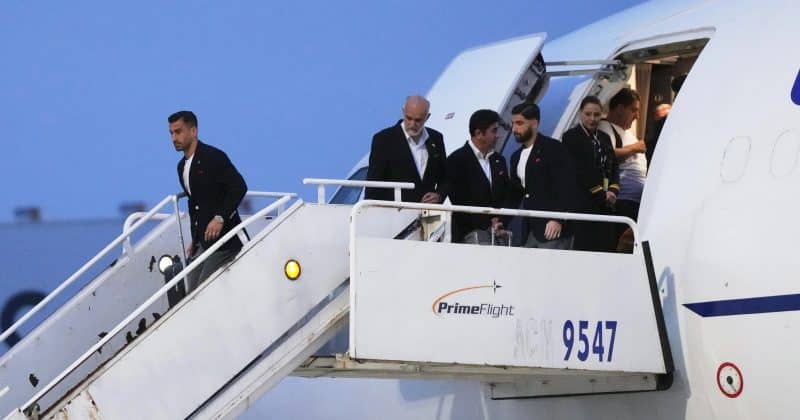
Iran’s national soccer team landed at Tijuana International Airport on June 7, setting up camp just south of the US border for the 2026 FIFA World Cup. The team was supposed to be in Tucson, Arizona. Instead, an active military conflict between the United States and Iran made that plan untenable.

Iran will still play its three group-stage matches on US soil, but the team must enter and exit American territory on the same day for each game.

From Tucson to Tijuana: how it unraveled

Iran originally planned to base itself in Tucson, a logical choice given the proximity to World Cup venues. That fell apart when some team members were denied US visas, a direct consequence of the ongoing military tensions between Washington and Tehran. Iran’s football federation publicly criticized the US for what it called “obstruction.”

Advertisement

The solution was Centro Xoloitzcuintle in Tijuana, Baja California. FIFA confirmed the facility as Iran’s official base camp for the tournament. Before arriving in Mexico, the squad had been training in Antalya, Turkey. Captain Ehsan Haji Safi was among the players who touched down in Tijuana, where fans and members of the local Iranian expat community greeted the team at the airport.

Same-day entry: the logistics nightmare

Every group-stage match will involve a border crossing into the United States, the game itself, and an immediate return to Mexico. That means no pre-match overnight stays near the venue.

For context, the 2026 World Cup is spread across the US, Mexico, and Canada. Most participating nations don’t face anything resembling this kind of restriction.

Geopolitics on the pitch

FIFA’s role here is worth examining. The governing body confirmed Tijuana as Iran’s base camp, effectively accommodating the situation rather than confronting it. The same-day entry-and-exit arrangement appears to be a compromise brokered between FIFA, US authorities, and the Iranian federation.

What this means for the tournament and beyond

Centro Xoloitzcuintle, home of the Club Tijuana Xoloitzcuintles, is a professional-grade facility. The training infrastructure itself is not the problem. The problem is everything that happens between the training ground and the match venues across the border, and the geopolitical reality that turned a straightforward World Cup preparation into a cross-border diplomatic exercise.

Disclosure: This article was edited by Editorial Team. For more information on how we create and review content, see our Editorial Policy.

Iranian national soccer team trains in Tijuana amid World Cup conflict with US

Iranian national soccer team trains in Tijuana amid World Cup conflict with US

Visa denials forced Iran to abandon its Arizona base camp, relocating across the border while navigating same-day entry rules for US-hosted matches.

Iran’s national soccer team landed at Tijuana International Airport on June 7, setting up camp just south of the US border for the 2026 FIFA World Cup. The team was supposed to be in Tucson, Arizona. Instead, an active military conflict between the United States and Iran made that plan untenable.

Iran will still play its three group-stage matches on US soil, but the team must enter and exit American territory on the same day for each game.

From Tucson to Tijuana: how it unraveled

Iran originally planned to base itself in Tucson, a logical choice given the proximity to World Cup venues. That fell apart when some team members were denied US visas, a direct consequence of the ongoing military tensions between Washington and Tehran. Iran’s football federation publicly criticized the US for what it called “obstruction.”

Advertisement

The solution was Centro Xoloitzcuintle in Tijuana, Baja California. FIFA confirmed the facility as Iran’s official base camp for the tournament. Before arriving in Mexico, the squad had been training in Antalya, Turkey. Captain Ehsan Haji Safi was among the players who touched down in Tijuana, where fans and members of the local Iranian expat community greeted the team at the airport.

Same-day entry: the logistics nightmare

Every group-stage match will involve a border crossing into the United States, the game itself, and an immediate return to Mexico. That means no pre-match overnight stays near the venue.

For context, the 2026 World Cup is spread across the US, Mexico, and Canada. Most participating nations don’t face anything resembling this kind of restriction.

Geopolitics on the pitch

FIFA’s role here is worth examining. The governing body confirmed Tijuana as Iran’s base camp, effectively accommodating the situation rather than confronting it. The same-day entry-and-exit arrangement appears to be a compromise brokered between FIFA, US authorities, and the Iranian federation.

What this means for the tournament and beyond

Centro Xoloitzcuintle, home of the Club Tijuana Xoloitzcuintles, is a professional-grade facility. The training infrastructure itself is not the problem. The problem is everything that happens between the training ground and the match venues across the border, and the geopolitical reality that turned a straightforward World Cup preparation into a cross-border diplomatic exercise.

Disclosure: This article was edited by Editorial Team. For more information on how we create and review content, see our Editorial Policy.