
Nexo Earn with Nexo
Iran closes Strait of Hormuz and launches missile attacks as US-Iran conflict reshapes crypto markets

Iran closes Strait of Hormuz and launches missile attacks as US-Iran conflict reshapes crypto markets

Iran's retaliatory strikes and Bitcoin-based sanctions evasion have drawn the US Treasury into a $344M crypto freeze, while geopolitical chaos sends Bitcoin below $80K

The world’s most important oil chokepoint is now a battlefield, and the fallout is rippling through crypto markets in ways nobody predicted a year ago.

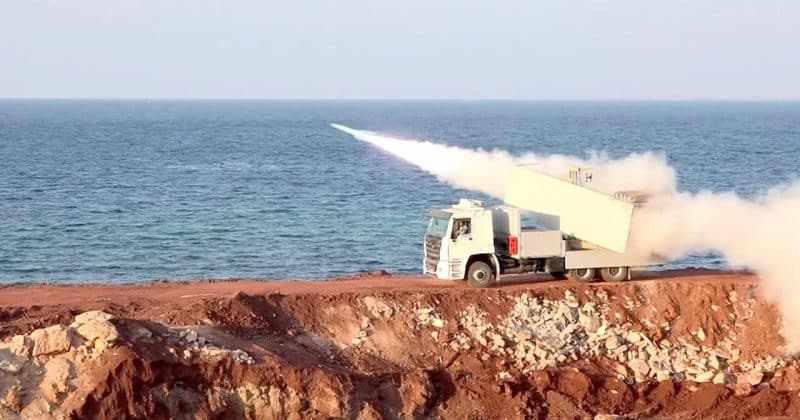
Nour News reported on June 10, 2026, that Iran’s military response to US strikes on installations in Hormozgan province included retaliatory missile attacks on American military facilities, damage to a US naval vessel, the forced withdrawal of a US F-16, and the closure of the Strait of Hormuz. Iran also claims to have struck the US Fifth Fleet headquarters in Bahrain and the Al-Azraq Air Base.

The Strait, the strikes, and the standoff

The Strait of Hormuz handles roughly a fifth of the world’s daily oil consumption.

Advertisement

Iran has been tightening its grip on the waterway since early 2026, declaring restrictions and closures at strategic points during March and April that significantly reduced shipping traffic. The Iranian government has emphasized that the strait is not fully sealed as of June 2026, though partial closures have clearly had an effect.

US forces responded with what the Pentagon has characterized as self-defense strikes on Iranian missile sites and drone installations throughout May and early June. De-escalation talks in Qatar have produced some cautiously optimistic signals, but the situation remains fluid.

Bitcoin as a sanctions weapon

Iran has reportedly begun requiring Bitcoin payments for transit tolls and shipping insurance when vessels pass through the Strait of Hormuz. The strategy, implemented since around April 2026, is a direct attempt to circumvent US sanctions by operating outside the traditional financial system.

The US Treasury was not amused. American authorities have taken action against digital wallets associated with Iran’s toll collection scheme, freezing approximately $344 million in cryptocurrency linked to the Iranian government.

Market impact: Bitcoin’s geopolitical stress test

Bitcoin briefly dipped below $80,000 on May 26, 2026, as reports of escalating tensions hit the wires. The decline was sharp but temporary, with prices stabilizing after de-escalation signals emerged from the Qatar talks.

When a nation-state adopts Bitcoin as an explicit tool to circumvent sanctions, the digital asset becomes part of the geopolitical chess game rather than a bystander. That dual role creates contradictory price pressures. On one hand, conflict-driven fear pushes traders toward risk-off positions. On the other, Iran’s adoption signals broader sovereign-level demand for Bitcoin as a financial instrument.

The $344 million Treasury freeze also introduces regulatory risk that investors need to weigh. If Bitcoin becomes closely associated with sanctions evasion in Washington’s eyes, the regulatory response could extend well beyond freezing specific wallets. Broader compliance requirements, stricter KYC enforcement on exchanges, or even restrictions on certain transaction types are all on the table.

Disclosure: This article was edited by Editorial Team. For more information on how we create and review content, see our Editorial Policy.

Iran closes Strait of Hormuz and launches missile attacks as US-Iran conflict reshapes crypto markets

Iran closes Strait of Hormuz and launches missile attacks as US-Iran conflict reshapes crypto markets

Iran's retaliatory strikes and Bitcoin-based sanctions evasion have drawn the US Treasury into a $344M crypto freeze, while geopolitical chaos sends Bitcoin below $80K

The world’s most important oil chokepoint is now a battlefield, and the fallout is rippling through crypto markets in ways nobody predicted a year ago.

Nour News reported on June 10, 2026, that Iran’s military response to US strikes on installations in Hormozgan province included retaliatory missile attacks on American military facilities, damage to a US naval vessel, the forced withdrawal of a US F-16, and the closure of the Strait of Hormuz. Iran also claims to have struck the US Fifth Fleet headquarters in Bahrain and the Al-Azraq Air Base.

The Strait, the strikes, and the standoff

The Strait of Hormuz handles roughly a fifth of the world’s daily oil consumption.

Advertisement

Iran has been tightening its grip on the waterway since early 2026, declaring restrictions and closures at strategic points during March and April that significantly reduced shipping traffic. The Iranian government has emphasized that the strait is not fully sealed as of June 2026, though partial closures have clearly had an effect.

US forces responded with what the Pentagon has characterized as self-defense strikes on Iranian missile sites and drone installations throughout May and early June. De-escalation talks in Qatar have produced some cautiously optimistic signals, but the situation remains fluid.

Bitcoin as a sanctions weapon

Iran has reportedly begun requiring Bitcoin payments for transit tolls and shipping insurance when vessels pass through the Strait of Hormuz. The strategy, implemented since around April 2026, is a direct attempt to circumvent US sanctions by operating outside the traditional financial system.

The US Treasury was not amused. American authorities have taken action against digital wallets associated with Iran’s toll collection scheme, freezing approximately $344 million in cryptocurrency linked to the Iranian government.

Market impact: Bitcoin’s geopolitical stress test

Bitcoin briefly dipped below $80,000 on May 26, 2026, as reports of escalating tensions hit the wires. The decline was sharp but temporary, with prices stabilizing after de-escalation signals emerged from the Qatar talks.

When a nation-state adopts Bitcoin as an explicit tool to circumvent sanctions, the digital asset becomes part of the geopolitical chess game rather than a bystander. That dual role creates contradictory price pressures. On one hand, conflict-driven fear pushes traders toward risk-off positions. On the other, Iran’s adoption signals broader sovereign-level demand for Bitcoin as a financial instrument.

The $344 million Treasury freeze also introduces regulatory risk that investors need to weigh. If Bitcoin becomes closely associated with sanctions evasion in Washington’s eyes, the regulatory response could extend well beyond freezing specific wallets. Broader compliance requirements, stricter KYC enforcement on exchanges, or even restrictions on certain transaction types are all on the table.

Disclosure: This article was edited by Editorial Team. For more information on how we create and review content, see our Editorial Policy.