
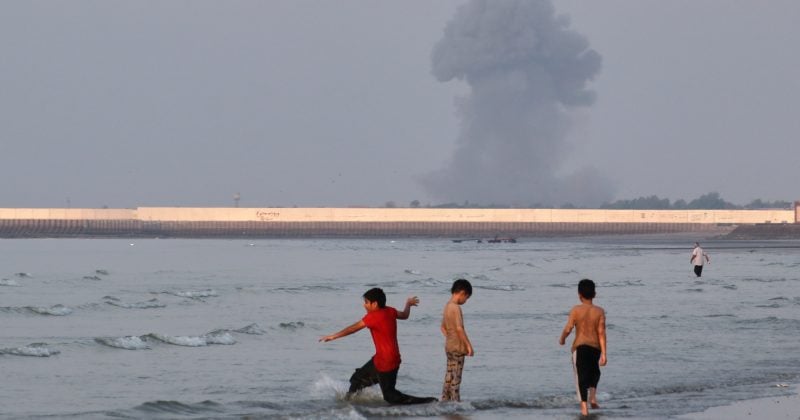
Iran vows to keep Strait of Hormuz closed after US strikes, and crypto markets barely flinch
The world's most important oil chokepoint is shut down, but Bitcoin's reaction tells a story about how crypto processes geopolitical risk in 2026
Iran declared the Strait of Hormuz closed “until further notice” after the US conducted its third round of airstrikes on Iranian targets in a single week. Roughly one-fifth of the world’s oil supply passes through that narrow waterway.
Bitcoin, apparently, did not get the memo. The largest cryptocurrency was trading near $63,800, down a mere 0.3% over 24 hours. The rest of the major coins were equally unbothered.
What actually happened in the strait
The US strikes on July 11-12, 2026, targeted sites connected to attacks on commercial vessels. This was not a one-off. It was the third escalation in seven days.
Iran’s response was to shut down the most strategically important maritime chokepoint on the planet. Vessel tracking data confirmed the announcement wasn’t just rhetoric. Traffic through the strait dropped significantly below normal levels, with only limited ship movements observed.
Ships were spotted sailing off the UAE coast, rerouting around the blockade. The Strait of Hormuz is about 21 miles wide at its narrowest point, sitting between Iran and Oman.
Iranian state media reported explosions at southern energy installations, painting a picture of sustained damage to infrastructure that matters for both domestic production and export capacity.
Macro, rates, and crypto—what moved markets and what matters next.
Daily. Free. Join 34,000+ readers across crypto, finance, and policy.
Crypto’s strange calm
Earlier rounds of US-Iran escalation this year produced very different market reactions. When tensions first spiked, Brent crude surged past $100 per barrel and crypto markets experienced significant sell-offs.
This time, the playbook broke. Ether was holding near $1,800. XRP sat at roughly $1.09. Solana traded around $76. Daily fluctuations across the board were negligible.
One possible explanation is timing. The latest military actions were reported over the weekend, when crypto trading volumes tend to thin out and institutional participation drops.
Where the smart money is actually trading this
Prediction market contracts on Polymarket forecasting whether the Strait of Hormuz stays closed or normalizes have generated substantial trading volume. Those contracts fluctuated sharply after each round of airstrikes was announced.
Polymarket contracts were repricing in near real-time as strike reports emerged, functioning as a crowdsourced intelligence estimate on the conflict’s trajectory.
Rising oil prices typically strengthen the dollar, and a strong dollar has historically been a drag on crypto valuations. Prolonged oil price spikes feed into inflation expectations, which feed into central bank hawkishness, which feeds into tighter financial conditions.