
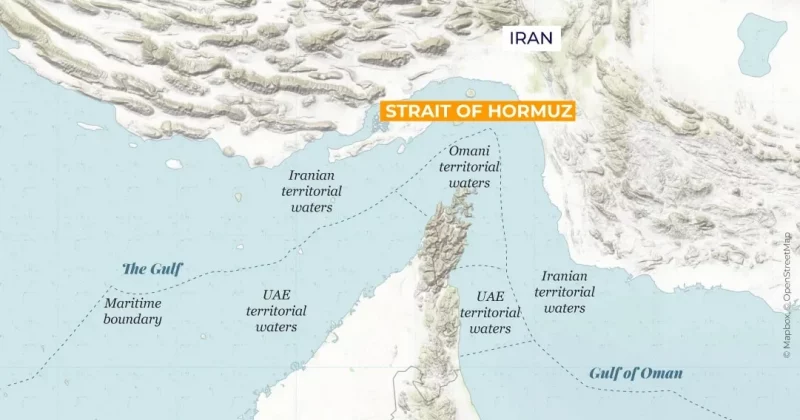
Iran consolidates control over Strait of Hormuz, creating energy crisis that ripples across crypto markets
The world's most critical oil chokepoint is now operating under Iranian-imposed transit rules, with vessel traffic dropping over 85% and crude supply gaps reaching millions of barrels per day.
The narrow waterway between Iran and Oman that roughly 20% of the world’s traded oil passes through is no longer operating under the principle of free navigation. Iran has established a new mechanism for regulating ship passage through the Strait of Hormuz, effectively turning one of the planet’s most important trade arteries into a toll road with geopolitical strings attached.
The consequences are already severe. Traffic through the strait has plummeted from around 150 vessels per day to fewer than 20, with many ships anchoring rather than risking the crossing. The global energy market is now missing approximately 11 million barrels per day of crude supply.
Coercive access, not a blockade
Iran’s approach is not a traditional blockade. Instead, Iran has opted for a system best described as coercive access management. Reports indicate transit fees exceeding $1 million per vessel in some situations, transforming what was once a free international waterway into a revenue stream backed by naval pressure.
Shipping companies are making rational decisions to avoid the strait entirely, rerouting around the Cape of Good Hope or simply keeping vessels at anchor until the situation clarifies. That 85%-plus drop in daily vessel traffic tells the story more clearly than any diplomatic statement could.
Why 11 million barrels matters
The strait also handles a significant volume of liquefied natural gas shipments, meaning the disruption extends well beyond crude oil. Countries in Asia that depend heavily on LNG imports, particularly Japan, South Korea, and parts of Southeast Asia, face acute supply pressure that alternative routes cannot fully offset. Rerouting around Africa adds weeks to delivery times and dramatically increases shipping costs.
The crypto connection
The thesis for digital assets in 2025 has largely rested on expectations of loosening monetary policy, improving liquidity conditions, and a gradual normalization of risk appetite. An energy crisis of this scale threatens all three pillars simultaneously. Higher energy costs mean stickier inflation. Stickier inflation means rates stay elevated for longer. Elevated rates mean tighter liquidity, which historically correlates with underperformance in high-beta assets like crypto.
Bitcoin’s performance during the initial COVID crash, the Russia-Ukraine escalation, and various banking crises suggests it trades as a risk asset first and a hedge second, at least in the short term.
For crypto investors watching this situation, the key variables to track are crude oil futures, inflation breakeven rates, and any signals from the Federal Reserve about adjusting its rate path in response to energy-driven inflation.