
Nexo Earn with Nexo
Iran strikes US air base in Kuwait after Trump dismisses Hormuz deal, rattling global markets

Iran strikes US air base in Kuwait after Trump dismisses Hormuz deal, rattling global markets

The IRGC claimed responsibility for drone attacks on Ali Al Salem Air Base, escalating a conflict that threatens oil flows and is already pushing investors toward safe-haven assets including crypto.

Iran’s Islamic Revolutionary Guard Corps launched drone strikes against a US air base in Kuwait early Wednesday morning. The attack came hours after President Trump publicly rejected a proposed deal, brokered through Oman, that aimed to restore normal shipping through the Strait of Hormuz.

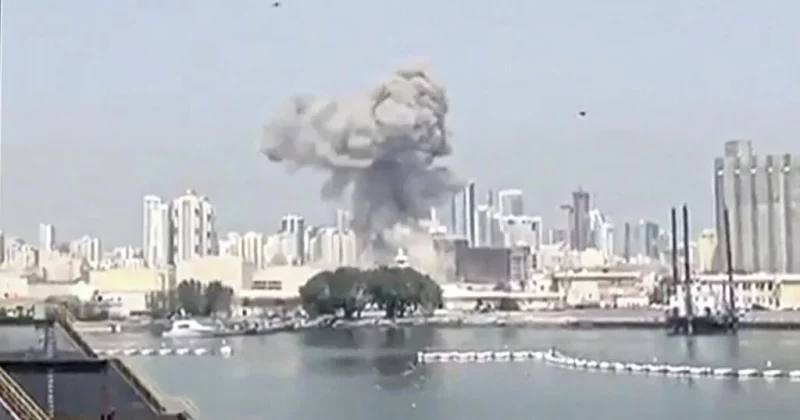
The IRGC said its strikes hit Ali Al Salem Air Base at 4:50 a.m. local time on May 28. Kuwait reported intercepting hostile drones and missiles targeting the facility, though the full extent of damage remains unclear.

What happened and why it matters

The US conducted airstrikes on Iranian drone positions near the Strait of Hormuz. Iran retaliated by hitting the US air base in Kuwait. Trump dismissed reports of a compromise deal for managing Hormuz traffic, calling them fabricated.

Advertisement

This is now the second major clash since the April ceasefire, a ceasefire that followed intense hostilities earlier in 2026 involving Iranian drone attacks on multiple US bases across the Gulf.

The Strait of Hormuz is a vital chokepoint through which roughly 20% of the world’s total petroleum passes. Any prolonged disruption there doesn’t just affect energy markets. It ripples through every asset class on the planet, from equities to commodities to crypto.

The crypto angle: safe havens and sentiment shifts

If oil prices surge because traders price in a prolonged conflict or actual disruption to Hormuz shipping lanes, broader risk-off sentiment can initially drag everything down, crypto included. But sustained geopolitical tension tends to benefit Bitcoin’s narrative as a non-sovereign store of value, particularly among investors in regions directly affected by the conflict.

Commodity price spikes feed inflation expectations, and inflation expectations have been one of the most reliable drivers of institutional interest in Bitcoin over the past several years.

What investors should watch

For crypto specifically, watch Bitcoin’s correlation with gold over the next few weeks. During the early stages of the 2026 Iran conflict, Bitcoin showed periods of moving in tandem with gold rather than with risk assets like tech stocks.

Also worth monitoring: stablecoin flows in the Middle East and South Asia. Tether (USDT) volumes on peer-to-peer platforms in affected regions have historically been a leading indicator of how seriously local populations are taking the instability.

Trump’s rejection of the Oman-brokered deal is the detail that should concern investors most. The April ceasefire lasted roughly a month before falling apart. With the US and Iran now trading strikes and the most promising peace framework publicly dismissed by the American president, the window for de-escalation is narrower than it was 48 hours ago.

Disclosure: This article was edited by Editorial Team. For more information on how we create and review content, see our Editorial Policy.

Iran strikes US air base in Kuwait after Trump dismisses Hormuz deal, rattling global markets

Iran strikes US air base in Kuwait after Trump dismisses Hormuz deal, rattling global markets

The IRGC claimed responsibility for drone attacks on Ali Al Salem Air Base, escalating a conflict that threatens oil flows and is already pushing investors toward safe-haven assets including crypto.

Iran’s Islamic Revolutionary Guard Corps launched drone strikes against a US air base in Kuwait early Wednesday morning. The attack came hours after President Trump publicly rejected a proposed deal, brokered through Oman, that aimed to restore normal shipping through the Strait of Hormuz.

The IRGC said its strikes hit Ali Al Salem Air Base at 4:50 a.m. local time on May 28. Kuwait reported intercepting hostile drones and missiles targeting the facility, though the full extent of damage remains unclear.

What happened and why it matters

The US conducted airstrikes on Iranian drone positions near the Strait of Hormuz. Iran retaliated by hitting the US air base in Kuwait. Trump dismissed reports of a compromise deal for managing Hormuz traffic, calling them fabricated.

Advertisement

This is now the second major clash since the April ceasefire, a ceasefire that followed intense hostilities earlier in 2026 involving Iranian drone attacks on multiple US bases across the Gulf.

The Strait of Hormuz is a vital chokepoint through which roughly 20% of the world’s total petroleum passes. Any prolonged disruption there doesn’t just affect energy markets. It ripples through every asset class on the planet, from equities to commodities to crypto.

The crypto angle: safe havens and sentiment shifts

If oil prices surge because traders price in a prolonged conflict or actual disruption to Hormuz shipping lanes, broader risk-off sentiment can initially drag everything down, crypto included. But sustained geopolitical tension tends to benefit Bitcoin’s narrative as a non-sovereign store of value, particularly among investors in regions directly affected by the conflict.

Commodity price spikes feed inflation expectations, and inflation expectations have been one of the most reliable drivers of institutional interest in Bitcoin over the past several years.

What investors should watch

For crypto specifically, watch Bitcoin’s correlation with gold over the next few weeks. During the early stages of the 2026 Iran conflict, Bitcoin showed periods of moving in tandem with gold rather than with risk assets like tech stocks.

Also worth monitoring: stablecoin flows in the Middle East and South Asia. Tether (USDT) volumes on peer-to-peer platforms in affected regions have historically been a leading indicator of how seriously local populations are taking the instability.

Trump’s rejection of the Oman-brokered deal is the detail that should concern investors most. The April ceasefire lasted roughly a month before falling apart. With the US and Iran now trading strikes and the most promising peace framework publicly dismissed by the American president, the window for de-escalation is narrower than it was 48 hours ago.

Disclosure: This article was edited by Editorial Team. For more information on how we create and review content, see our Editorial Policy.