
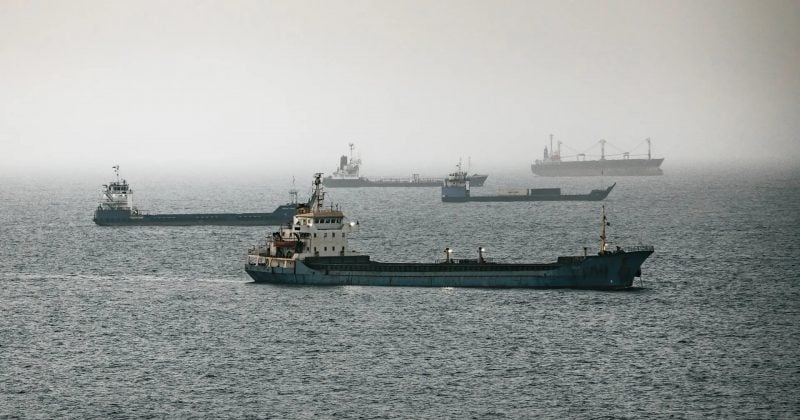
US Central Command accuses Iran of targeting seven commercial ships as crypto enters the Strait of Hormuz
Military escalation in one of the world's most critical shipping lanes is colliding with an unexpected twist: Iran reportedly demanding Bitcoin for passage fees.
US Central Command has accused Iran of targeting commercial ships and launching missiles and drones toward Persian Gulf countries, marking a significant escalation in a waterway that handles roughly a third of the world’s seaborne oil trade.
Iran has reportedly begun demanding Bitcoin fees from vessels seeking passage approval through the strait, charging approximately $1 per barrel.
What’s happening in the strait
CENTCOM executed at least three waves of precision strikes targeting Iranian military infrastructure in early-to-mid July 2026. The targets included Iranian air defenses, missile sites, coastal radar systems, and Islamic Revolutionary Guard Corps small boats stationed at key ports like Bushehr and Bandar Abbas.
The strikes came in direct response to Iranian attacks on commercial vessels. Among the ships hit was the Cyprus-flagged container ship M/V GFS Galaxy, which sustained fire damage and had a crew member go missing. Iran also declared the Strait of Hormuz closed and launched retaliatory measures against US and allied positions in the region.
CENTCOM hit over 60 IRGC small boats and struck missile and drone infrastructure across multiple sites, including Bushehr, Chabahar, Jask, and Bandar Abbas.
The news moving money, markets, and the world—before your day starts.
Daily. Free. Join 34,000+ readers across crypto, finance, and policy.
The Bitcoin toll booth
Iran has reportedly mandated Bitcoin fees for ships passing through the Strait of Hormuz, charging $1 per barrel as a transit toll payable in BTC. For a country under heavy international sanctions, the logic is straightforward: traditional banking rails are largely closed to Tehran, but Bitcoin transactions don’t require SWIFT access or correspondent banking relationships.
Iran has previously explored crypto mining as a revenue strategy, leveraging its subsidized electricity to run large-scale operations. Demanding Bitcoin as a maritime toll fee transforms a geopolitical chokepoint into a forced-adoption mechanism for cryptocurrency.
Markets shrug, and that might be the story
Bitcoin traded at approximately $63,800 during the escalation, reflecting only minor daily fluctuations.
The Iran Bitcoin toll demand could trigger regulatory responses from Western governments. Treasury departments in the US and EU have been increasingly focused on crypto’s role in sanctions circumvention. A high-profile case of a nation-state using Bitcoin to monetize control of a shipping lane would give regulators exactly the ammunition they’ve been looking for to push stricter compliance requirements on exchanges and on-chain transaction monitoring.