
Nexo Earn with Nexo
Iran allegedly shoots down US Army Apache helicopter near Oman, triggering retaliatory strikes

Iran allegedly shoots down US Army Apache helicopter near Oman, triggering retaliatory strikes

Both crew members were rescued unharmed by an unmanned drone boat in what officials describe as a first-of-its-kind sea operation.

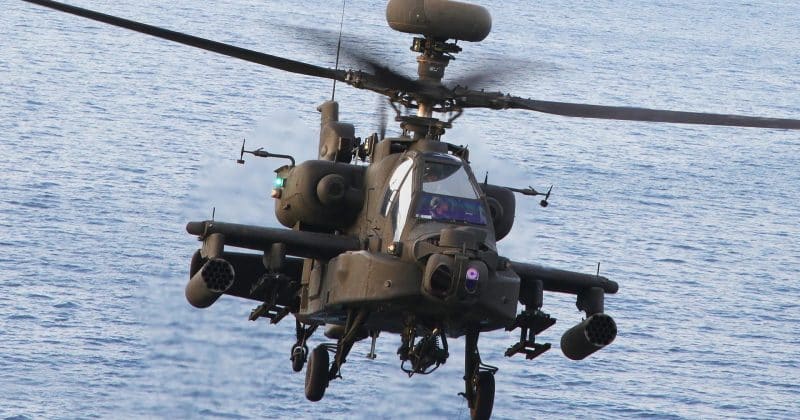
An American AH-64 Apache attack helicopter went down near the coast of Oman on June 8, with US officials attributing the incident to an Iranian drone strike. The helicopter was operating on patrol near the strategically vital Strait of Hormuz when it was reportedly hit, marking one of the most direct military confrontations between the US and Iran in recent memory.

President Donald Trump confirmed via Truth Social that Iranian forces shot down the helicopter. Both crew members survived and were rescued unharmed, a detail that may have prevented this from becoming an even more explosive geopolitical flashpoint.

What happened and what came next

The Apache went down around 3:30 a.m. local time during what officials described as a patrol operation. Pentagon and US Central Command officials believe the helicopter was struck by an Iranian drone, likely a Shahed model, the same family of one-way attack drones that Iran has exported to Russia for use in Ukraine and deployed through its regional proxy networks.

The rescue operation itself was notable. Both crew members were pulled from the water by an unmanned drone boat, which officials say represents the first reported sea rescue of its kind.

Advertisement

CENTCOM did not wait long to respond. On June 9 at 5 p.m. ET, the command launched retaliatory strikes against Iran, characterizing the action as self-defense against what it called unjustified aggression.

In the days leading up to the incident, Iran had claimed it targeted the command center of a US military vessel operating in the region. CENTCOM dismissed that claim outright.

The Strait of Hormuz, a perennial pressure point

The geography matters here. The Strait of Hormuz is a narrow waterway between Iran and Oman through which roughly a fifth of the world’s oil supply passes daily.

The broader context compounds the significance. US-Iran relations have deteriorated sharply amid overlapping conflicts involving Israel and Iranian-backed groups across the Middle East. The helicopter shootdown did not happen in a vacuum. It landed on top of weeks of military exchanges and competing claims between multiple parties in the region.

What this means for markets and geopolitical risk

Oil prices are the most direct transmission mechanism. Any sustained disruption to traffic through the Strait of Hormuz would send energy costs surging, with downstream effects on inflation expectations, central bank policy, and risk appetite across every asset class.

The unmanned drone boat rescue signals that the US military is operationalizing autonomous systems in combat zones faster than most observers expected.

Investors should also consider the political dynamics in Washington. A sitting president confirming a hostile shootdown on social media within hours creates its own momentum, and the speed of CENTCOM’s retaliatory action suggests the administration had no interest in appearing hesitant.

Disclosure: This article was edited by Editorial Team. For more information on how we create and review content, see our Editorial Policy.

Iran allegedly shoots down US Army Apache helicopter near Oman, triggering retaliatory strikes

Iran allegedly shoots down US Army Apache helicopter near Oman, triggering retaliatory strikes

Both crew members were rescued unharmed by an unmanned drone boat in what officials describe as a first-of-its-kind sea operation.

An American AH-64 Apache attack helicopter went down near the coast of Oman on June 8, with US officials attributing the incident to an Iranian drone strike. The helicopter was operating on patrol near the strategically vital Strait of Hormuz when it was reportedly hit, marking one of the most direct military confrontations between the US and Iran in recent memory.

President Donald Trump confirmed via Truth Social that Iranian forces shot down the helicopter. Both crew members survived and were rescued unharmed, a detail that may have prevented this from becoming an even more explosive geopolitical flashpoint.

What happened and what came next

The Apache went down around 3:30 a.m. local time during what officials described as a patrol operation. Pentagon and US Central Command officials believe the helicopter was struck by an Iranian drone, likely a Shahed model, the same family of one-way attack drones that Iran has exported to Russia for use in Ukraine and deployed through its regional proxy networks.

The rescue operation itself was notable. Both crew members were pulled from the water by an unmanned drone boat, which officials say represents the first reported sea rescue of its kind.

Advertisement

CENTCOM did not wait long to respond. On June 9 at 5 p.m. ET, the command launched retaliatory strikes against Iran, characterizing the action as self-defense against what it called unjustified aggression.

In the days leading up to the incident, Iran had claimed it targeted the command center of a US military vessel operating in the region. CENTCOM dismissed that claim outright.

The Strait of Hormuz, a perennial pressure point

The geography matters here. The Strait of Hormuz is a narrow waterway between Iran and Oman through which roughly a fifth of the world’s oil supply passes daily.

The broader context compounds the significance. US-Iran relations have deteriorated sharply amid overlapping conflicts involving Israel and Iranian-backed groups across the Middle East. The helicopter shootdown did not happen in a vacuum. It landed on top of weeks of military exchanges and competing claims between multiple parties in the region.

What this means for markets and geopolitical risk

Oil prices are the most direct transmission mechanism. Any sustained disruption to traffic through the Strait of Hormuz would send energy costs surging, with downstream effects on inflation expectations, central bank policy, and risk appetite across every asset class.

The unmanned drone boat rescue signals that the US military is operationalizing autonomous systems in combat zones faster than most observers expected.

Investors should also consider the political dynamics in Washington. A sitting president confirming a hostile shootdown on social media within hours creates its own momentum, and the speed of CENTCOM’s retaliatory action suggests the administration had no interest in appearing hesitant.

Disclosure: This article was edited by Editorial Team. For more information on how we create and review content, see our Editorial Policy.