
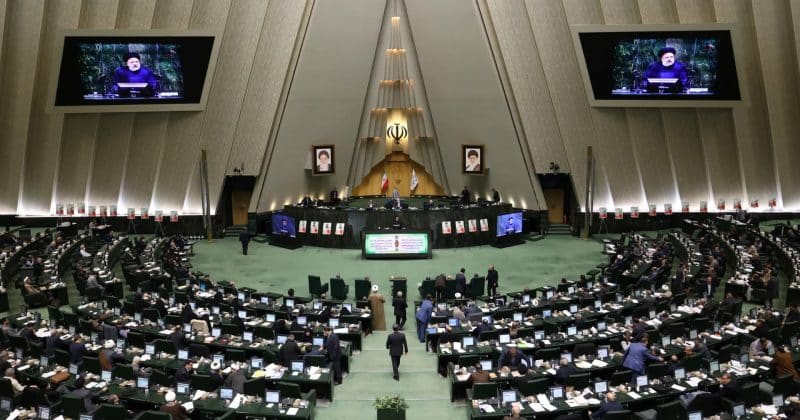
Iranian Parliament Speaker details $300B investment framework with US
The proposed memorandum of understanding would channel private capital into reconstruction efforts, but compliance conditions and unresolved nuclear issues loom large.
Iran’s Parliament Speaker Mohammad Bagher Ghalibaf announced a roughly $300 billion investment framework with the United States on June 15, 2026. The deal, structured as a memorandum of understanding, is aimed at reconstruction and damages from a recent military conflict in the Middle East.
Here’s the thing: the money isn’t coming from American taxpayers. President Trump made that point loudly on the same day, calling any suggestion of direct US government funding “Fake News” and insisting the US is not investing any funds into the framework. The capital is instead expected to flow from private investors and Gulf states.
What the framework actually looks like
The MOU functions as a conditional investment pipeline. US Vice President JD Vance stated that Iran could access the fund if it complies with specific obligations, including ending its nuclear program and accepting inspections.
Over $150 billion has reportedly already been committed from various international investors. The capital is targeting sectors including energy, logistics, and manufacturing.
The agreement also extends a ceasefire for three months while major issues, including control of the Strait of Hormuz, remain under active discussion. Roughly a fifth of the world’s oil passes through it.
Macro, rates, and crypto—what moved markets and what matters next.
Daily. Free. Join 34,000+ readers across crypto, finance, and policy.
The geopolitical backdrop
The fact that Ghalibaf, not Iran’s president or supreme leader, made the announcement is itself notable. As Parliament Speaker, Ghalibaf holds significant political influence but is not the ultimate decision-maker on foreign policy. His framing of the framework as “pivotal for addressing damages incurred during the war” positions it as a necessity rather than a concession, which matters for domestic politics in Tehran.
Trump’s insistence that no taxpayer money is involved serves a parallel domestic purpose. Private capital provides political cover: the US government facilitates without funding.
The compliance conditions create a familiar tension. The 2015 JCPOA collapsed after the US withdrew in 2018, and every subsequent attempt at revival has stalled. Asking Iran to end its nuclear program entirely, rather than merely limit enrichment, sets a higher bar than any previous agreement.
What this means for investors
Iran sits on some of the world’s largest proven oil and natural gas reserves. If sanctions relief accompanies compliance, the return of Iranian crude to global markets could pressure oil prices downward. Gulf states that have committed capital to this framework would be simultaneously funding a competitor in global energy markets.
The three-month ceasefire window is the most important timeline to watch. Critical unresolved issues, particularly around nuclear compliance and Strait of Hormuz control, will determine whether this framework becomes a functioning agreement or an aspirational document. The $150 billion in committed capital suggests serious institutional interest, but committed capital and deployed capital are very different things.