
Iran hardliners protest US-Iran deal, but regime backs agreement as crypto crackdown intensifies

Iran hardliners protest US-Iran deal, but regime backs agreement as crypto crackdown intensifies

The MoU drew death chants from Iranian hardliners, but the ruling elite sees it as a survival mechanism, while US sanctions on Iran's largest crypto exchange reshape the digital asset landscape.

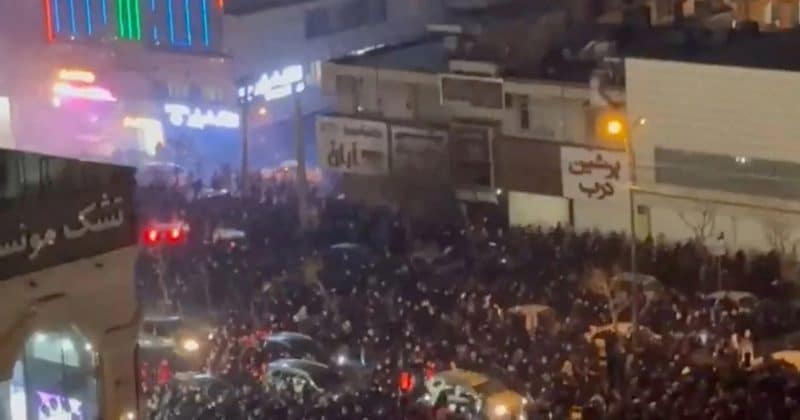
Iran’s ruling establishment is pushing forward with a memorandum of understanding signed with the United States between June 12-15, 2026, even as hardliners within the country have erupted in protest. Death chants directed at chief negotiators Abbas Araghchi and Mohammad Bagher Ghalibaf haven’t shaken the regime’s commitment to a deal it considers essential for its own survival.

The MoU was signed by US President Donald Trump and Iranian parliament speaker Mohammad Bagher Qalibaf, targeting de-escalation and the reopening of the Strait of Hormuz. Roughly 65% of potential sanctions relief under the agreement is tied to Iran’s compliance with nuclear limitations and related commitments.

Oil prices fell on the news, reflecting market expectations that shipping through the Strait of Hormuz will resume more freely.

Advertisement

US Treasury goes after Iran’s crypto backbone

Two weeks before the MoU was finalized, the US Treasury sanctioned Nobitex, Iran’s largest digital asset exchange, along with three other platforms and their executives on June 2, 2026. The stated reason: facilitating transactions linked to the Iranian Revolutionary Guard Corps.

Nobitex alone accounted for over 50% of Iran’s crypto transaction volume in 2025. Prior to the MoU, approximately $344 million in crypto wallets connected to Iran had been frozen.

Bitcoin’s reaction and the bigger picture

Bitcoin reached a two-week high following the MoU announcement. If Iran complies with the MoU and sanctions relief begins to flow, the country’s dependence on crypto for international transactions could decrease.

The $344 million in frozen wallets represents capital that was effectively removed from circulation, and it represents just the portion that was identified and seized.

Investors should watch whether the Nobitex sanctions trigger migration to smaller, harder-to-track platforms, and whether the phased sanctions relief structure creates predictable catalyst dates that traders can position around.

Disclosure: This article was edited by Editorial Team. For more information on how we create and review content, see our Editorial Policy.

Iran hardliners protest US-Iran deal, but regime backs agreement as crypto crackdown intensifies

Iran hardliners protest US-Iran deal, but regime backs agreement as crypto crackdown intensifies

The MoU drew death chants from Iranian hardliners, but the ruling elite sees it as a survival mechanism, while US sanctions on Iran's largest crypto exchange reshape the digital asset landscape.

Iran’s ruling establishment is pushing forward with a memorandum of understanding signed with the United States between June 12-15, 2026, even as hardliners within the country have erupted in protest. Death chants directed at chief negotiators Abbas Araghchi and Mohammad Bagher Ghalibaf haven’t shaken the regime’s commitment to a deal it considers essential for its own survival.

The MoU was signed by US President Donald Trump and Iranian parliament speaker Mohammad Bagher Qalibaf, targeting de-escalation and the reopening of the Strait of Hormuz. Roughly 65% of potential sanctions relief under the agreement is tied to Iran’s compliance with nuclear limitations and related commitments.

Oil prices fell on the news, reflecting market expectations that shipping through the Strait of Hormuz will resume more freely.

Advertisement

US Treasury goes after Iran’s crypto backbone

Two weeks before the MoU was finalized, the US Treasury sanctioned Nobitex, Iran’s largest digital asset exchange, along with three other platforms and their executives on June 2, 2026. The stated reason: facilitating transactions linked to the Iranian Revolutionary Guard Corps.

Nobitex alone accounted for over 50% of Iran’s crypto transaction volume in 2025. Prior to the MoU, approximately $344 million in crypto wallets connected to Iran had been frozen.

Bitcoin’s reaction and the bigger picture

Bitcoin reached a two-week high following the MoU announcement. If Iran complies with the MoU and sanctions relief begins to flow, the country’s dependence on crypto for international transactions could decrease.

The $344 million in frozen wallets represents capital that was effectively removed from circulation, and it represents just the portion that was identified and seized.

Investors should watch whether the Nobitex sanctions trigger migration to smaller, harder-to-track platforms, and whether the phased sanctions relief structure creates predictable catalyst dates that traders can position around.

Disclosure: This article was edited by Editorial Team. For more information on how we create and review content, see our Editorial Policy.