
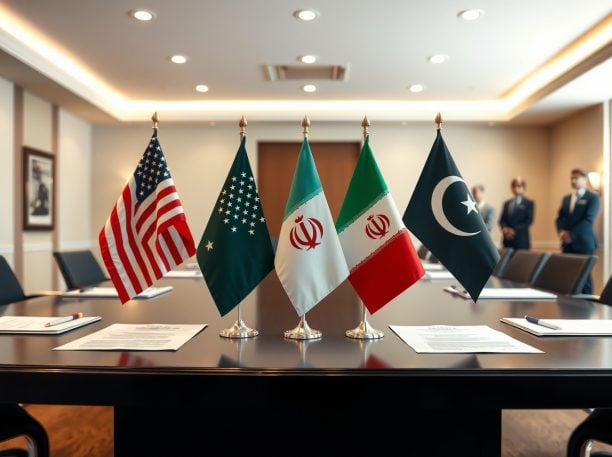
Iran and US reach draft agreement on ceasefire and sanctions relief, with major crypto implications
The draft deal follows weeks of tense negotiations, frozen USDT wallets, and Iran's push to collect oil transit fees in cryptocurrency.
Iran and the United States have reportedly reached a final draft agreement that includes a ceasefire framework, sanctions relief, and a roadmap for negotiating remaining sticking points.
The agreement comes after a fragile ceasefire established on April 8, 2026, following roughly six weeks of open hostilities. That ceasefire has been described as being “on life support,” making a formalized agreement all the more urgent for markets watching the situation closely.
A long road of rejected drafts
Both sides have exchanged multiple drafts over the past several weeks, with Iran submitting 10-point proposals and the US responding with 15-point versions of its own.
President Trump rejected Iran’s latest counter-proposal on May 10, calling it “totally unacceptable.” At the same time, he described the broader negotiations as moving toward a comprehensive deal.
Iran’s demands have been ambitious. Tehran has pushed for full sanctions removal and war reparations. The negotiations, mediated by Pakistan, have centered on three core issues: reopening the Strait of Hormuz, placing limits on Iran’s nuclear program, and establishing conditions for easing sanctions.
Roughly a fifth of the world’s oil passes through the Strait of Hormuz, giving whoever controls it enormous leverage over global energy markets.
Crypto enters the geopolitical playbook
Iran has proposed charging transit fees of up to $2 million per oil tanker passing through the Strait of Hormuz, and it wants those fees paid in cryptocurrency or Chinese yuan.
On April 24, US Treasury authorities and Tether coordinated to freeze $344 million in USDT wallets linked to Iran.
Bitcoin surged roughly 7% around initial reports of the ceasefire, reaching approximately $71,500 before experiencing fluctuations tied to each new negotiation headline.
What this means for investors
The $344 million USDT freeze isn’t an isolated event. US authorities have intensified enforcement actions against Iran-linked digital assets recently.
A sovereign nation proposing to collect transit fees via cryptocurrency signals that crypto is being treated as a legitimate settlement layer for international commerce, particularly by nations looking to reduce dependence on the dollar.
The draft agreement still needs to be finalized and signed. As of May 21, no definitive agreement has been signed, and discussions remain active with revisions being continually exchanged.