
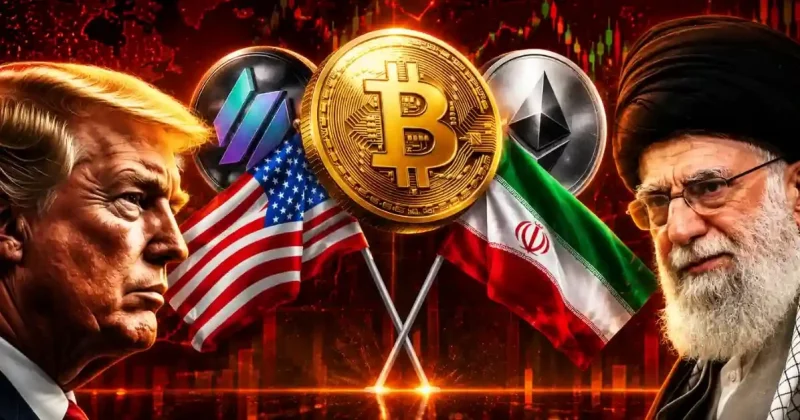
Iran and US near memorandum of understanding as Bitcoin rallies past $82K on de-escalation hopes
A 14-point framework between Washington and Tehran could end weeks of hostilities, and crypto markets are already pricing in the optimism.
Iran and the United States are on the verge of finalizing a memorandum of understanding designed to end hostilities that have persisted for roughly 84 days. The proposed 14-point framework would halt a naval blockade in the Strait of Hormuz and kick off a 30- to 60-day window for deeper negotiations on Iran’s nuclear program, sanctions relief, and other sticking points.
Bitcoin responded by surging past $82,000 for the first time in three months. Oil, meanwhile, went in the opposite direction, with WTI crude dropping more than 6% in a single session as traders recalibrated their risk models around the prospect of Middle Eastern de-escalation.
What’s in the deal
Iranian Foreign Ministry spokesperson Esmaeil Baghaei confirmed on May 23, 2026, that the two sides are close to wrapping up the MOU. The agreement is being brokered with the help of US envoys Steve Witkoff and Jared Kushner, with Pakistan and Qatar serving as mediators.
US President Donald Trump indicated the agreement is “largely negotiated” and suspended a planned military strike to make room for diplomacy.
Iranian officials, for their part, have been careful to frame the MOU as preliminary. The 14 points reportedly cover the cessation of hostilities, the lifting of the naval blockade, and a pathway toward sanctions relief. But the details of what “sanctions relief” actually looks like remain subject to the follow-up negotiations.
Why crypto is reacting
Bitcoin’s move above $82,000 marks its highest level in three months. The rally coincided with gains across other risk assets, suggesting this isn’t just a crypto-specific phenomenon.
The news moving money, markets, and the world—before your day starts.
Daily. Free. Join 34,000+ readers across crypto, finance, and policy.
The oil price collapse tells the other half of the story. A more than 6% single-session drop in WTI crude reflects the market’s view that shipping through the Strait of Hormuz, one of the world’s most critical oil chokepoints, is about to get safer.
There’s also a more direct connection between this diplomatic development and digital assets. The US has previously seized hundreds of millions of dollars in Iranian-linked digital assets as part of its sanctions enforcement regime. If the follow-up negotiations lead to meaningful sanctions relief, the regulatory landscape around Iranian-linked crypto could shift substantially.
What this means for investors
The MOU is a starting point, not a finish line. The 30- to 60-day negotiation window introduces a period of uncertainty where any breakdown in talks could reverse the current optimism.
If sanctions relief becomes a real possibility during the negotiation period, it could open channels for capital flows that have been blocked for years. Iranian-linked digital assets have been largely frozen out of global markets due to US restrictions.
One factor that often gets overlooked in these situations is enforcement. Even if sanctions relief is negotiated, the US Treasury’s Office of Foreign Assets Control has historically been slow to update its compliance guidance. Crypto exchanges and custodians will need clear regulatory signals before they can meaningfully engage with previously restricted assets. The gap between a diplomatic agreement and actual on-the-ground regulatory change can be measured in months, sometimes years.