
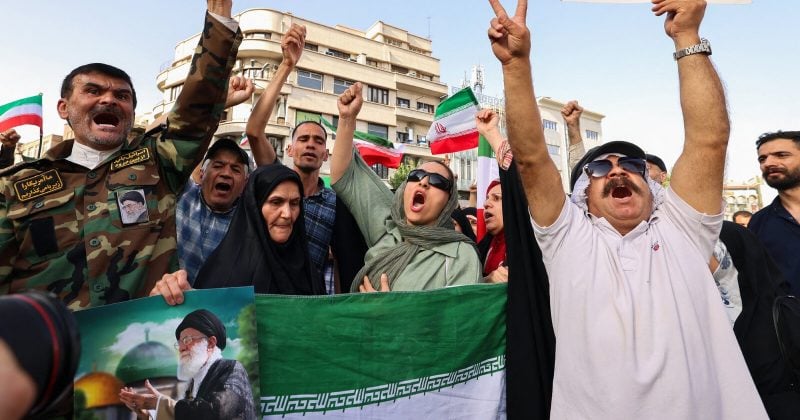
Iran vows disproportionate response to US strikes, warns Washington of regret

https://www.nytimes.com/video/world/middleeast/100000010243221/iran-says-it-has-the-right-to-respond-to-us-attacks.html

Iran vows disproportionate response to US strikes, warns Washington of regret

US-Iran deal in 2026

Iran’s Deputy Foreign Minister Kazem Gharibabadi declared Tuesday that Tehran’s response to recent U.S. military strikes will not be proportional, warning instead that Washington will “regret” its actions — remarks published by Iran’s official media on X. The statement follows the collapse of an interim ceasefire on July 8, after which the U.S. struck over 80 Iranian targets in retaliation for alleged Iranian attacks on commercial vessels in the Strait of Hormuz. Iran has since targeted 85 U.S. military sites in Bahrain and Kuwait and shot down an MQ-9 drone, reflecting active high-intensity hostilities. Prediction markets pricing a 2026 U.S.-Iran deal have declined sharply, with reconstruction funding odds falling from 38% seven days ago to approximately 25.5% YES — consistent with NO outcome support as diplomatic prospects appear to narrow.

Advertisement

Key Takeaways

  • Gharibabadi’s “non-proportional” framing appears consistent with a widening conflict scenario, suggesting markets view a negotiated deal as increasingly unlikely in the near term.
  • Pricing across deal-term sub-markets has declined broadly over seven days — enrichment moratorium odds sit at 16% YES, uranium surrender at 9.5% YES — suggesting participants view specific concessions as remote.
  • The pattern of declining odds across multiple sub-markets appears consistent with markets interpreting escalating rhetoric as evidence the diplomatic pathway has narrowed materially.

What to Watch

Watch for any response from U.S. Chief Negotiator Mike Vance or Qatari and Pakistani mediators, whose engagement — or absence — may indicate whether back-channel diplomacy remains active. Additional Iranian strikes on U.S. assets in Bahrain or Kuwait, or further U.S. waves targeting IRGC infrastructure, would appear consistent with continued NO-supportive pricing pressure across deal markets through the December 31, 2026 resolution window.

Get live prediction-market analysis, powered by Vera. Sign up for Vera.

Disclosure: This article was edited by Estefano Gomez. For more information on how we create and review content, see our Editorial Policy.

Iran vows disproportionate response to US strikes, warns Washington of regret

Iran vows disproportionate response to US strikes, warns Washington of regret

US-Iran deal in 2026

https://www.nytimes.com/video/world/middleeast/100000010243221/iran-says-it-has-the-right-to-respond-to-us-attacks.html

Iran’s Deputy Foreign Minister Kazem Gharibabadi declared Tuesday that Tehran’s response to recent U.S. military strikes will not be proportional, warning instead that Washington will “regret” its actions — remarks published by Iran’s official media on X. The statement follows the collapse of an interim ceasefire on July 8, after which the U.S. struck over 80 Iranian targets in retaliation for alleged Iranian attacks on commercial vessels in the Strait of Hormuz. Iran has since targeted 85 U.S. military sites in Bahrain and Kuwait and shot down an MQ-9 drone, reflecting active high-intensity hostilities. Prediction markets pricing a 2026 U.S.-Iran deal have declined sharply, with reconstruction funding odds falling from 38% seven days ago to approximately 25.5% YES — consistent with NO outcome support as diplomatic prospects appear to narrow.

Advertisement

Key Takeaways

  • Gharibabadi’s “non-proportional” framing appears consistent with a widening conflict scenario, suggesting markets view a negotiated deal as increasingly unlikely in the near term.
  • Pricing across deal-term sub-markets has declined broadly over seven days — enrichment moratorium odds sit at 16% YES, uranium surrender at 9.5% YES — suggesting participants view specific concessions as remote.
  • The pattern of declining odds across multiple sub-markets appears consistent with markets interpreting escalating rhetoric as evidence the diplomatic pathway has narrowed materially.

What to Watch

Watch for any response from U.S. Chief Negotiator Mike Vance or Qatari and Pakistani mediators, whose engagement — or absence — may indicate whether back-channel diplomacy remains active. Additional Iranian strikes on U.S. assets in Bahrain or Kuwait, or further U.S. waves targeting IRGC infrastructure, would appear consistent with continued NO-supportive pricing pressure across deal markets through the December 31, 2026 resolution window.

Get live prediction-market analysis, powered by Vera. Sign up for Vera.

Disclosure: This article was edited by Estefano Gomez. For more information on how we create and review content, see our Editorial Policy.