
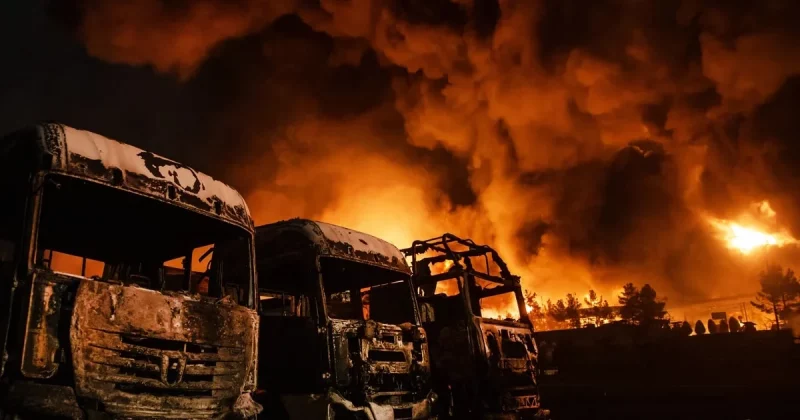
Iran war accelerates depletion of global oil stocks ahead of travel season
With roughly 20 million barrels per day of oil flow through the Strait of Hormuz under threat, prices have surged 15% and analysts warn the worst may not be over.
The world’s most important oil chokepoint is effectively under siege, and it’s happening at the worst possible time. The Strait of Hormuz, a narrow waterway between Iran and Oman that normally handles approximately 20 million barrels of oil per day, faces unprecedented disruption as the Iran war grinds on. Summer travel season, when gasoline and jet fuel demand reliably spikes, is just around the corner.
Oil prices have climbed roughly 15% since US-Israeli strikes on Iran began, with Brent crude already trading above $100 per barrel. That’s not just an energy story. It’s an everything story.
The Hormuz problem
Think of the Strait of Hormuz as a single-lane bridge carrying a fifth of the world’s oil supply. Iran has announced a closure of the strait, which also handles around 15% of global liquefied natural gas shipments. When that bridge gets blocked, or even just threatened, the ripple effects are immediate.
Shipping costs have jumped. Insurance premiums for tankers transiting the region have ballooned. And the actual barrels of oil sitting in storage around the world are draining faster than they’re being replenished.
Goldman Sachs estimates that an $18 per barrel risk premium is now baked into oil prices. In English: traders are paying $18 extra per barrel just to account for the possibility that Hormuz flow stops entirely for six weeks. That’s not a panic premium. It’s a math premium, and the math is uncomfortable.
Forecasts from major financial institutions suggest Brent could reach $160 per barrel if disruptions persist. For context, the last time oil prices were anywhere near that territory was during the commodity supercycle of 2008, right before everything fell apart.
Strategic reserves are a band-aid, not a cure
The International Energy Agency and G7 nations have responded by releasing roughly 400 million barrels from strategic petroleum reserves. That sounds like a lot. It is a lot. But here’s the thing: at a rate of 20 million barrels per day normally flowing through Hormuz, 400 million barrels covers about 20 days of replacement supply, assuming every single barrel released goes to offset the shortfall perfectly.
It doesn’t work that perfectly. Strategic reserves are designed for short-term emergencies, not prolonged conflicts. They’re the geopolitical equivalent of breaking the glass on a fire extinguisher. Useful for buying time, not for rebuilding the house.
Macro, rates, and crypto—what moved markets and what matters next.
Daily. Free. Join 34,000+ readers across crypto, finance, and policy.
The real concern among energy analysts is what happens if the conflict extends through summer. Demand during the Northern Hemisphere travel season is already structurally higher. Layering a major supply disruption on top of that seasonal pattern creates a compounding effect that reserve releases can only partially absorb.
Every barrel pulled from strategic stockpiles is one less barrel available for the next crisis. Countries are depleting their emergency buffers to manage today’s prices, which leaves them more exposed tomorrow.
Markets are feeling the heat everywhere
This isn’t contained to energy markets. Global equity indices, including the S&P 500 and Nikkei 225, have declined as rising oil prices feed directly into inflation expectations. Higher energy costs make everything more expensive: transportation, manufacturing, food production, logistics.
Fixed income markets are also taking hits. When inflation rises, bond yields need to adjust, and that means existing bondholders watch the value of their holdings erode. Central banks that were cautiously signaling rate cuts now face the awkward prospect of persistent energy-driven inflation keeping monetary policy tighter for longer.
The flight-to-safety playbook is running predictably. Gold has attracted inflows as a traditional hedge against geopolitical uncertainty and inflation. Bitcoin has also seen renewed interest from investors treating it as a non-sovereign store of value during periods of macroeconomic stress.
Energy stocks, meanwhile, are one of the few bright spots in equity markets. When oil goes up, producers profit. It’s the rest of the economy that absorbs the pain.
Look, the Iran situation creates a particularly nasty feedback loop for investors. Higher oil prices push inflation higher, which keeps interest rates elevated, which pressures growth stocks and consumer spending. Reduced consumer spending eventually hits corporate earnings across sectors that have nothing to do with energy. The transmission mechanism from a strait closure in the Persian Gulf to a family’s summer road trip budget is shorter than most people realize.
For crypto-focused investors, the dynamic is worth watching closely. Bitcoin has historically shown mixed correlation with oil price shocks, but the current environment is different. If traditional markets continue to struggle under the weight of energy-driven inflation while central banks remain constrained in their ability to ease policy, the narrative around Bitcoin as an inflation hedge and alternative reserve asset gets stronger, not weaker. Whether the price action follows the narrative is another question entirely, but the macro setup is the kind that tends to attract institutional capital into uncorrelated assets.
The variable that matters most right now is duration. A conflict that resolves in weeks leaves markets bruised but functional. A conflict that stretches through summer, with Hormuz disruptions persisting and strategic reserves steadily depleting, creates the kind of structural supply deficit that takes quarters, not weeks, to repair.