
Nexo Earn with Nexo
Iran’s World Cup draw against New Zealand unites divided fans as crypto meets football’s biggest stage

Iran’s World Cup draw against New Zealand unites divided fans as crypto meets football’s biggest stage

A 2-2 thriller at SoFi Stadium brought together a fractured diaspora, while the first crypto-sponsored World Cup raises new questions about fan tokens, sanctions, and digital access.

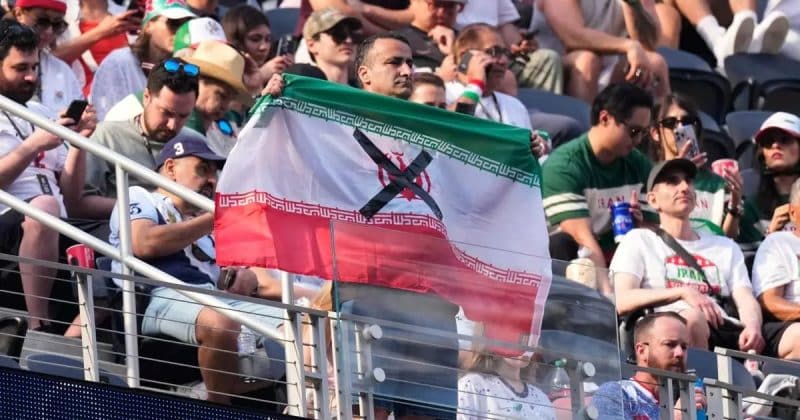
Iran and New Zealand played to a 2-2 draw on June 15 at SoFi Stadium in Inglewood, California. Ramin Rezaeian and Mohammad Mohebi scored for Iran, while New Zealand’s Eli Just bagged a brace to level the match. The Iranian diaspora, one of the largest in the world and heavily concentrated in the Los Angeles area, turned SoFi into something resembling a home fixture for Team Melli.

Iran’s national team has long been a lightning rod for political tension. The 2022 World Cup in Qatar, where Iranian players notably declined to sing the national anthem in solidarity with domestic protests, was a preview of how charged these moments can become. Fans expressed positive sentiments despite deep ideological divisions, rallying behind the players rather than debating what the jersey represents.

The first crypto-sponsored World Cup

This World Cup is the first edition of the tournament to explicitly incorporate crypto sponsorship at the highest levels. Kraken is the official crypto exchange supporter of the 2026 FIFA World Cup. Chiliz powers fan tokens on the Socios platform, enabling supporters to vote on minor club decisions and access exclusive content. Avalanche supports FIFA Collect NFTs, the digital collectible layer that FIFA has been building since 2022.

Advertisement

The fan token ecosystem has become a measurable indicator of supporter engagement. Argentina (ARG) and Portugal (POR) national-team tokens are active and traded on exchanges. Neither Iran nor New Zealand currently has a national-team fan token listed in the ecosystem.

Sanctions cast a long shadow

On June 2, 2026, the US government announced sanctions targeting Nobitex, Iran’s largest crypto exchange. The action cited concerns over links to the Iranian Revolutionary Guard Corps and potential sanctions evasion mechanisms. The timing, less than two weeks before Iran’s World Cup opener, was not lost on observers.

Sanctions compliance means exchanges must block users from sanctioned jurisdictions. An Iranian fan sitting in SoFi Stadium could theoretically download Socios, but a fan watching from Tehran almost certainly could not access the same platforms without running afoul of US Treasury restrictions.

What this means for crypto investors

For investors watching the fan token space, the absence of Iran and New Zealand tokens highlights a gap. The tokens that do exist, like ARG and POR, tend to spike around tournament matches and then fade. The Nobitex sanctions send a chilling message to any exchange or protocol that might consider serving similar markets. For platforms like Chiliz that aim for global fan engagement, sanctions create hard geographic boundaries that limit total addressable market.

Crypto sponsorship of the World Cup is designed to onboard mainstream users into digital asset ecosystems. US sanctions policy carves out entire populations from that onboarding funnel, creating a two-tier system where fans in sanctioned countries watch the same matches but cannot access the same digital products. The Nobitex sanctions establish a precedent that could extend to other jurisdictions, making compliance risk a permanent variable in the fan token and sports crypto thesis.

Disclosure: This article was edited by Editorial Team. For more information on how we create and review content, see our Editorial Policy.

Iran’s World Cup draw against New Zealand unites divided fans as crypto meets football’s biggest stage

Iran’s World Cup draw against New Zealand unites divided fans as crypto meets football’s biggest stage

A 2-2 thriller at SoFi Stadium brought together a fractured diaspora, while the first crypto-sponsored World Cup raises new questions about fan tokens, sanctions, and digital access.

Iran and New Zealand played to a 2-2 draw on June 15 at SoFi Stadium in Inglewood, California. Ramin Rezaeian and Mohammad Mohebi scored for Iran, while New Zealand’s Eli Just bagged a brace to level the match. The Iranian diaspora, one of the largest in the world and heavily concentrated in the Los Angeles area, turned SoFi into something resembling a home fixture for Team Melli.

Iran’s national team has long been a lightning rod for political tension. The 2022 World Cup in Qatar, where Iranian players notably declined to sing the national anthem in solidarity with domestic protests, was a preview of how charged these moments can become. Fans expressed positive sentiments despite deep ideological divisions, rallying behind the players rather than debating what the jersey represents.

The first crypto-sponsored World Cup

This World Cup is the first edition of the tournament to explicitly incorporate crypto sponsorship at the highest levels. Kraken is the official crypto exchange supporter of the 2026 FIFA World Cup. Chiliz powers fan tokens on the Socios platform, enabling supporters to vote on minor club decisions and access exclusive content. Avalanche supports FIFA Collect NFTs, the digital collectible layer that FIFA has been building since 2022.

Advertisement

The fan token ecosystem has become a measurable indicator of supporter engagement. Argentina (ARG) and Portugal (POR) national-team tokens are active and traded on exchanges. Neither Iran nor New Zealand currently has a national-team fan token listed in the ecosystem.

Sanctions cast a long shadow

On June 2, 2026, the US government announced sanctions targeting Nobitex, Iran’s largest crypto exchange. The action cited concerns over links to the Iranian Revolutionary Guard Corps and potential sanctions evasion mechanisms. The timing, less than two weeks before Iran’s World Cup opener, was not lost on observers.

Sanctions compliance means exchanges must block users from sanctioned jurisdictions. An Iranian fan sitting in SoFi Stadium could theoretically download Socios, but a fan watching from Tehran almost certainly could not access the same platforms without running afoul of US Treasury restrictions.

What this means for crypto investors

For investors watching the fan token space, the absence of Iran and New Zealand tokens highlights a gap. The tokens that do exist, like ARG and POR, tend to spike around tournament matches and then fade. The Nobitex sanctions send a chilling message to any exchange or protocol that might consider serving similar markets. For platforms like Chiliz that aim for global fan engagement, sanctions create hard geographic boundaries that limit total addressable market.

Crypto sponsorship of the World Cup is designed to onboard mainstream users into digital asset ecosystems. US sanctions policy carves out entire populations from that onboarding funnel, creating a two-tier system where fans in sanctioned countries watch the same matches but cannot access the same digital products. The Nobitex sanctions establish a precedent that could extend to other jurisdictions, making compliance risk a permanent variable in the fan token and sports crypto thesis.

Disclosure: This article was edited by Editorial Team. For more information on how we create and review content, see our Editorial Policy.