
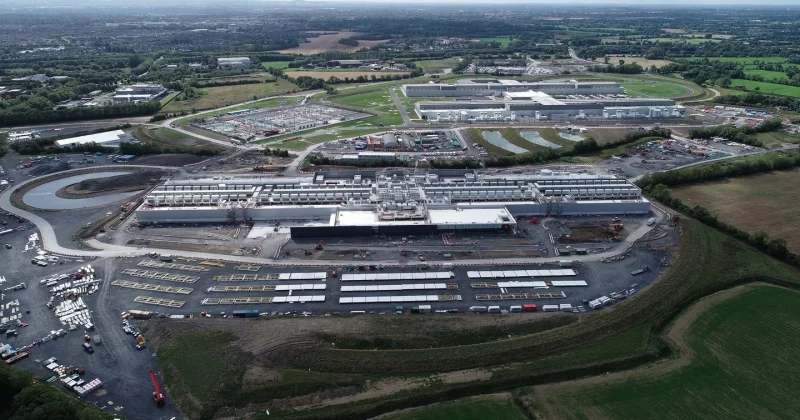
Ireland implements Bring Your Own Power policy for data centers
New data centers must generate their own electricity or secure renewable contracts, ending years of grid dependency that saw facilities consume 21% of the nation's power.
Ireland just told its data center industry to stop freeloading off the national grid. The country’s new “Bring Your Own Power” policy requires incoming facilities to either generate their own electricity on-site or lock in contracts with renewable energy producers, a move that fundamentally reshapes how one of Europe’s biggest data center hubs operates.
Here’s the thing: data centers in Ireland now account for roughly 21% of the country’s total electricity consumption. The Commission for Regulation of Utilities (CRU) issued the decision paper codifying this policy in December 2025, with a compliance deadline of March 2026.
What the policy actually requires
The BYOP framework has teeth. New data centers must secure on-site generation or storage capacity that matches their import capacity from the grid.
But it goes further than just self-sufficiency. Facilities must source at least 80% of their electricity from renewable sources.
There’s also a reciprocity clause baked into the framework. Data centers are required to contribute electricity back to the national grid during peak demand periods.
At least one data center in Dublin has already made the transition, operating entirely off its own on-site power plant without pulling from the grid at all.
The news moving money, markets, and the world—before your day starts.
Daily. Free. Join 34,000+ readers across crypto, finance, and policy.
Why Ireland reached this point
Ireland became a magnet for data center operators thanks to a trifecta of advantages: favorable tax incentives, a naturally cool climate that reduces cooling costs, and strong connectivity infrastructure.
By 2022, the situation in Dublin had gotten serious enough that authorities instituted what amounted to a de facto moratorium on new data center grid connections in the capital. The BYOP policy is designed to replace that freeze with something more nuanced, a framework that lets the industry keep growing while shifting the energy burden off the public grid.
What this means for investors
The BYOP policy creates a new cost layer for any company planning to build or expand data center operations in Ireland. On-site power generation and battery storage aren’t cheap. Neither are long-term renewable energy contracts that meet the 80% threshold.
For operators already established in the country, existing facilities connected before the policy aren’t being forced off the grid retroactively, but any new capacity will need to comply.
On the flip side, the policy is a significant tailwind for renewable energy developers and on-site generation companies operating in Ireland. Every new data center that needs to meet the 80% renewable threshold represents a potential customer for wind, solar, and battery storage providers.
The March 2026 compliance deadline doesn’t leave much runway. Companies that were planning Irish data center builds now have to either accelerate their energy procurement strategies or reconsider their timelines entirely.