
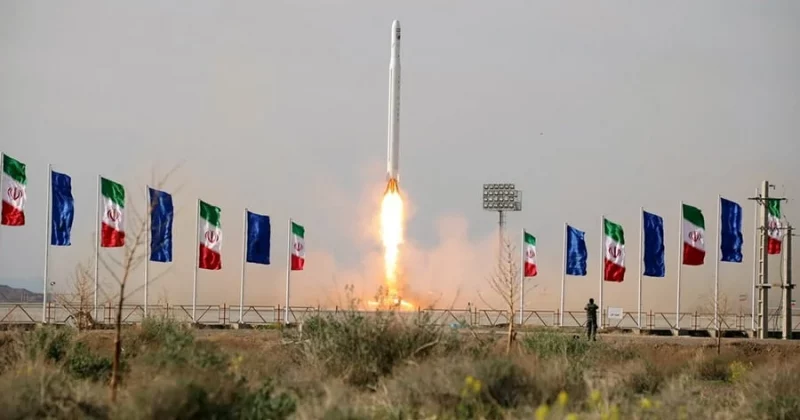
IRGC missile launch over Javanrud lights up Iranian sky as Middle East tensions spike
Iran's Revolutionary Guard fired at least 10 ballistic missiles toward Israel on June 7, calling the salvo a 'warning' after Israeli strikes on Beirut.
Videos circulating online on the evening of June 7 showed streaks of light cutting across the sky above Javanrud, a city in Iran’s Kermanshah province. The Islamic Revolutionary Guard Corps had just launched a salvo of ballistic missiles toward Israel, marking one of the most provocative direct military exchanges between the two countries in recent memory.
The IRGC fired at least 10 missiles targeting the Ramat David airbase in Israel. All were intercepted, with no reported casualties.
What triggered the launch
Earlier on June 7, Hezbollah launched a rocket assault on northern Israel. Israel responded with airstrikes targeting Hezbollah positions in Beirut. Iran then retaliated against Israel directly, framing the missile strikes as a response to the Beirut operation.
The IRGC released a statement characterizing its attack as a limited, retaliatory “warning.” The statement went further, indicating the potential for more extensive retaliation if what it described as Israeli aggressions continue.
Why Javanrud matters
Javanrud sits in Kermanshah province, in western Iran near the Iraqi border. Kermanshah province has historically been significant in Iran’s military posture, partly due to its proximity to Iraq and its role during the Iran-Iraq War.
The interception and its implications
All 10 missiles were intercepted before reaching their target, and no casualties were reported. The targeting of Ramat David airbase, a military installation in northern Israel, signals intentionality. By aiming at a military target rather than civilian infrastructure, Iran attempted to stay within a narrow band of escalation.
What this means for crypto markets
No cryptocurrency tokens were directly linked to this incident, and there was no immediate, attributable disruption to crypto markets from the June 7 launches. The IRGC has a well-documented history of utilizing digital assets as part of broader sanctions evasion strategies. Escalating conflict between Iran and Israel doesn’t just create headline risk. It increases the likelihood of tightened regulatory scrutiny on crypto flows tied to sanctioned entities, which can ripple through compliance frameworks at major exchanges.