
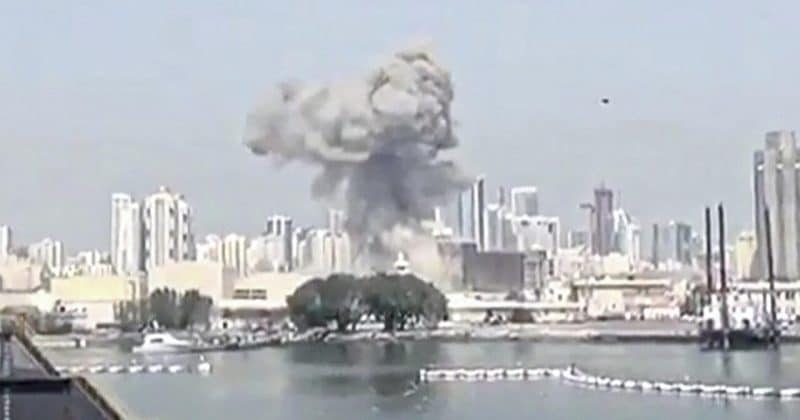
Iran’s Revolutionary Guards claim missile strike on US base in Jordan amid wider Gulf escalation
The IRGC says it launched retaliatory strikes against multiple US military facilities across the Gulf region, raising geopolitical risk across global markets.
Iran’s Islamic Revolutionary Guard Corps claimed responsibility on May 28 for a missile strike targeting a US air base, marking a significant escalation in the ongoing military confrontation between Tehran and Washington. The IRGC framed the attack as retaliation for prior American military actions near Bandar Abbas airport in Iran.
Reports indicated the strikes began at approximately 4:50 a.m. local time, with the IRGC claiming to have targeted several US military installations across the Gulf region. The attack reportedly involved missile debris overflying Jordanian airspace, raising immediate safety concerns for the kingdom.
Multiple US facilities reportedly targeted
The scope of the IRGC’s claimed operation extended well beyond Jordan. Claims suggested that US facilities in Kuwait, including Ali Al Salem and Camp Arifjan, as well as Qatar’s Al Udeid Air Base, were also targeted during the salvo. Al Udeid alone serves as the forward headquarters for US Central Command and hosts thousands of American military personnel, making it one of the most strategically significant installations in the region.
The Muwaffaq Salti air base and the logistics hub known as Tower 22, both located in Jordanian territory, have historically been pivotal nodes in America’s regional military architecture. Tower 22 gained international attention in early 2024 when a drone strike killed three US service members there.
No independent verification of damage to specific Jordan-based US facilities was reported following the strike.
The news moving money, markets, and the world—before your day starts.
Daily. Free. Join 34,000+ readers across crypto, finance, and policy.
The broader 2026 Iran conflict
This strike fits into a pattern of escalating military exchanges between Iran and US-aligned forces throughout 2026, involving hundreds of Iranian missiles and drones directed at American and allied positions across the Gulf.
The triggering event, according to Tehran, was American military activity near Bandar Abbas, a strategically vital port city on the Strait of Hormuz. Bandar Abbas is home to Iranian naval facilities and sits at the chokepoint through which roughly a fifth of the world’s oil supply transits daily.
What this means for markets and crypto investors
Traditional safe-haven assets like gold and US Treasuries typically see inflows during periods of military escalation in the Middle East. Oil prices spike on supply disruption fears, particularly when the Strait of Hormuz is anywhere near the conflict zone.
Prolonged military conflict in the Gulf could disrupt global energy supplies, accelerate inflation, and force central banks to reconsider monetary policy trajectories. A weakening dollar has historically been correlated with Bitcoin strength. Investors looking for actionable signals should focus on how energy prices, inflation expectations, and central bank rhetoric shift in response to sustained regional instability.