
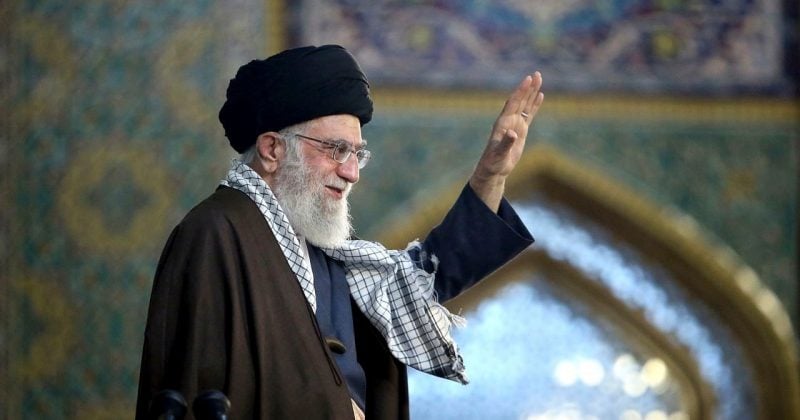
IRGC Navy vows revenge for Khamenei assassination, and crypto markets are bracing for impact
Iran's military commander pledges 'divine revenge' against the US and Israel, sending geopolitical risk meters into the red zone for digital asset markets.
IRGC Navy Commander Alireza Azmaei stood before cameras on July 4, 2026, and made the kind of promise that moves markets. He pledged “divine revenge” against the United States and Israel for the assassination of Supreme Leader Ayatollah Ali Khamenei, who was killed in coordinated US-Israeli airstrikes on February 28, 2026.
The rhetoric was pointed. Azmaei specifically named US President Donald Trump and Israeli Prime Minister Benjamin Netanyahu as targets of Iran’s response, and IRGC officials have promised what they described as the “most ferocious offensive operation” against both nations.
What happened and why it matters now
Mojtaba Khamenei, the late leader’s son, has been positioned as his successor. A major funeral procession is scheduled for July 9, 2026, which is likely to serve as both a mourning event and a rallying point for military mobilization.
The IRGC Navy controls significant maritime capabilities in the Persian Gulf and Strait of Hormuz, a chokepoint through which roughly a fifth of the world’s oil supply passes.
The crypto angle: safe havens and sanctions evasion
When tensions spike in the Middle East, two things tend to happen in digital asset markets almost simultaneously. First, Bitcoin gets its “digital gold” narrative dusted off. Second, stablecoins like USDT and USDC see significant demand surges, as analysts have noted a potential surge in demand for these assets as investors seek refuge from market volatility linked to geopolitical crises.
The news moving money, markets, and the world—before your day starts.
Daily. Free. Join 34,000+ readers across crypto, finance, and policy.
Iran has a well-documented history of using cryptocurrency to circumvent international financial sanctions. Multiple reports over the years have detailed how the country has leveraged Bitcoin mining operations and stablecoin transactions to move value outside the reach of Western banking restrictions. An escalation in conflict could intensify these practices, with more Iranian mining activity affecting global hash rate distributions and more sanctions-evasion-driven stablecoin volume appearing as anomalous trading activity on certain exchanges.
What investors should actually watch
The July 9 funeral procession for Khamenei is the next critical date. Large public gatherings in Iran following military leaders’ deaths have historically been accompanied by escalatory rhetoric and, sometimes, military action.
On-chain stablecoin flows will tell the real story before price charts do. Large movements of USDT and USDC to exchanges, particularly those with significant Middle Eastern or Asian trading volumes, would suggest that sophisticated market participants are positioning for volatility. Conversely, stablecoin flows off exchanges and into cold storage would indicate that larger players are de-risking entirely.