
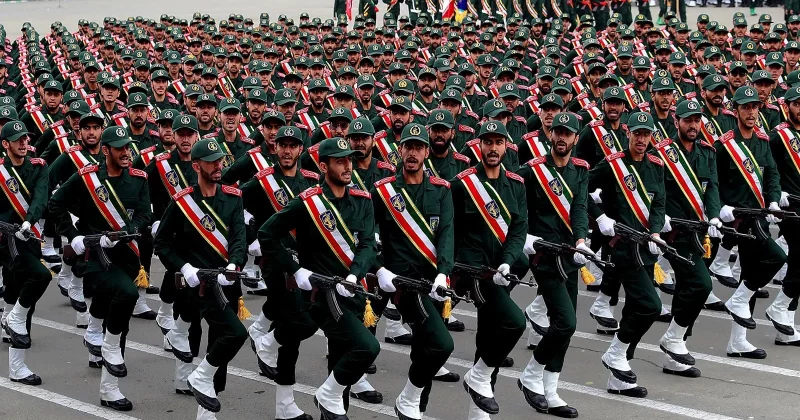
IRGC targets US bases in Kuwait and Bahrain after American strikes on Sirik and Qeshm
Iran's Revolutionary Guard launched ballistic missiles at US military installations, escalating a Persian Gulf standoff that could ripple through energy and crypto markets.
Iran’s Islamic Revolutionary Guard Corps fired ballistic missiles at US military bases in Kuwait and Bahrain on June 6, marking a dramatic escalation in a Persian Gulf conflict that has been simmering for weeks. The IRGC said the strikes were a direct response to American military operations targeting Iranian infrastructure on Sirik Island and Qeshm Island.
The exchange of fire happened despite a ceasefire that has technically been in place since April 8. Both sides have accused each other of violating it.
What happened and how we got here
US Central Command conducted military operations between June 1 and June 6, describing them as self-defense measures. Those strikes targeted Iranian command-and-control facilities, radar installations, and drone-related sites in Goruk and Qeshm. The catalyst: Iran had downed a US drone over Iranian territory, and Washington decided that warranted a kinetic response.
The IRGC’s Aerospace Force then answered with ballistic missiles aimed at US-linked facilities in Kuwait and the US fleet stationed in Bahrain. Kuwaiti air defenses intercepted seven of the incoming ballistic missiles, and reports indicate minimal damage to US installations.
The IRGC issued a warning that any further American military action would be met with a “completely different response.”
The Strait of Hormuz problem
The Strait of Hormuz, which sits right next to Qeshm Island, is the narrow waterway through which roughly a fifth of the world’s oil supply passes daily.
What this means for crypto investors
Energy market dynamics also matter for crypto’s physical infrastructure. Bitcoin mining operations are sensitive to electricity costs, which correlate with fossil fuel prices in many jurisdictions. A sustained oil price shock would raise the cost of mining, potentially affecting hash rate distribution and, at the margins, network economics.
The more immediate concern for crypto traders is volatility clustering. Geopolitical headlines of this magnitude tend to produce sharp, fast moves in thin weekend or after-hours liquidity. Leveraged positions in perpetual futures are particularly vulnerable to the kind of sudden price swings that missile-strike headlines generate.