
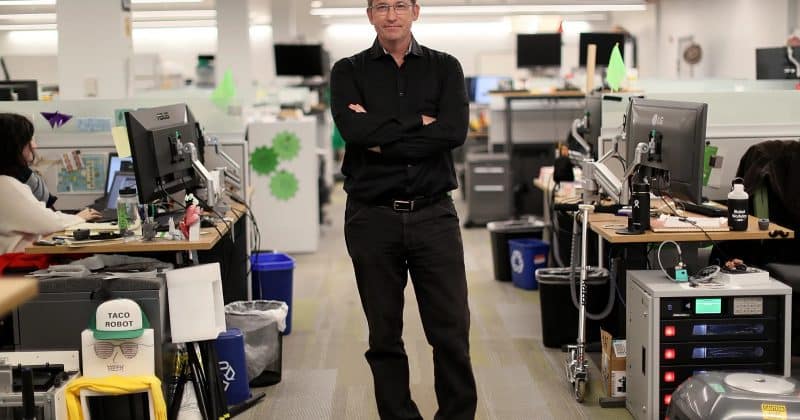
iRobot co-founder Colin Angle reflects on Roomba’s role in launching the robot revolution

iRobot co-founder Colin Angle reflects on Roomba’s role in launching the robot revolution

The man behind the world's most famous robot vacuum traces its journey from MIT lab project to 50 million units sold, and explains what comes next for consumer robotics

Colin Angle spent 15 years trying to make robots people would actually buy. Then he released a small, round vacuum that bumped into furniture, and people started giving it names.

The iRobot co-founder has been making the media rounds in 2026, appearing on podcasts like How I Built This and Automated, reflecting on the Roomba’s unlikely path from engineering curiosity to cultural phenomenon. His story is equal parts triumph and cautionary tale, because the company he built sold over 50 million robot vacuums but ultimately filed for bankruptcy.

From MIT hallways to 50 million living rooms

iRobot was founded in 1990 by Angle and several MIT colleagues. The Roomba didn’t arrive until 2002, which means a full dozen years of development preceded the product most people associate with the brand.

Advertisement

Owners treated their Roombas like pets. They named them. They felt guilty when the little disc got stuck under the couch. Angle has pointed to this anthropomorphization as a key driver of the product’s success, noting that the emotional bond consumers formed with their devices was something the team hadn’t fully anticipated but quickly learned to embrace.

Over 50 million Roomba units have been sold since launch, a figure that speaks to how thoroughly the product category penetrated the mainstream consumer market.

The bankruptcy chapter nobody wanted

iRobot filed for pre-packaged Chapter 11 bankruptcy in December 2025. Shenzhen Picea Robotics, one of iRobot’s secured lenders, completed its acquisition of the company on January 23, 2026. The deal was structured to give iRobot a more manageable balance sheet, essentially wiping the slate clean enough for a fresh start under new ownership.

Angle had already departed from his CEO role before the bankruptcy proceedings. He’s now channeling his energy into a new venture called Familiar Machines & Magic, which focuses on developing context-aware AI robots.

What Roomba teaches us about the next wave of consumer technology

Angle’s central insight, repeated across his recent appearances, is deceptively simple: people don’t just want robots that work. They want robots that feel like they belong in their homes. The Roomba succeeded not because it was the best vacuum on the market, but because it crossed an emotional threshold that traditional appliances never approached.

Familiar Machines & Magic is positioning itself at the intersection of physical robotics and AI that can read and respond to the context of a given environment.

The competitive landscape has shifted dramatically since the Roomba’s debut. Brands like Roborock, Ecovacs, and Dreame now offer robot vacuums with lidar navigation, mopping capabilities, and self-emptying docks at price points that would have seemed impossible a decade ago. iRobot under new ownership will need to innovate aggressively just to keep pace in a market it essentially created.

Disclosure: This article was edited by Editorial Team. For more information on how we create and review content, see our Editorial Policy.

iRobot co-founder Colin Angle reflects on Roomba’s role in launching the robot revolution

iRobot co-founder Colin Angle reflects on Roomba’s role in launching the robot revolution

The man behind the world's most famous robot vacuum traces its journey from MIT lab project to 50 million units sold, and explains what comes next for consumer robotics

Colin Angle spent 15 years trying to make robots people would actually buy. Then he released a small, round vacuum that bumped into furniture, and people started giving it names.

The iRobot co-founder has been making the media rounds in 2026, appearing on podcasts like How I Built This and Automated, reflecting on the Roomba’s unlikely path from engineering curiosity to cultural phenomenon. His story is equal parts triumph and cautionary tale, because the company he built sold over 50 million robot vacuums but ultimately filed for bankruptcy.

From MIT hallways to 50 million living rooms

iRobot was founded in 1990 by Angle and several MIT colleagues. The Roomba didn’t arrive until 2002, which means a full dozen years of development preceded the product most people associate with the brand.

Advertisement

Owners treated their Roombas like pets. They named them. They felt guilty when the little disc got stuck under the couch. Angle has pointed to this anthropomorphization as a key driver of the product’s success, noting that the emotional bond consumers formed with their devices was something the team hadn’t fully anticipated but quickly learned to embrace.

Over 50 million Roomba units have been sold since launch, a figure that speaks to how thoroughly the product category penetrated the mainstream consumer market.

The bankruptcy chapter nobody wanted

iRobot filed for pre-packaged Chapter 11 bankruptcy in December 2025. Shenzhen Picea Robotics, one of iRobot’s secured lenders, completed its acquisition of the company on January 23, 2026. The deal was structured to give iRobot a more manageable balance sheet, essentially wiping the slate clean enough for a fresh start under new ownership.

Angle had already departed from his CEO role before the bankruptcy proceedings. He’s now channeling his energy into a new venture called Familiar Machines & Magic, which focuses on developing context-aware AI robots.

What Roomba teaches us about the next wave of consumer technology

Angle’s central insight, repeated across his recent appearances, is deceptively simple: people don’t just want robots that work. They want robots that feel like they belong in their homes. The Roomba succeeded not because it was the best vacuum on the market, but because it crossed an emotional threshold that traditional appliances never approached.

Familiar Machines & Magic is positioning itself at the intersection of physical robotics and AI that can read and respond to the context of a given environment.

The competitive landscape has shifted dramatically since the Roomba’s debut. Brands like Roborock, Ecovacs, and Dreame now offer robot vacuums with lidar navigation, mopping capabilities, and self-emptying docks at price points that would have seemed impossible a decade ago. iRobot under new ownership will need to innovate aggressively just to keep pace in a market it essentially created.

Disclosure: This article was edited by Editorial Team. For more information on how we create and review content, see our Editorial Policy.