
Israel warns Iran’s enriched uranium must be removed by force if needed, Bitcoin dips as tensions escalate

Israel warns Iran’s enriched uranium must be removed by force if needed, Bitcoin dips as tensions escalate

Netanyahu's hardline stance on Iran's nuclear program is rattling crypto markets while driving a 700% spike in Bitcoin outflows from Iranian exchanges

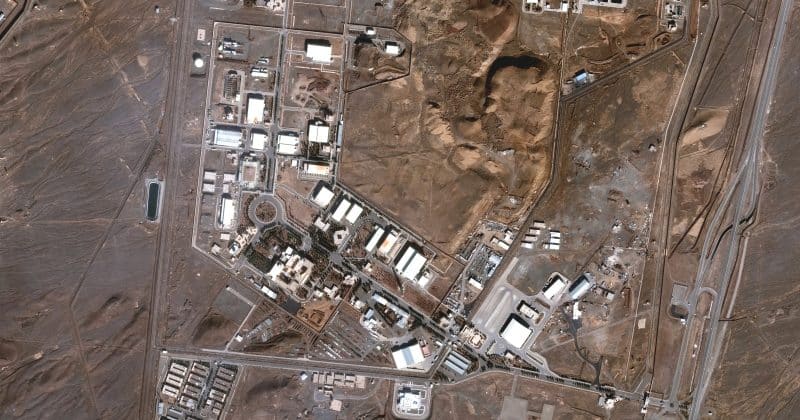
Israeli Prime Minister Benjamin Netanyahu declared on May 10, 2026, that the military campaign against Iran “is not over” until all enriched uranium is removed from the country and its nuclear enrichment sites are dismantled. The statement effectively puts diplomacy on a timer, with force positioned as the fallback if negotiations stall.

The crypto market is paying attention. Bitcoin slid to around $104K amid the escalation, and Iranian exchanges saw Bitcoin outflows surge roughly 700% in the days following the initial strikes.

What’s happening on the ground

The US-Israeli military campaign against Iran began on February 28, 2026, and continued for 20 days. Netanyahu has claimed that the strikes significantly degraded Iran’s uranium enrichment capabilities and missile production infrastructure.

Advertisement

Netanyahu’s latest comments make clear that the job, as Israel defines it, isn’t finished. Remaining nuclear materials need to be physically removed from Iranian territory, and he’s signaled that military action remains a live option if that doesn’t happen through other channels.

How crypto markets are reacting

Bitcoin’s drop to approximately $104K during the escalation reflects a classic risk-off response. Bitcoin outflows from Iranian exchanges surged approximately 700% in the days after the February 28 strikes began. Iranian entities appear to be accelerating their use of digital assets to move value outside the country’s borders, likely as a mechanism to circumvent sanctions that have tightened considerably since the military campaign began.

Meanwhile, a Polymarket contract focused on whether the US and Iran would reach a nuclear deal by June 30 attracted $11.3 million in trading volume, suggesting that traders see the probability of a deal as genuinely uncertain rather than a foregone conclusion in either direction.

The broader context for investors

The 700% outflow spike from Iranian exchanges represents an accelerating structural trend where digital assets become tools of economic survival in sanctioned economies. Every major jurisdiction is watching how effectively crypto enables sanctions evasion, and the data coming out of this conflict will almost certainly inform future policy responses.

For institutional investors, this means the regulatory risk premium on crypto assets could increase if Western governments decide that the Iran situation demonstrates a need for tighter controls on digital asset flows. The $11.3 million in volume on a single Iran-related Polymarket contract suggests the market expects this story to continue evolving, with potential for further price dislocations in either direction depending on whether diplomacy or force prevails.

Disclosure: This article was edited by Editorial Team. For more information on how we create and review content, see our Editorial Policy.

Israel warns Iran’s enriched uranium must be removed by force if needed, Bitcoin dips as tensions escalate

Israel warns Iran’s enriched uranium must be removed by force if needed, Bitcoin dips as tensions escalate

Netanyahu's hardline stance on Iran's nuclear program is rattling crypto markets while driving a 700% spike in Bitcoin outflows from Iranian exchanges

Israeli Prime Minister Benjamin Netanyahu declared on May 10, 2026, that the military campaign against Iran “is not over” until all enriched uranium is removed from the country and its nuclear enrichment sites are dismantled. The statement effectively puts diplomacy on a timer, with force positioned as the fallback if negotiations stall.

The crypto market is paying attention. Bitcoin slid to around $104K amid the escalation, and Iranian exchanges saw Bitcoin outflows surge roughly 700% in the days following the initial strikes.

What’s happening on the ground

The US-Israeli military campaign against Iran began on February 28, 2026, and continued for 20 days. Netanyahu has claimed that the strikes significantly degraded Iran’s uranium enrichment capabilities and missile production infrastructure.

Advertisement

Netanyahu’s latest comments make clear that the job, as Israel defines it, isn’t finished. Remaining nuclear materials need to be physically removed from Iranian territory, and he’s signaled that military action remains a live option if that doesn’t happen through other channels.

How crypto markets are reacting

Bitcoin’s drop to approximately $104K during the escalation reflects a classic risk-off response. Bitcoin outflows from Iranian exchanges surged approximately 700% in the days after the February 28 strikes began. Iranian entities appear to be accelerating their use of digital assets to move value outside the country’s borders, likely as a mechanism to circumvent sanctions that have tightened considerably since the military campaign began.

Meanwhile, a Polymarket contract focused on whether the US and Iran would reach a nuclear deal by June 30 attracted $11.3 million in trading volume, suggesting that traders see the probability of a deal as genuinely uncertain rather than a foregone conclusion in either direction.

The broader context for investors

The 700% outflow spike from Iranian exchanges represents an accelerating structural trend where digital assets become tools of economic survival in sanctioned economies. Every major jurisdiction is watching how effectively crypto enables sanctions evasion, and the data coming out of this conflict will almost certainly inform future policy responses.

For institutional investors, this means the regulatory risk premium on crypto assets could increase if Western governments decide that the Iran situation demonstrates a need for tighter controls on digital asset flows. The $11.3 million in volume on a single Iran-related Polymarket contract suggests the market expects this story to continue evolving, with potential for further price dislocations in either direction depending on whether diplomacy or force prevails.

Disclosure: This article was edited by Editorial Team. For more information on how we create and review content, see our Editorial Policy.