
Israel and Lebanon reach ceasefire as US seeks to revive Iran nuclear talks

Israel and Lebanon reach ceasefire as US seeks to revive Iran nuclear talks

The Trump administration is leveraging a fragile Middle Eastern ceasefire to restart stalled negotiations with Tehran, and crypto markets are watching closely.


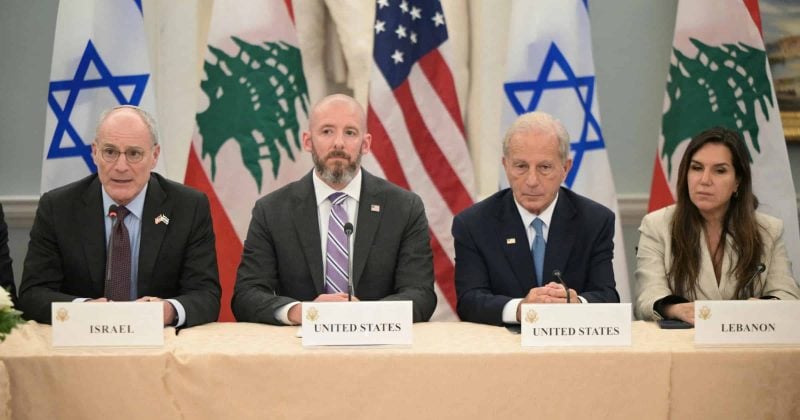
Israel and Lebanon agreed to implement a ceasefire after US mediated talks in Washington, marking a rare diplomatic step between the two countries as the Trump administration tries to contain a widening regional conflict.

The agreement is conditional on Hezbollah ending hostilities and withdrawing its operatives from areas south of the Litani River. Lebanese armed forces would then take control of designated zones in southern Lebanon, creating a framework for a longer term security arrangement.

The problem is that Hezbollah is not on board. The group rejected the ceasefire terms, arguing that the agreement threatens Lebanese sovereignty and demanding a full Israeli withdrawal. That rejection leaves the deal exposed before it can become a meaningful de escalation signal for markets.

Advertisement

The ceasefire follows earlier attempts to pause the conflict. A 10 day truce began in April, followed by an extension in May, but violence persisted through Israeli strikes and Hezbollah attacks. The new agreement goes further by requiring Hezbollah to leave southern Lebanon, a condition the group has historically resisted.

The Washington talks also carry a broader regional purpose. The Trump administration is trying to stabilize the Lebanon front while managing stalled diplomacy with Iran, whose support for Hezbollah has made the Lebanon conflict difficult to separate from wider Middle East tensions.

For crypto markets, the agreement lands at a fragile moment. Bitcoin fell about 4% on June 3 to $64,721, its lowest level since February 28, as traders responded to geopolitical risk, ETF outflows, and weakening sentiment across digital assets.

The Lebanon ceasefire could help ease pressure if it holds, but Hezbollah’s rejection means investors are unlikely to treat it as a durable peace signal. Crypto has remained sensitive to geopolitical shocks this year, particularly when conflicts raise energy market risks or broader risk off sentiment.

The key issue is the Litani River condition. If Hezbollah refuses to withdraw, the ceasefire may collapse quickly. If it partially complies while maintaining influence through allied forces or local proxies, markets will face a harder question: whether the agreement represents real de escalation or just another pause before renewed fighting.

Disclosure: This article was edited by Editorial Team. For more information on how we create and review content, see our Editorial Policy.

Israel and Lebanon reach ceasefire as US seeks to revive Iran nuclear talks

Israel and Lebanon reach ceasefire as US seeks to revive Iran nuclear talks

The Trump administration is leveraging a fragile Middle Eastern ceasefire to restart stalled negotiations with Tehran, and crypto markets are watching closely.

Share

Add us on Google

Israel and Lebanon agreed to implement a ceasefire after US mediated talks in Washington, marking a rare diplomatic step between the two countries as the Trump administration tries to contain a widening regional conflict.

The agreement is conditional on Hezbollah ending hostilities and withdrawing its operatives from areas south of the Litani River. Lebanese armed forces would then take control of designated zones in southern Lebanon, creating a framework for a longer term security arrangement.

The problem is that Hezbollah is not on board. The group rejected the ceasefire terms, arguing that the agreement threatens Lebanese sovereignty and demanding a full Israeli withdrawal. That rejection leaves the deal exposed before it can become a meaningful de escalation signal for markets.

Advertisement

The ceasefire follows earlier attempts to pause the conflict. A 10 day truce began in April, followed by an extension in May, but violence persisted through Israeli strikes and Hezbollah attacks. The new agreement goes further by requiring Hezbollah to leave southern Lebanon, a condition the group has historically resisted.

The Washington talks also carry a broader regional purpose. The Trump administration is trying to stabilize the Lebanon front while managing stalled diplomacy with Iran, whose support for Hezbollah has made the Lebanon conflict difficult to separate from wider Middle East tensions.

For crypto markets, the agreement lands at a fragile moment. Bitcoin fell about 4% on June 3 to $64,721, its lowest level since February 28, as traders responded to geopolitical risk, ETF outflows, and weakening sentiment across digital assets.

The Lebanon ceasefire could help ease pressure if it holds, but Hezbollah’s rejection means investors are unlikely to treat it as a durable peace signal. Crypto has remained sensitive to geopolitical shocks this year, particularly when conflicts raise energy market risks or broader risk off sentiment.

The key issue is the Litani River condition. If Hezbollah refuses to withdraw, the ceasefire may collapse quickly. If it partially complies while maintaining influence through allied forces or local proxies, markets will face a harder question: whether the agreement represents real de escalation or just another pause before renewed fighting.

Disclosure: This article was edited by Editorial Team. For more information on how we create and review content, see our Editorial Policy.