
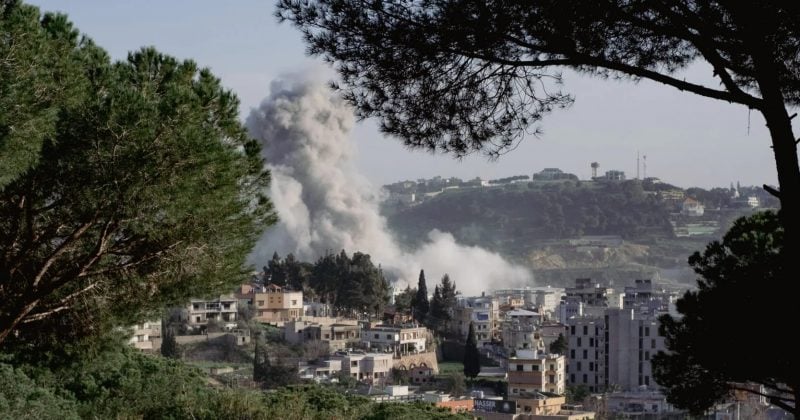
Israel withdraws from buffer zone in southern Lebanon as US brokers fragile peace
The Lebanese Army is expected to move into areas vacated by Israeli forces under a US-facilitated pilot program designed to test territorial handovers
Israel has begun pulling forces out of parts of its buffer zone in southern Lebanon, with the Lebanese Army expected to fill the vacuum. The withdrawal marks the first tangible movement under a ceasefire framework that the United States helped negotiate earlier this month.
What’s actually happening on the ground
The withdrawal covers select portions of the buffer zone Israel has maintained in southern Lebanon. These areas are being transferred to the Lebanese Army under what’s being described as a pilot program, essentially a test run for broader territorial handovers.
The US is handling the training and vetting of Lebanese troops set to deploy in these zones. The explicit goal is to ensure that units taking over have no affiliations with Hezbollah, the Iran-backed militant group that has been Israel’s primary adversary in the region for decades.
Israeli Ambassador to the UN Danny Danon has announced plans to eventually pull Israeli forces back to the Litani River, roughly 30 km north of the border.
Prime Minister Benjamin Netanyahu made clear on June 24 that Israel’s military buffer zone in southern Lebanon, which covers approximately 6% of Lebanese territory, will remain in place for as long as he leads the government.
Macro, rates, and crypto—what moved markets and what matters next.
Daily. Free. Join 34,000+ readers across crypto, finance, and policy.
The buffer zone itself has been accompanied by expanding evacuation orders that restrict civilian re-entry into affected areas.
The ceasefire framework and its limits
The ceasefire agreement underpinning this withdrawal was reached on June 3, 2026. It was brokered by the United States and introduced the concept of pilot zones, carefully delineated areas where territorial handovers could be tested under controlled conditions.
The pilot zone concept is designed to address one of the core trust deficits in the relationship. Israel has long argued that the Lebanese state lacks the capacity, or in some cases the will, to prevent Hezbollah from operating freely in southern Lebanon. By having the US vet and train the troops taking over, the framework attempts to create a credible security guarantee.
Why this matters beyond the Middle East
Netanyahu’s statement about maintaining the buffer zone indefinitely introduces a key variable: tying a military posture to one leader’s tenure means that any change in Israeli leadership could dramatically shift the calculus, while the current posture is unlikely to change as long as he remains in power.
The expanding evacuation orders add another dimension. The longer Lebanese civilians are prevented from returning to their homes, the more domestic and international pressure builds for a resolution.