
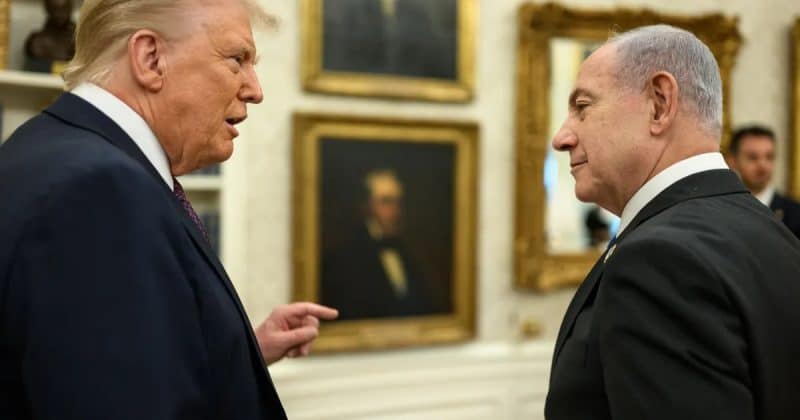
Israeli official highlights US-Israel rift over Iran threat perception

https://www.whitehouse.gov/gallery/president-donald-trump-and-israeli-prime-minister-benjamin-netanyahu-hold-a-joint-press-conference-announcing-the-u-s-peace-plan-for-gaza/

Israeli official highlights US-Israel rift over Iran threat perception

Iran leadership status by end of 2026

An Israeli official has highlighted a strategic rift between the United States and Israel, with Israel viewing Iran as a more significant threat than the US does. The official’s remarks underscore differing priorities amid the ongoing US-Israel conflict with Iran, which began earlier this year. While the US focuses on stabilizing Gulf energy supplies, Israel is prioritizing the dismantlement of Iran’s nuclear program. This divergence may influence market perceptions of Iran’s leadership stability, suggesting potential implications for the likelihood of regime change.

Advertisement

In prediction markets, the probability of a change in Iran’s leadership by the end of 2026 has seen minor fluctuations. The market pricing suggests a modest decrease in confidence in the Iranian regime’s survival, reflected in a slight increase in the probability that there will be no head of state in Iran by the end of 2026. This is consistent with concerns over the regime’s stability amid ongoing military and strategic pressures.

Key Takeaways

  • Israeli official’s comments appear to underscore a strategic divide with the US over Iran, suggesting differing threat perceptions.
  • Market pricing indicates a modest decrease in confidence regarding Iran’s leadership stability by the end of 2026.
  • The probability of Iran having no head of state by the end of 2026 has increased slightly, reflecting potential instability.

What to Watch

Monitoring US and Israeli strategic decisions will be crucial to understanding future developments in the region. Continued military engagements or diplomatic efforts could influence market perceptions of Iran’s leadership stability. Any significant policy shifts or conflict escalations could provide insights into whether current market pricing will adjust further. The ongoing strategic divergence between the US and Israel may also continue to impact these market dynamics.

Get prediction market intelligence as a structured API feed. Early access waitlist.

Disclosure: This article was edited by Estefano Gomez. For more information on how we create and review content, see our Editorial Policy.

Israeli official highlights US-Israel rift over Iran threat perception

Israeli official highlights US-Israel rift over Iran threat perception

Iran leadership status by end of 2026

https://www.whitehouse.gov/gallery/president-donald-trump-and-israeli-prime-minister-benjamin-netanyahu-hold-a-joint-press-conference-announcing-the-u-s-peace-plan-for-gaza/

An Israeli official has highlighted a strategic rift between the United States and Israel, with Israel viewing Iran as a more significant threat than the US does. The official’s remarks underscore differing priorities amid the ongoing US-Israel conflict with Iran, which began earlier this year. While the US focuses on stabilizing Gulf energy supplies, Israel is prioritizing the dismantlement of Iran’s nuclear program. This divergence may influence market perceptions of Iran’s leadership stability, suggesting potential implications for the likelihood of regime change.

Advertisement

In prediction markets, the probability of a change in Iran’s leadership by the end of 2026 has seen minor fluctuations. The market pricing suggests a modest decrease in confidence in the Iranian regime’s survival, reflected in a slight increase in the probability that there will be no head of state in Iran by the end of 2026. This is consistent with concerns over the regime’s stability amid ongoing military and strategic pressures.

Key Takeaways

  • Israeli official’s comments appear to underscore a strategic divide with the US over Iran, suggesting differing threat perceptions.
  • Market pricing indicates a modest decrease in confidence regarding Iran’s leadership stability by the end of 2026.
  • The probability of Iran having no head of state by the end of 2026 has increased slightly, reflecting potential instability.

What to Watch

Monitoring US and Israeli strategic decisions will be crucial to understanding future developments in the region. Continued military engagements or diplomatic efforts could influence market perceptions of Iran’s leadership stability. Any significant policy shifts or conflict escalations could provide insights into whether current market pricing will adjust further. The ongoing strategic divergence between the US and Israel may also continue to impact these market dynamics.

Get prediction market intelligence as a structured API feed. Early access waitlist.

Disclosure: This article was edited by Estefano Gomez. For more information on how we create and review content, see our Editorial Policy.