
Japan may intervene in currency markets as yen hits 40-year low
The yen's slide to its weakest level since 1986 is putting Tokyo on intervention watch, and crypto traders have reasons to pay attention
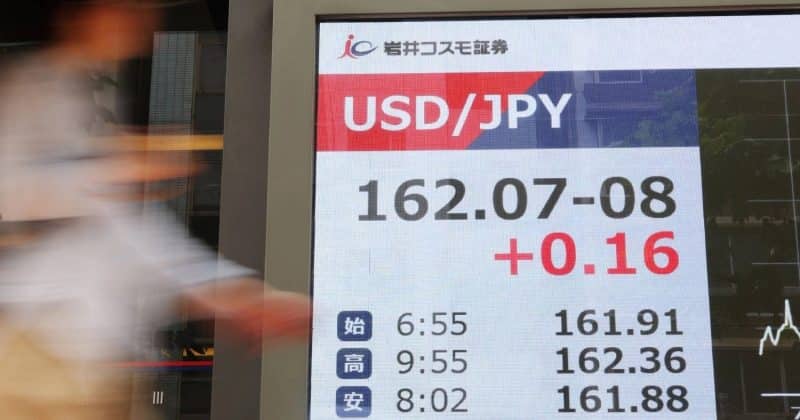
The Japanese yen just hit a level not seen since the Reagan administration. As of June 30, 2026, the currency had weakened to roughly 162 yen per US dollar, its lowest point since December 1986.
Finance Minister Satsuki Katayama has signaled that authorities stand ready to take what she called “appropriate action” as necessary.
What got us here
The yen’s slide is not a mystery. It is the predictable result of a persistent gap between US and Japanese interest rates. The US Federal Reserve has kept rates elevated, while the Bank of Japan has moved with its characteristic caution. Capital follows yield, and for years, that yield has pointed away from yen-denominated assets.
Japan has already shown it is willing to act. Between late April and late May 2026, Japanese authorities spent approximately ¥11.7 trillion, roughly $73 billion, on market intervention to prop up the yen. That is one of the largest currency defense operations in modern history, and it still could not stop the slide below 162.
Why crypto traders should care
The yen’s weakness has been quietly fueling one of the oldest trades in global finance: the yen carry trade. Investors borrow yen at low Japanese interest rates, convert the proceeds into higher-yielding currencies or assets, and pocket the difference.
The news moving money, markets, and the world—before your day starts.
Daily. Free. Join 34,000+ readers across crypto, finance, and policy.
Some of that carry trade money has found its way into Bitcoin and other crypto assets. The problem is what happens when the trade unwinds. If Japan intervenes aggressively and the yen strengthens sharply, carry traders face immediate pressure. A stronger yen means their borrowed yen is now more expensive to repay, so they have to sell whatever assets they bought to cover positions.
Previous yen intervention episodes have historically aligned with notable volatility in risk assets. Crypto, with its 24-hour markets and leveraged participants, tends to feel those shocks before traditional equity markets even open.
What to watch and what it means for investors
The fact that Japan spent $73 billion and still could not hold a prior threshold suggests that any new intervention might need to be even more aggressive to produce a lasting effect. A move back toward 155 or lower on an intervention would represent a significant yen strengthening in a short time frame.
Katayama’s “appropriate action” language is deliberate vagueness, designed to keep markets guessing. The next few weeks in USD/JPY are worth watching closely, not because forex is inherently interesting, but because the spillover potential into crypto markets is real and the historical precedent is clear.