
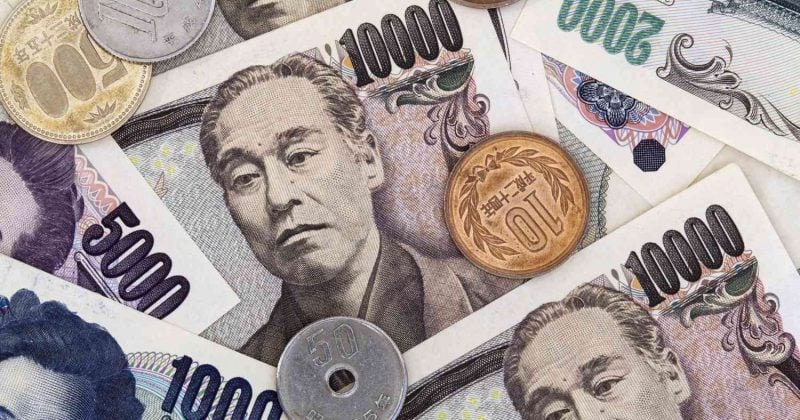
Japanese yen hits weakest level against the US dollar since 1986

Japanese yen hits weakest level against the US dollar since 1986

The yen's collapse to 162.40 per dollar caps a 57% decline since 2021, rattling global markets and sending Bitcoin below $60K

The Japanese yen just crossed a threshold that hasn’t been breached in nearly four decades. Trading at 162.40 per US dollar on June 29-30, the yen touched its weakest point since December 1986.

How a currency loses 57% in four years

Since 2021, the yen has declined approximately 57% against the dollar. The core reason is straightforward: the US Federal Reserve spent much of 2022 and 2023 aggressively raising interest rates, while the Bank of Japan held its benchmark rate near zero for years longer than almost any major central bank on the planet.

Advertisement

The Bank of Japan has since moved. Its policy rate now sits at 1%, the highest level in over thirty years. But when US rates remain at around 3.5%, the gap that has been punishing the yen for years doesn’t simply disappear because Tokyo nudged its benchmark upward.

Japan’s billion-dollar effort to stop the bleeding

Earlier in 2026, after the yen initially breached the 160-per-dollar level, Tokyo launched what amounted to the largest currency intervention in recorded history. The government spent ¥11.73 trillion, roughly $72.4 billion, attempting to prop up the yen and stabilize markets.

It bought time, not a solution. The yen has since pushed past 162, suggesting the intervention slowed the decline without reversing its underlying cause. Finance Minister Satsuki Katayama has signaled readiness for further action.

What this means for crypto and global risk assets

Bitcoin dropped more than 1% below $60,000 in the same period the yen was hitting its 1986 lows. A stronger dollar has historically worked against Bitcoin and other risk assets, and yen-funded carry trades represent a structural risk: borrowing in low-interest-rate yen to invest in higher-yielding assets means that any sharp reversal in the yen could trigger rapid de-risking across asset classes. Crypto, with its 24-hour markets and relatively thin liquidity compared to equities, would likely feel that faster than most.

Disclosure: This article was edited by Editorial Team. For more information on how we create and review content, see our Editorial Policy.

Japanese yen hits weakest level against the US dollar since 1986

Japanese yen hits weakest level against the US dollar since 1986

The yen's collapse to 162.40 per dollar caps a 57% decline since 2021, rattling global markets and sending Bitcoin below $60K

The Japanese yen just crossed a threshold that hasn’t been breached in nearly four decades. Trading at 162.40 per US dollar on June 29-30, the yen touched its weakest point since December 1986.

How a currency loses 57% in four years

Since 2021, the yen has declined approximately 57% against the dollar. The core reason is straightforward: the US Federal Reserve spent much of 2022 and 2023 aggressively raising interest rates, while the Bank of Japan held its benchmark rate near zero for years longer than almost any major central bank on the planet.

Advertisement

The Bank of Japan has since moved. Its policy rate now sits at 1%, the highest level in over thirty years. But when US rates remain at around 3.5%, the gap that has been punishing the yen for years doesn’t simply disappear because Tokyo nudged its benchmark upward.

Japan’s billion-dollar effort to stop the bleeding

Earlier in 2026, after the yen initially breached the 160-per-dollar level, Tokyo launched what amounted to the largest currency intervention in recorded history. The government spent ¥11.73 trillion, roughly $72.4 billion, attempting to prop up the yen and stabilize markets.

It bought time, not a solution. The yen has since pushed past 162, suggesting the intervention slowed the decline without reversing its underlying cause. Finance Minister Satsuki Katayama has signaled readiness for further action.

What this means for crypto and global risk assets

Bitcoin dropped more than 1% below $60,000 in the same period the yen was hitting its 1986 lows. A stronger dollar has historically worked against Bitcoin and other risk assets, and yen-funded carry trades represent a structural risk: borrowing in low-interest-rate yen to invest in higher-yielding assets means that any sharp reversal in the yen could trigger rapid de-risking across asset classes. Crypto, with its 24-hour markets and relatively thin liquidity compared to equities, would likely feel that faster than most.

Disclosure: This article was edited by Editorial Team. For more information on how we create and review content, see our Editorial Policy.