
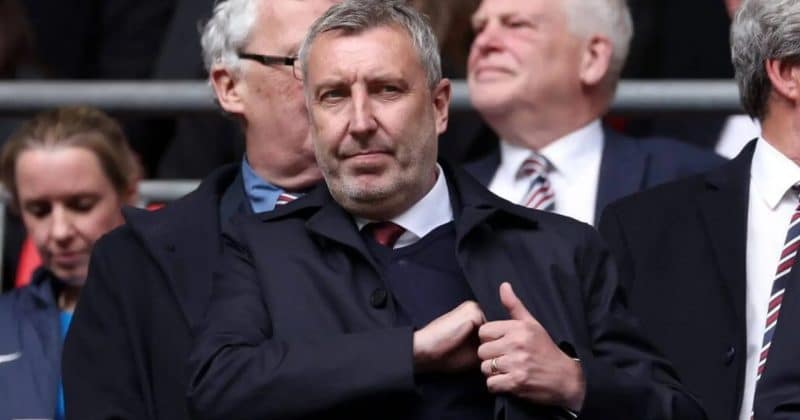
Jason Wilcox gains ultimate authority over Manchester United recruitment
The former Manchester City academy chief now holds final say on all player recruitment decisions at Old Trafford after a rapid ascent through the club's hierarchy.
Manchester United’s recruitment machine has a new captain. Jason Wilcox, who joined the club barely a year ago as technical director, now holds ultimate authority over football recruitment decisions at Old Trafford.
The promotion to Director of Football, which became official on June 4, 2025, completes a remarkably swift rise for a man who was working at Southampton’s football operations not long before. In the span of roughly 14 months, Wilcox has gone from new hire to the single most powerful voice in deciding which players wear the red shirt.
From technical director to the top of the pyramid
Wilcox first arrived at Manchester United on April 19, 2024, taking on the technical director role as part of the broader front-office restructuring triggered by INEOS’s partial takeover under Sir Jim Ratcliffe. At the time, Dan Ashworth was occupying the sporting director seat, and the two were expected to work in tandem to overhaul a recruitment operation that had, to put it charitably, produced mixed results for the better part of a decade.
That tandem didn’t last long. Ashworth departed Manchester United in December 2024, leaving a significant vacuum in the club’s football operations. Rather than rushing to find an external replacement, the club turned inward. Wilcox absorbed Ashworth’s responsibilities, and the subsequent months served as something of an extended audition.
He apparently passed. The Director of Football title formalized what had already been happening in practice: Wilcox calling the shots on player identification and recruitment strategy, with CEO Omar Berrada and negotiation director Matt Hargreaves handling the boardroom and contractual sides of deals.
The Man City blueprint, transplanted to Old Trafford
If you want to understand what Wilcox might build at Manchester United, look at where he came from. He spent over a decade at Manchester City, including six years as the academy director. Before City, Wilcox served as director of football at Southampton, another club historically renowned for punching above its weight in recruitment and youth development.
The news moving money, markets, and the world—before your day starts.
Daily. Free. Join 34,000+ readers across crypto, finance, and policy.
For context on the man himself, Wilcox knows what elite football looks like from the pitch too. He earned three caps for England and was part of the Blackburn Rovers squad that won the Premier League in the 1994-95 season.
Early signs of a new approach
The targets already linked to Wilcox’s United offer some clues about his philosophy in action. Matheus Cunha, the Wolverhampton Wanderers forward, and Bryan Mbeumo of Brentford have both been reported as players on Wilcox’s radar. Both fit a profile: proven in the Premier League, entering their prime years, and capable of immediate impact without carrying the inflated price tags of established superstars from Europe’s biggest clubs.
Not every pursuit has gone smoothly. An attempt to sign Liam Delap reportedly proved unsuccessful. The broader direction, though, appears focused on younger players and academy pathways, a long-term approach that prioritizes building something durable over assembling a collection of expensive individuals.
What this means for United’s future
For the INEOS regime, this appointment signals a commitment to the kind of professionalized football operations structure that has become standard at Europe’s best-run clubs. Liverpool’s model under Michael Edwards, Bayern Munich’s longstanding sporting director tradition, and Manchester City’s setup under Txiki Begiristain all centralized recruitment authority in a single football-literate executive rather than spreading it across businesspeople and agents.
United have cycled through Ed Woodward’s deal-making, various consultants, and the brief Ashworth experiment. Wilcox represents the latest attempt to get it right, and his background at City and Southampton suggests he at least understands what “right” looks like.