
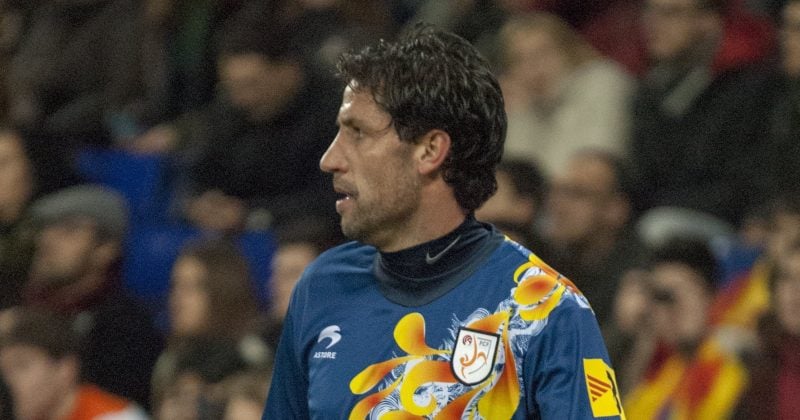
Joan Capdevila granted US entry waiver after Trump appeal ahead of World Cup final
The 2010 World Cup winner nearly missed Spain's date with Argentina after an Iran travel flag blocked his visa waiver application
Joan Capdevila played every single minute of Spain’s 2010 World Cup campaign, including the full 90 in the final against the Netherlands. He was there for the whole thing. So the idea that he might miss the 2026 final, with Spain back in the championship match, because of a decade-old trip to Iran was, to put it gently, a lot.
Fortunately for Capdevila, the story has a better ending. After a public appeal to President Donald Trump on July 17, the 48-year-old former defender was granted a waiver to enter the United States, clearing the way for him to attend the final on July 19 at MetLife Stadium in New Jersey.
What actually happened
Capdevila had applied for ESTA authorization, the Electronic System for Travel Authorization that allows nationals from certain countries to enter the US without a full visa. His application was denied.
The reason traces back to a trip Capdevila made to Iran roughly a decade ago for an exhibition match. Under US law, travelers who have visited Iran, Cuba, North Korea, or a handful of other designated countries are generally ineligible for the visa waiver program, regardless of why they went.
With time running short, Capdevila went public. His July 17 post on X laid out the situation plainly, saying he wanted to attend the final with his children. The post spread quickly across sports media, putting the story in front of a large audience and, apparently, the right people.
The news moving money, markets, and the world—before your day starts.
Daily. Free. Join 34,000+ readers across crypto, finance, and policy.
Within a day, a waiver came through. Capdevila is going to the game.
Why a soccer story is actually a policy story
The ESTA program exists to make travel frictionless for nationals of participating countries. But the Iran carve-out is a hard rule. It does not matter if you went as a professional athlete, a journalist, a humanitarian worker, or a tourist. If your passport shows Iran travel, you are out of the ESTA lane and into the full visa application process, which is slower, more uncertain, and far less forgiving when you are working against a deadline measured in days.
The 2026 tournament is the first World Cup co-hosted by three nations, with the United States, Canada, and Mexico sharing duties.
Capdevila’s place in the story of Spanish football
Capdevila was the left back for a generation-defining squad that won consecutive European Championships in 2008 and 2012, and the World Cup sandwiched between them in 2010. He started at left back and did not come off once during the entire tournament. He was there for Iniesta’s extra-time winner in Johannesburg.
Now, with Spain back in a 2026 World Cup final against Argentina, Capdevila wanted to be in the stands.