
JPMorgan: Tokenized money market funds unlikely to exceed 15% of stablecoin market
The bank's analysts see tokenized MMFs stuck in a narrow lane, even as JPMorgan itself launches a $100M fund on Ethereum.
Tokenized money market funds are the shiny new thing in crypto’s institutional toolkit. They offer yield, they live on blockchains, and they’ve attracted some of the biggest names in traditional finance. But according to JPMorgan’s own analysts, they’re not going to dethrone stablecoins anytime soon.
The bank’s research team, led by managing director Nikolaos Panigirtzoglou, pegs tokenized MMFs at roughly 5% of the stablecoin market today. Their ceiling, absent a major regulatory shake-up? Somewhere between 10% and 15%.
The numbers in context
The nine largest tokenized money market funds collectively manage about $8 billion in assets. That sounds impressive until you remember the stablecoin market dwarfs it entirely, with USDT and USDC alone controlling over 80% of the space.
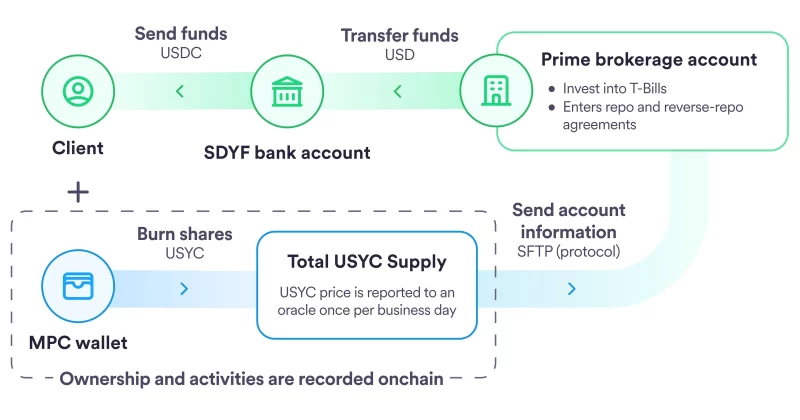
Tokenized MMFs do something stablecoins generally don’t: they generate yield. Think of them as a blockchain-native version of parking your cash in a government money market fund, except the shares exist as tokens on Ethereum or similar networks.
JPMorgan is betting on it anyway
JPMorgan Asset Management launched its second tokenized government money market fund, JLTXX, on Ethereum on May 13, with an initial seed of $100 million. The fund is specifically designed to bolster reserves for stablecoin issuers in line with the GENIUS Act, the legislative framework working its way through Congress that would establish federal standards for stablecoin reserves.
The news moving money, markets, and the world—before your day starts.
Daily. Free. Join 34,000+ readers across crypto, finance, and policy.
JPMorgan isn’t alone in this space. BlackRock, Franklin Templeton, and Circle’s partnership with Hashnote have all entered the tokenized fund arena.
Why the ceiling exists
Tokenized money market fund shares are securities. They carry regulatory baggage. KYC requirements, transfer restrictions, redemption windows, and compliance overhead all limit their utility as a medium of exchange. You can’t just swap a tokenized MMF share for ETH on a decentralized exchange the way you can with USDC.
JPMorgan’s projection also hinges on the regulatory environment staying roughly where it is. If legislation like the GENIUS Act were to explicitly bless tokenized MMFs as acceptable stablecoin reserves, or if regulators mandated yield-bearing alternatives, the calculus could shift. But the analysts clearly view that scenario as outside their base case.
What this means for investors
The $8 billion in collective assets shows genuine traction, and the entry of JPMorgan, BlackRock, and Franklin Templeton lends credibility. JPMorgan’s JLTXX fund is explicitly designed to serve as backing for stablecoin reserves, meaning tokenized MMFs could become infrastructure that supports stablecoin growth rather than competing with it.
Watch the GENIUS Act’s progress closely. The regulatory framework it establishes for stablecoin reserves could either cement the current ceiling or blow it open entirely, and JPMorgan is clearly positioning to benefit from either outcome.