
Nexo Earn with Nexo
Kalshi builds Bloomberg Terminal-style interface for prediction market power users

Kalshi builds Bloomberg Terminal-style interface for prediction market power users

The CFTC-regulated platform is alpha testing a professional-grade trading terminal as it chases institutional adoption after a $1B funding round.

Kalshi wants its most serious traders to feel like they’re sitting on a Wall Street desk, not browsing a betting app.

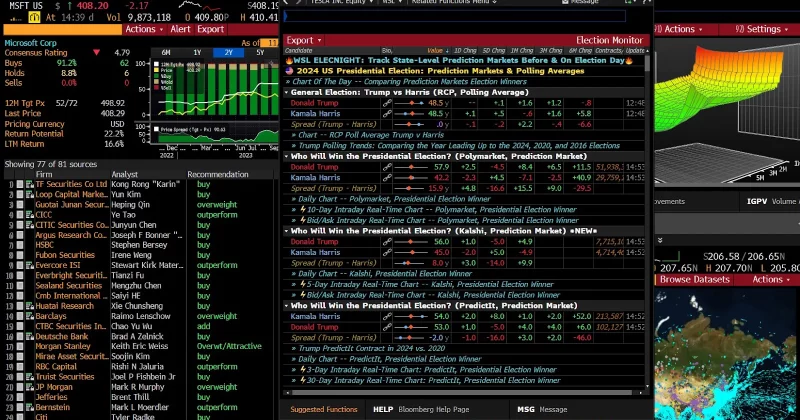
The CFTC-regulated prediction market platform is developing a professional-grade trading interface modeled after the Bloomberg Terminal. The new interface is currently in alpha testing with a select group of high-end traders. Building a terminal that lets traders manage multiple event contract positions, access live trade data, and execute trades with less friction is the kind of move that signals Kalshi isn’t content being a consumer-facing platform anymore.

From retail darling to institutional contender

Kalshi raised $1 billion in its Series F funding round in May 2026, pushing its valuation to $22 billion. The round included Coatue, Sequoia, and a16z.

The platform now reports an annualized trading volume of $178 billion. Kalshi claims to account for over 90% of US prediction market activity.

Advertisement

The new terminal has been in development for roughly a month as of early June 2026. Alpha testing with a curated group of traders suggests Kalshi is taking a deliberately measured approach, refining the product based on feedback from users who need multi-position management and real-time data feeds.

The competition is already building

Kalshi isn’t the only platform that sees this opportunity. Competitors including Paradigm, Verso, and Panther are all developing similar trading terminals aimed at professional and institutional users.

The breadth of contracts driving this growth spans elections, sports, economic indicators, and increasingly niche events.

Polymarket, the crypto-native prediction market that grabbed headlines during the 2024 US presidential election cycle, remains a significant player in the broader space. But Kalshi’s CFTC-regulated status gives it a structural advantage with institutional allocators who need regulatory clarity before deploying capital.

What this means for traders and investors

Professional traders bring larger order sizes and more consistent activity, which means tighter spreads on event contracts benefiting all participants.

If Paradigm, Verso, and Panther ship comparable products, the differentiation will come down to data quality, execution speed, contract variety, and fee structures. Kalshi’s head start in volume and regulatory standing gives it an edge.

A $22 billion valuation on $178 billion in annualized volume implies investors believe there’s room for those numbers to grow substantially, and that the traders driving that growth will increasingly look like institutional desks rather than individual speculators.

Disclosure: This article was edited by Editorial Team. For more information on how we create and review content, see our Editorial Policy.

Kalshi builds Bloomberg Terminal-style interface for prediction market power users

Kalshi builds Bloomberg Terminal-style interface for prediction market power users

The CFTC-regulated platform is alpha testing a professional-grade trading terminal as it chases institutional adoption after a $1B funding round.

Kalshi wants its most serious traders to feel like they’re sitting on a Wall Street desk, not browsing a betting app.

The CFTC-regulated prediction market platform is developing a professional-grade trading interface modeled after the Bloomberg Terminal. The new interface is currently in alpha testing with a select group of high-end traders. Building a terminal that lets traders manage multiple event contract positions, access live trade data, and execute trades with less friction is the kind of move that signals Kalshi isn’t content being a consumer-facing platform anymore.

From retail darling to institutional contender

Kalshi raised $1 billion in its Series F funding round in May 2026, pushing its valuation to $22 billion. The round included Coatue, Sequoia, and a16z.

The platform now reports an annualized trading volume of $178 billion. Kalshi claims to account for over 90% of US prediction market activity.

Advertisement

The new terminal has been in development for roughly a month as of early June 2026. Alpha testing with a curated group of traders suggests Kalshi is taking a deliberately measured approach, refining the product based on feedback from users who need multi-position management and real-time data feeds.

The competition is already building

Kalshi isn’t the only platform that sees this opportunity. Competitors including Paradigm, Verso, and Panther are all developing similar trading terminals aimed at professional and institutional users.

The breadth of contracts driving this growth spans elections, sports, economic indicators, and increasingly niche events.

Polymarket, the crypto-native prediction market that grabbed headlines during the 2024 US presidential election cycle, remains a significant player in the broader space. But Kalshi’s CFTC-regulated status gives it a structural advantage with institutional allocators who need regulatory clarity before deploying capital.

What this means for traders and investors

Professional traders bring larger order sizes and more consistent activity, which means tighter spreads on event contracts benefiting all participants.

If Paradigm, Verso, and Panther ship comparable products, the differentiation will come down to data quality, execution speed, contract variety, and fee structures. Kalshi’s head start in volume and regulatory standing gives it an edge.

A $22 billion valuation on $178 billion in annualized volume implies investors believe there’s room for those numbers to grow substantially, and that the traders driving that growth will increasingly look like institutional desks rather than individual speculators.

Disclosure: This article was edited by Editorial Team. For more information on how we create and review content, see our Editorial Policy.