
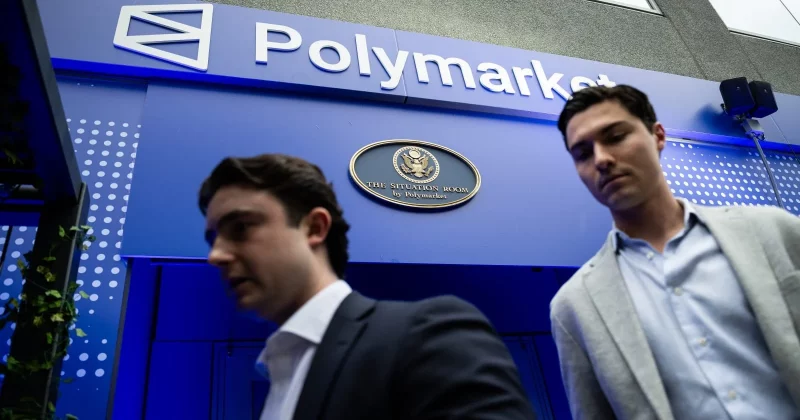
Kalshi and Polymarket open doors to Indian users, creating a prediction market duopoly in one of the world’s largest betting markets
The two dominant prediction platforms are onboarding users from India without local licenses, betting that regulatory ambiguity works in their favor.
Two of the world’s largest prediction market platforms have quietly started accepting users from India, a country with 1.4 billion people and an appetite for wagering that most Western platforms have historically avoided. Polymarket and Kalshi are both allowing Indian residents to sign up, deposit funds, and trade on event contracts, from sports outcomes to geopolitical developments.
Neither platform has established a legal entity in India or obtained a local license to operate there.
The numbers behind the land grab
The combined scale of these two platforms is staggering. Kalshi clears roughly $2.7B in weekly trades across more than 350,000 active markets, giving it approximately 53% of global prediction market volume. Polymarket, the crypto-native competitor, generates slightly over $2.1B in weekly trades. Together, that’s north of $4.8B changing hands every week.
The entire prediction market sector has experienced over 1,000% annual growth. Both platforms are now valued above $10B each. Polymarket demonstrated its mainstream pulling power during Super Bowl 60, when its related markets captured $1.63B in trading volume for a single sporting event.
Why India, and why now
The timing isn’t accidental. India’s Premier League cricket season, the IPL, is one of the largest sporting events on the planet by viewership and betting volume. Both platforms are actively targeting Indian users for IPL-related markets.
The news moving money, markets, and the world—before your day starts.
Daily. Free. Join 34,000+ readers across crypto, finance, and policy.
Kalshi’s approach leans on its regulatory pedigree. The platform is regulated by the US Commodity Futures Trading Commission (CFTC) and structures its offerings as event contracts. Polymarket takes a different route entirely, operating as a crypto-native platform where trades settle via smart contracts on blockchain infrastructure.
What this means for traders and the broader market
For Indian users, the immediate upside is access. Prediction markets let participants trade on the outcomes of real-world events, everything from election results to central bank rate decisions to whether it’ll rain during a test match in Mumbai.
For Kalshi and Polymarket, India represents a high-reward, high-risk expansion play. Neither platform faces meaningful local competition in the prediction market category, effectively operating as a duopoly in this space.