
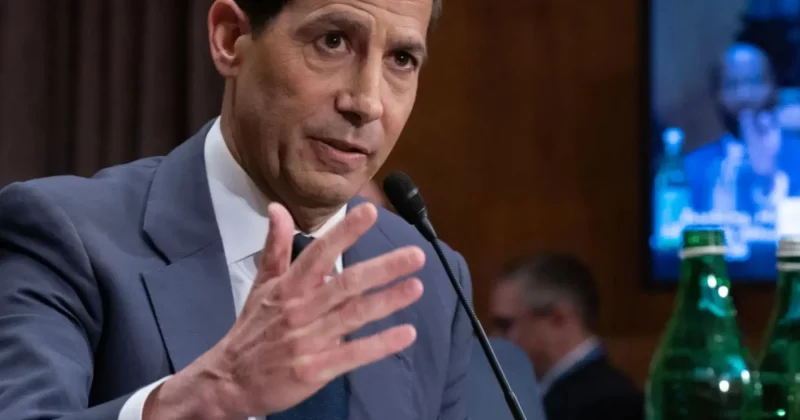
Kevin Warsh poised for Senate confirmation vote to lead Federal Reserve
The former Fed governor's crypto-friendly stance and hawkish inflation views could reshape monetary policy and digital asset markets.
Kevin Warsh cleared the Senate Banking Committee on a 13-11 party-line vote on April 29, 2026, putting him one full Senate vote away from becoming the next chair of the Federal Reserve. If confirmed, he’s set to take the reins by May 15, replacing Jerome Powell in what amounts to the most consequential leadership change at the central bank in years.
For crypto markets, this is not just a personnel swap. It’s a philosophical one. Warsh has called Bitcoin the “new gold for under 40s” and disclosed investments in more than 20 crypto-linked entities. That’s a far cry from Powell’s arm’s-length approach to digital assets.
From nomination to near-confirmation
President Trump nominated Warsh on March 4, 2026. The former Fed governor, who served on the board during the 2008 financial crisis, has spent the years since in the private sector building a reputation as a monetary hawk with surprisingly warm feelings toward digital finance.
His Senate confirmation hearing on April 21 offered the clearest signal of his intentions. Warsh defined digital assets as part of the US financial system, a statement that sounds bland until you realize no sitting or incoming Fed chair has ever framed it that way.
The committee vote split cleanly along party lines. Every Republican voted yes, every Democrat voted no. That 13-11 margin means the full Senate confirmation is likely to follow a similar partisan pattern, and with the current Republican majority, the math works in Warsh’s favor.
Powell sailed through his initial confirmation 84-13 in 2018. The narrow margin here reflects genuine disagreement about Warsh’s approach.
What his leadership means for monetary policy
Warsh has been vocal about monetary discipline. He’s signaled that controlling price pressures will be his top priority, which in Fed-speak usually means higher rates for longer. For risk assets, including crypto, that’s traditionally bad news. Tight money means less liquidity sloshing around looking for returns.
Warsh’s personal portfolio tells a story his policy speeches don’t fully capture. Having disclosed stakes in over 20 crypto-linked entities, he has skin in the game in a way no previous Fed chair has.
Analysts have pointed to the proposed CLARITY Act as a potential catalyst under Warsh’s leadership. The thinking goes that a Fed chair who views crypto as part of the financial system, combined with clearer legislative frameworks, could unlock a wave of institutional capital that’s been sitting on the sidelines.
Bitcoin’s price action tells a mixed story
Bitcoin dropped to $75,000 on April 29, the same day as the committee vote. By May 10, it had stabilized around $80,000.
Spot Bitcoin ETF outflows hit $268 million on May 7, adding to the cautious mood.
Some analysts have projected Bitcoin could reach $200,000 by the end of 2026, driven by expectations of faster interest rate cuts under Warsh’s leadership.
What this means for investors
The shift from Powell to Warsh represents a genuine ideological transformation in how the Fed’s top official views digital assets. Powell treated crypto like a regulatory problem to be managed. Warsh treats it like a financial innovation to be integrated.
Warsh’s commitment to monetary discipline means the path to lower interest rates may not be as smooth or fast as crypto bulls hope. Bitcoin has historically struggled during aggressive tightening cycles, and if Warsh inherits an inflation problem that requires further rate hikes, crypto could face headwinds before it gets tailwinds.
The smart play here is to watch two things closely. First, Warsh’s initial policy statements after taking office: will he signal rate cuts, holds, or hikes? Second, any coordination between the Fed and Congress on crypto-specific legislation like the CLARITY Act.