
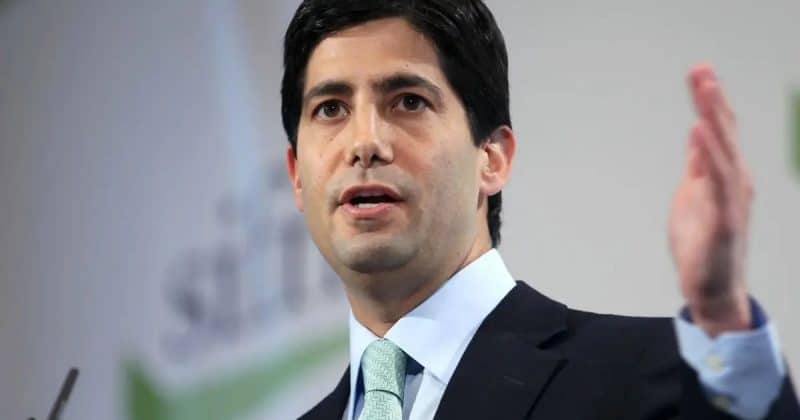
Kevin Warsh takes the Fed’s wheel with a crypto portfolio and a grudge against forward guidance
The new Federal Reserve chair wants a 'regime change' from Powell's playbook, and his 30-plus crypto holdings make him the most digital-asset-friendly central banker in US history
The Federal Reserve has a new boss, and he’s not interested in doing things the old way. Kevin Warsh was sworn in as Fed Chair on May 22, 2026, replacing Jerome Powell with a mandate that reads less like continuity and more like a controlled demolition of the previous regime’s toolkit.
Warsh, confirmed by the Senate on May 13 with a tight 55-45 vote, has been explicit about what he wants: a “regime change” at the world’s most powerful central bank. For crypto markets, the implications are unusually direct. This is the first Fed Chair in history with significant personal exposure to digital assets, holding stakes in over 30 crypto-related investments.
What ‘regime change’ actually means
His priorities boil down to three pillars. First, strict adherence to a 2% inflation target, ditching the “flexible average” framework that gave Powell room to let inflation run hot temporarily. Second, a sharp reduction in forward guidance, the practice of telegraphing rate moves months in advance. Third, an aggressive shrinking of the Fed’s balance sheet.
The flexible average inflation targeting framework, introduced under Powell in 2020, was designed to let the Fed tolerate above-target inflation for periods after undershooting. Warsh is firmly in that camp, and now he has the chair to do something about it.
There’s also the question of internal culture. Warsh has signaled he wants to foster more dissent within the Federal Open Market Committee, a contrast to the consensus-driven approach that characterized Powell’s leadership. Powell, notably, remains on the Board of Governors even though his term as chair ended on May 15. That creates an unusual dynamic: the architect of the old regime sitting in the room while his successor dismantles it.
Macro, rates, and crypto—what moved markets and what matters next.
Daily. Free. Join 34,000+ readers across crypto, finance, and policy.
The crypto factor
Warsh’s personal portfolio includes more than 30 crypto-related holdings, making him not just sympathetic to the space but financially embedded in it. He has described Bitcoin as comparable to gold for younger investors, a framing that positions it as a legitimate store of value rather than speculative noise.
Warsh’s appointment aligns with the Trump administration’s broader pro-innovation stance on digital currencies.
What this means for investors
The first major test comes at the FOMC meeting scheduled for June 16-17, 2026. That will be Warsh’s inaugural meeting as chair, and markets will be parsing every word for signals about how quickly he plans to implement his agenda. The current economic backdrop includes heightened inflation concerns and calls for potential monetary easing, a tension that Warsh will have to navigate with his stricter framework.
Investors should also watch for friction between Warsh and Powell, who remains a governor with a vote on the FOMC. Powell built the system Warsh is trying to tear down. Having him in the room as a dissenting voice, in a committee where the new chair actively encourages dissent, could produce the kind of policy debates that haven’t been seen at the Fed in years.