
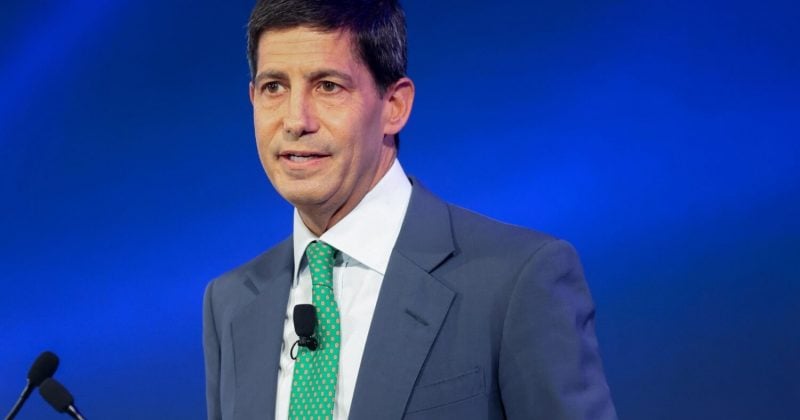
Kevin Warsh outlines monetary policy in first congressional testimony
The new Fed chairman signaled zero tolerance for sticky inflation while calling Bitcoin an 'important asset' for understanding the economy
Kevin Warsh just did something no Federal Reserve chairman has done before: acknowledged crypto holdings on a financial disclosure form while simultaneously warning Congress about inflation.
In his first congressional testimony since being confirmed as Fed chairman in May, Warsh appeared before the House Financial Services Committee on July 14 and laid out a monetary policy framework that has implications for every corner of the market, crypto included.
The inflation hard line
Warsh’s central message was blunt. The Federal Open Market Committee has “no tolerance for persistently elevated inflation,” he told lawmakers, reinforcing the Fed’s commitment to its 2% target.
That target is currently more aspiration than reality. June’s Consumer Price Index came in at 3.5% annually, nearly double the Fed’s goal. Warsh pointed to global energy crises as a key driver of the stubborn price pressures, framing the challenge as partly beyond domestic monetary policy’s direct control.
Bitcoin responded accordingly, trading in a choppy range between $62,000 and $64,000 as markets digested both the CPI data and Warsh’s remarks.
Macro, rates, and crypto—what moved markets and what matters next.
Daily. Free. Join 34,000+ readers across crypto, finance, and policy.
The crypto chairman the industry didn’t expect
Warsh’s financial disclosures revealed personal holdings in Solana, Optimism, and dYdX, among other digital assets. That’s a first for a sitting Fed chair, and it immediately drew attention from both supporters and skeptics on the committee.
Rep. Maxine Waters questioned Warsh directly about potential conflicts of interest in shaping crypto regulations while holding the assets those regulations would affect.
During his earlier confirmation hearings, Warsh acknowledged that digital assets are already an integral part of the US financial services landscape. He called Bitcoin an “important asset” for understanding broader economic conditions. At the same time, he warned that crypto technologies could threaten the stability of the payments system.
What this means for the CLARITY Act and beyond
Warsh’s testimony lands at a particularly loaded moment for crypto regulation in Washington. The CLARITY Act, which aims to establish clearer jurisdictional boundaries for digital asset oversight, is actively being debated in Congress.
A Senate follow-up session is expected on July 15, where Warsh will face additional scrutiny from lawmakers who may press harder on both the conflict-of-interest questions and the specifics of how the Fed plans to close the gap between 3.5% inflation and its 2% target.