
Khamenei’s burial at Imam Reza shrine caps months of geopolitical uncertainty that moved crypto markets
The Supreme Leader's funeral procession concludes in Mashhad as traders continue to weigh the implications of Iran's leadership vacuum on digital assets
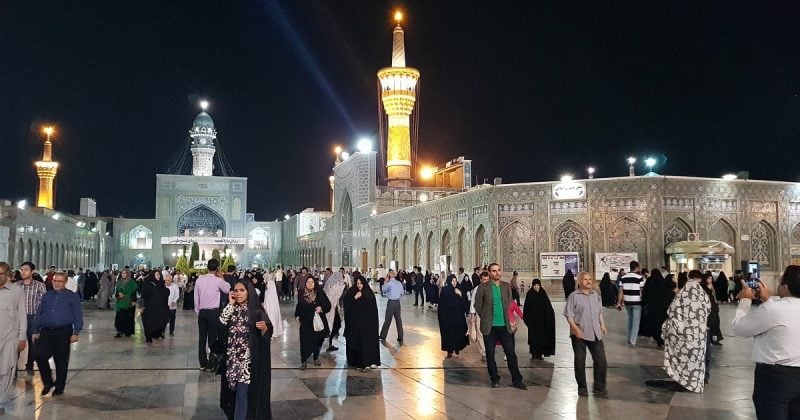
Ali Khamenei’s coffin arrived at the Imam Reza shrine in Mashhad on July 9, 2026, marking the final chapter of funeral processions that stretched across Iran and Iraq over the course of a week. Iranian state media broadcast the burial ceremony live, drawing massive crowds to one of Shia Islam’s holiest sites.
The burial brings a degree of symbolic closure to a sequence of events that began on February 28, 2026, when Khamenei was killed in a US-Israeli airstrike. His death, confirmed by Iranian state media on March 1, sent shockwaves through global markets, and crypto was no exception.
How Khamenei’s death rippled through crypto
When news of Khamenei’s assassination broke, Bitcoin rallied approximately 2.2%, climbing to around $68,000. The move wasn’t about Iran specifically. It was about what traders do when a major geopolitical variable suddenly changes: they buy the asset that doesn’t belong to any government.
The price reaction was modest in absolute terms. A 2.2% move on Bitcoin barely registers as a notable day. But the speed and directionality of the move told a clearer story: traders interpreted the leadership vacuum as a potential catalyst for de-escalation in the region, and they priced that optimism into risk assets almost immediately.
Prediction markets lit up as well. Platforms like Polymarket and Kalshi processed high volumes of contracts tied to Khamenei’s status and Iran’s political trajectory. Legal debates followed quickly. The validity of certain prediction market contracts tied to Khamenei’s death sparked rapid discussions about the boundaries of what these platforms should allow.
The news moving money, markets, and the world—before your day starts.
Daily. Free. Join 34,000+ readers across crypto, finance, and policy.
The geopolitical backdrop
Khamenei served as Iran’s Supreme Leader since 1989, making him one of the longest-serving heads of state in the Middle East. His role extended far beyond domestic politics. He was the central figure in Iran’s network of regional proxy relationships, its nuclear ambitions, and its adversarial posture toward the US and Israel.
The funeral processions ran from July 3 to July 9. The Supreme Leader’s successor will be selected by the Assembly of Experts, a body of senior clerics.
What this means for investors
The burial itself didn’t produce any fresh market-moving developments in crypto. No new sanctions were announced, no retaliatory strikes materialized during the ceremony, and no crypto-specific policy changes emerged from the political fallout.
Bitcoin’s reaction to Khamenei’s death in February added another data point to a growing body of evidence that digital assets respond to geopolitical shocks in ways that increasingly resemble gold’s traditional safe-haven behavior. The surge in Polymarket and Kalshi activity around this event suggests that crypto-native platforms are becoming the first place traders go to express views on geopolitical outcomes.