
KNDS struggles to attract investors for €12B-plus IPO as governance concerns mount

KNDS struggles to attract investors for €12B-plus IPO as governance concerns mount

Europe's biggest defense IPO in years is running into investor skepticism over state ownership, lock-up periods, and a shrinking valuation target

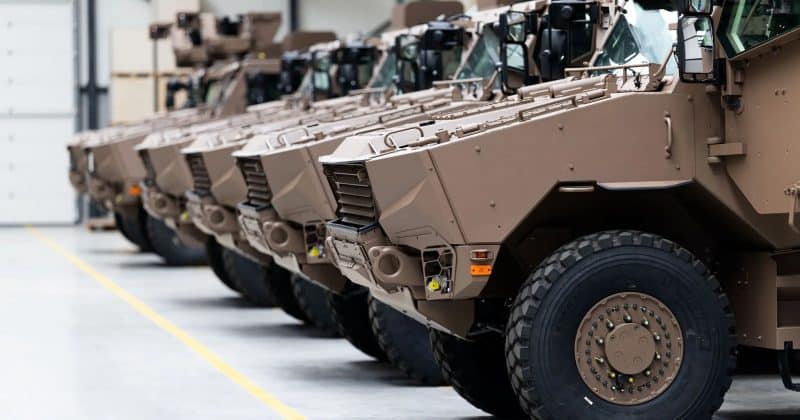
KNDS, the Franco-German defense giant behind the Leopard 2 and Leclerc tanks, is finding out that building armored vehicles is easier than building investor confidence. The company’s planned IPO, once expected to command a valuation north of €20 billion, has seen its target slashed to roughly €15 billion as institutional buyers push back on the deal’s structure.

Here’s the thing: KNDS isn’t struggling because of weak fundamentals. The company posted €4.4 billion in revenue for fiscal year 2025, a 16% year-over-year jump, alongside €661 million in EBIT and €980 million in free cash flow. It sits on a record order backlog of €33.1 billion.

KNDS was born in 2015 from the merger of Germany’s Krauss-Maffei Wegmann and France’s Nexter, the latter owned by the French state through GIAT Industries. The IPO is structured as a secondary sale of approximately 20% of existing share capital, meaning no new shares will be issued and no fresh capital flows into the company itself.

Advertisement

After the listing, GIAT (representing the French state) and KfW (representing the German state) are each expected to hold 40% of the company. That leaves just 20% as free float available to public investors. Two governments will control 80% of a publicly traded company, and investors are being asked to buy the remaining sliver.

Germany is expected to acquire its 40% stake from the Wegmann family either before or concurrent with the IPO, a transaction designed to ensure balanced Franco-German ownership.

A 10-year lock-up period will reportedly apply to state holders with stakes below 30%. Investors buying into the 20% free float would be purchasing a minority position in a company where the majority ownership cannot change for ten years.

That €33.1 billion order backlog as of December 31, 2025, represents roughly seven and a half years of revenue at current run rates.

The planned dual listing on Euronext Paris and the Frankfurt Stock Exchange, targeting a mid-July 2026 launch, adds another wrinkle. For a company valued around €15 billion, that means roughly €3 billion worth of shares would actually be available for public trading.

A 20% free float controlled by two sovereign governments, a decade-long ownership freeze, and a valuation that has already dropped by roughly 30% from initial expectations before a single share has traded publicly.

If KNDS does come to market at €15 billion, that would imply a price-to-EBIT multiple of roughly 23x based on the 2025 EBIT figure of €661 million.

Disclosure: This article was edited by Editorial Team. For more information on how we create and review content, see our Editorial Policy.

KNDS struggles to attract investors for €12B-plus IPO as governance concerns mount

KNDS struggles to attract investors for €12B-plus IPO as governance concerns mount

Europe's biggest defense IPO in years is running into investor skepticism over state ownership, lock-up periods, and a shrinking valuation target

KNDS, the Franco-German defense giant behind the Leopard 2 and Leclerc tanks, is finding out that building armored vehicles is easier than building investor confidence. The company’s planned IPO, once expected to command a valuation north of €20 billion, has seen its target slashed to roughly €15 billion as institutional buyers push back on the deal’s structure.

Here’s the thing: KNDS isn’t struggling because of weak fundamentals. The company posted €4.4 billion in revenue for fiscal year 2025, a 16% year-over-year jump, alongside €661 million in EBIT and €980 million in free cash flow. It sits on a record order backlog of €33.1 billion.

KNDS was born in 2015 from the merger of Germany’s Krauss-Maffei Wegmann and France’s Nexter, the latter owned by the French state through GIAT Industries. The IPO is structured as a secondary sale of approximately 20% of existing share capital, meaning no new shares will be issued and no fresh capital flows into the company itself.

Advertisement

After the listing, GIAT (representing the French state) and KfW (representing the German state) are each expected to hold 40% of the company. That leaves just 20% as free float available to public investors. Two governments will control 80% of a publicly traded company, and investors are being asked to buy the remaining sliver.

Germany is expected to acquire its 40% stake from the Wegmann family either before or concurrent with the IPO, a transaction designed to ensure balanced Franco-German ownership.

A 10-year lock-up period will reportedly apply to state holders with stakes below 30%. Investors buying into the 20% free float would be purchasing a minority position in a company where the majority ownership cannot change for ten years.

That €33.1 billion order backlog as of December 31, 2025, represents roughly seven and a half years of revenue at current run rates.

The planned dual listing on Euronext Paris and the Frankfurt Stock Exchange, targeting a mid-July 2026 launch, adds another wrinkle. For a company valued around €15 billion, that means roughly €3 billion worth of shares would actually be available for public trading.

A 20% free float controlled by two sovereign governments, a decade-long ownership freeze, and a valuation that has already dropped by roughly 30% from initial expectations before a single share has traded publicly.

If KNDS does come to market at €15 billion, that would imply a price-to-EBIT multiple of roughly 23x based on the 2025 EBIT figure of €661 million.

Disclosure: This article was edited by Editorial Team. For more information on how we create and review content, see our Editorial Policy.