
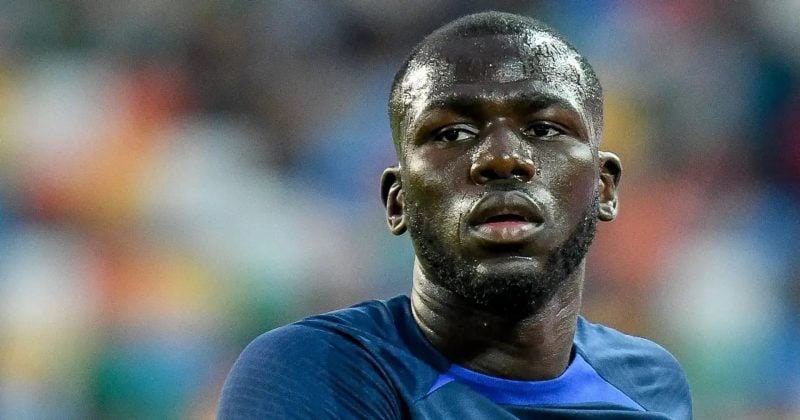
Kalidou Koulibaly criticizes travel bans for Senegal fans at World Cup

Kalidou Koulibaly criticizes travel bans for Senegal fans at World Cup

Senegal's captain questions why African supporters face US entry restrictions while other nations bring their fans freely

Kalidou Koulibaly, captain of the Senegal national football team, did not hold back after his side’s opening World Cup match. The question on his mind wasn’t about tactics or formations. It was about why so many Senegalese fans couldn’t get into the country.

Following Senegal’s June 16 opener against France at MetLife Stadium, Koulibaly publicly called out US travel restrictions that have effectively locked out large portions of his nation’s supporter base from the 2026 FIFA World Cup.

A World Cup with empty seats where fans should be

The issue traces back to a December 2025 proclamation by President Donald Trump. That order imposed partial entry bans on nationals from Senegal, Ivory Coast, Iran, and Haiti, citing concerns over high visa overstay rates.

Advertisement

The justification for Senegal’s inclusion: a B1/B2 visa overstay rate of 4.30%.

Here’s the thing. Athletes, team staff, and official delegations can still enter the US. The ban doesn’t apply to the players themselves. But general fans are largely shut out.

Official Senegalese supporter delegations were denied entry. Individual fans in Senegal found themselves unable to obtain visas. The result was a stadium atmosphere at MetLife that relied almost entirely on US-based Senegalese diaspora communities to fill the void.

“I think that every team can have their people, so I don’t understand why people from Africa cannot have their people.”

The broader pattern beyond Senegal

Senegal isn’t alone in facing this problem. Cape Verde has reported similar visa challenges affecting their participants’ families.

The team managed to navigate some of the bureaucratic barriers for players’ families. Koulibaly acknowledged that officials helped secure entry for some family members. But the broader supporter base had no such luck.

What this means for the tournament’s credibility

Koulibaly’s comments carry weight beyond the pitch. He’s not just a footballer airing a grievance. He’s the captain of a nationally beloved team pointing out what looks, to many observers, like unequal treatment along geographic and racial lines. The fact that the affected nations are predominantly from Africa and the Caribbean has not gone unnoticed.

The Senegalese diaspora in the US stepped up for the France match, filling seats and bringing energy to MetLife. But diaspora support is a workaround, not a solution.

Disclosure: This article was edited by Editorial Team. For more information on how we create and review content, see our Editorial Policy.

Kalidou Koulibaly criticizes travel bans for Senegal fans at World Cup

Kalidou Koulibaly criticizes travel bans for Senegal fans at World Cup

Senegal's captain questions why African supporters face US entry restrictions while other nations bring their fans freely

Kalidou Koulibaly, captain of the Senegal national football team, did not hold back after his side’s opening World Cup match. The question on his mind wasn’t about tactics or formations. It was about why so many Senegalese fans couldn’t get into the country.

Following Senegal’s June 16 opener against France at MetLife Stadium, Koulibaly publicly called out US travel restrictions that have effectively locked out large portions of his nation’s supporter base from the 2026 FIFA World Cup.

A World Cup with empty seats where fans should be

The issue traces back to a December 2025 proclamation by President Donald Trump. That order imposed partial entry bans on nationals from Senegal, Ivory Coast, Iran, and Haiti, citing concerns over high visa overstay rates.

Advertisement

The justification for Senegal’s inclusion: a B1/B2 visa overstay rate of 4.30%.

Here’s the thing. Athletes, team staff, and official delegations can still enter the US. The ban doesn’t apply to the players themselves. But general fans are largely shut out.

Official Senegalese supporter delegations were denied entry. Individual fans in Senegal found themselves unable to obtain visas. The result was a stadium atmosphere at MetLife that relied almost entirely on US-based Senegalese diaspora communities to fill the void.

“I think that every team can have their people, so I don’t understand why people from Africa cannot have their people.”

The broader pattern beyond Senegal

Senegal isn’t alone in facing this problem. Cape Verde has reported similar visa challenges affecting their participants’ families.

The team managed to navigate some of the bureaucratic barriers for players’ families. Koulibaly acknowledged that officials helped secure entry for some family members. But the broader supporter base had no such luck.

What this means for the tournament’s credibility

Koulibaly’s comments carry weight beyond the pitch. He’s not just a footballer airing a grievance. He’s the captain of a nationally beloved team pointing out what looks, to many observers, like unequal treatment along geographic and racial lines. The fact that the affected nations are predominantly from Africa and the Caribbean has not gone unnoticed.

The Senegalese diaspora in the US stepped up for the France match, filling seats and bringing energy to MetLife. But diaspora support is a workaround, not a solution.

Disclosure: This article was edited by Editorial Team. For more information on how we create and review content, see our Editorial Policy.