
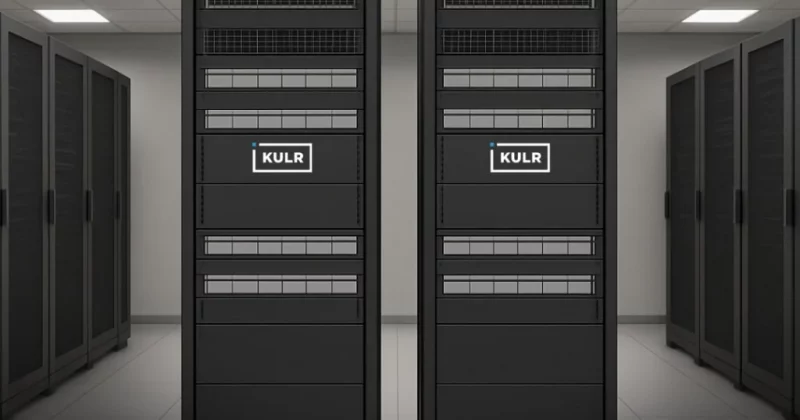
KULR Technology highlights battery systems’ role in AI data center demand
The energy storage company is betting that AI's insatiable appetite for power will make advanced battery backup systems a billion-dollar necessity.
Every time someone asks ChatGPT to write a haiku or generates an AI image of a cat wearing a business suit, a data center somewhere is burning through electricity at a rate that would make a small town blush. KULR Technology Group wants to be the company that keeps those data centers from blinking off.
The NYSE American-listed energy storage firm announced a partnership with a leading battery-cell manufacturer to develop the KULR ONE MAX Battery Backup Unit, purpose-built for high-power AI environments. The collaboration carries a projected value of up to $100 million, signaling that KULR sees AI infrastructure as more than a side bet.
Why AI data centers need better batteries
Traditional uninterruptible power supplies were designed for a different era. They work fine for conventional server loads, but AI clusters demand something with more punch, better thermal management, and faster response times. That’s the gap KULR is trying to fill.
The company’s battery technology was originally developed for NASA, which is the kind of pedigree that makes “high-stakes environment” feel like an understatement. KULR is focusing specifically on 21700 cell platforms, a lithium-ion battery format that balances energy density with the kind of power output AI data centers require.
The data center energy storage market sits at roughly $1.58 billion as of 2024. By 2030, that figure is projected to reach $2.67 billion. In English: the market is expected to grow by about 69% in six years, driven almost entirely by AI’s relentless expansion.
AI, tech, and the markets they move—in one daily briefing.
Daily. Free. Join 34,000+ readers across crypto, finance, and policy.
Open Compute Project and industry standards
On December 11, 2025, KULR joined the Open Compute Project as a Platinum Member. OCP is the organization founded by Facebook (now Meta) back in 2011 to create open-source hardware designs for data centers. Its members include most of the hyperscalers you’d expect: Meta, Microsoft, Google, and others.
Platinum membership isn’t just a logo on the website. It means KULR is working directly with the organizations that set hardware standards for the largest data centers on the planet. The company has specifically noted that its energy solutions will conform to NVIDIA GPU specifications, which makes sense given that NVIDIA’s chips power the vast majority of AI training infrastructure worldwide.
The Bitcoin angle
In a twist that makes KULR harder to categorize in a single sector, the company also runs a Bitcoin treasury strategy. As of its latest reporting, KULR holds 1,021 BTC, with a commitment to allocate up to 90% of its cash reserves to Bitcoin holdings.
For investors, this creates an unusual risk profile. On one hand, you’re buying exposure to a growing market for data center energy storage. On the other, you’re taking on the volatility of a significant Bitcoin position.
Look, the $100 million projected value of the KULR ONE MAX development initiative sounds impressive, but projected value and realized revenue are very different animals. The real test will be whether KULR can convert its OCP membership and NASA-grade technology into actual purchase orders from hyperscalers and colocation providers. Investors watching this space should pay close attention to whether KULR announces specific customer contracts in the coming quarters, because partnerships and memberships only matter if they eventually turn into invoices.